March 28, 2013
Parliament must take steps to empower women: M.S. Swaminathan, India
New Delhi, March 22 (IANS) Retiring Rajya Sabha member and veteran agricultural scientist M.S.
Democracy and the equal participation of men and women in the political arena are closely intertwined. No parliament or any decision-making body can claim to be representative without the participation of both men and women. As stated in the Universal Declaration on Democracy adopted by the Inter-Parliamentary Union’s Member Parliaments in 1997, "The achievement of democracy presupposes a genuine partnership between men and women in the conduct of the affairs of society in which they work in equality and complementarity, drawing mutual enrichment from their differences."
Recent years have seen a steady increase in the number of women in parliament, though the world average of less than 22 percent remains far from the goal of parity between women and men. The election of women to the highest positions of state and government in several countries has also contributed to the changing face of politics.
While the road to election is a difficult one, the challenges for women do not stop there. Once women enter parliament or other bodies, they are faced with many new challenges. Parliament is traditionally a male-oriented domain where the rules and practices have been written by men. It is, therefore, an ongoing challenge to transform parliament into a gender-sensitive environment, to ensure that actions are gender-sensitive and to guarantee that gender is mainstreamed throughout the legislature.
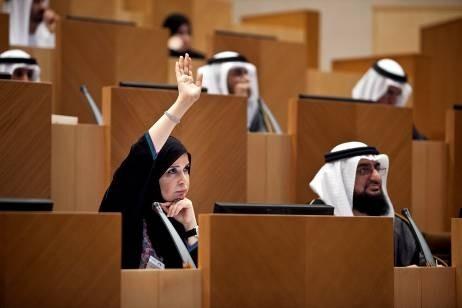
New Delhi, March 22 (IANS) Retiring Rajya Sabha member and veteran agricultural scientist M.S.
A study conducted by market research company TNS shows that from a sample of 500 women from different social classes, 84% feel less secure financially after t
Malawi government has pledged to help female parliamentarians retain their seats in 2014 tripartite polls.
VietNamNet Bridge – The number of women in leadership positions in political organisations, including the National Assembly and Government, has yet to reach its full potential, said deputy head of the Viet Nam Women's Union Nguyen Thi Thu Ha.
HARARE South legislator Cde Hurbert Nyanhongo yesterday said Zanu-PF would continue to recognise the pivotal role played by women in n
Remarks by Rebeca Grynspan
UN Under-Secretary-General and UNDP Associate Administrator
From June 18–21, 2012, IFES worked with the Institute of Social Studies and Analysis (ISSA), a Tbilisi–based research organization, to conduct eight focus groups across Georgia to better understand the perceptions, opinions and perceived obstacles women face as political candida
From June 18–21, 2012, IFES worked with the Institute of Social Studies and Analysis (ISSA), a Tbilisi–based research organization, to conduct eight focus groups across Georgia to better understand the perceptions, opinions and perceived obstacles women face as political candida
PESHAWAR, March 21: The majority of the women elected to the last Khyber Pakhtunkhwa Assembly on reserved seats have applied for tickets of their respective parties for the upcoming elections — but many feel the political culture is still not favoura