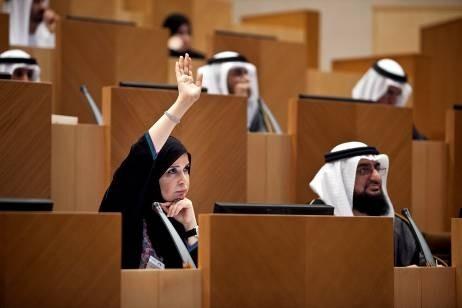
In a bid to enhance the role and influence of women MPs in the political scene in Burundi, women parliamentarians in the east African country have been given training on ways to build their leadership, communication and advocacy skills as part of a long-standing IPU programme there on stre
Parliaments and Representatives
Democracy and the equal participation of men and women in the political arena are closely intertwined. No parliament or any decision-making body can claim to be representative without the participation of both men and women. As stated in the Universal Declaration on Democracy adopted by the Inter-Parliamentary Union’s Member Parliaments in 1997, "The achievement of democracy presupposes a genuine partnership between men and women in the conduct of the affairs of society in which they work in equality and complementarity, drawing mutual enrichment from their differences."
Recent years have seen a steady increase in the number of women in parliament, though the world average of less than 22 percent remains far from the goal of parity between women and men. The election of women to the highest positions of state and government in several countries has also contributed to the changing face of politics.
While the road to election is a difficult one, the challenges for women do not stop there. Once women enter parliament or other bodies, they are faced with many new challenges. Parliament is traditionally a male-oriented domain where the rules and practices have been written by men. It is, therefore, an ongoing challenge to transform parliament into a gender-sensitive environment, to ensure that actions are gender-sensitive and to guarantee that gender is mainstreamed throughout the legislature.
There would have been fewer fights in the Ukrainian parliament if more women were among the deputies. At least female parliamentarians were not seen taking part in the multiple brawls that marked the first working days of Ukraine’s newly elected legislature this week.
e-Discussions
Gender equity: A model for prosperity
There is greater need for women to be on public boards and commissions that are critical to decision making about the development of Jamaica. Not only is there call to action for women to be selected for these positions, qualified and competent women who are needed, and yes, they exist. I am imploring the current decision-makers in Jamaica, yes we are a country that is accustomed to making decisions on a partisan politics basis but if Vision 2030 is to be anywhere near achieved then the interest of the country must supersede that of political parties.
Ghana’s next Parliament is set to have the highest number of female representation for the first time since the onset of the Fourth Republic.
Prior to their official inauguration slated for tomorrow Friday 7th Decemb
ZANU PF Goromonzi West MP and chairperson of the Regional Women’s Parliamentary Caucus Beatrice Nyamupinga has accused the police and the Judiciary of paying lip service to issues relating to gender-based violence.
he anxiety and uncertainty surrounding women's abilities to win Parliamentary seats have been laid to rest as 28 women from nine regions have reached office so far in Ghana's hotly contested 2012 elections.
One Hundred and thirty three women are running in 27 out of the 275 constituencies in Ghana’s Parliamentary race this year. This number is relatively small compared to their male counterparts who number up to one thousand three hundred and thirty two.
Kuwaiti women are taking part in parliamentary elections both as candidates and voters for the fifth time since they won their political rights.
Pagination
- Previous page
- Page 319
- Next page