In the House, 10 new congresswomen will join the 64 incumbents who were re-elected, according to Rutgers University's Center for American Women and Politics, bringing the number of women in the 435-seat body to a record 74. The 100-member U.S.
Parliaments and Representatives
Democracy and the equal participation of men and women in the political arena are closely intertwined. No parliament or any decision-making body can claim to be representative without the participation of both men and women. As stated in the Universal Declaration on Democracy adopted by the Inter-Parliamentary Union’s Member Parliaments in 1997, "The achievement of democracy presupposes a genuine partnership between men and women in the conduct of the affairs of society in which they work in equality and complementarity, drawing mutual enrichment from their differences."
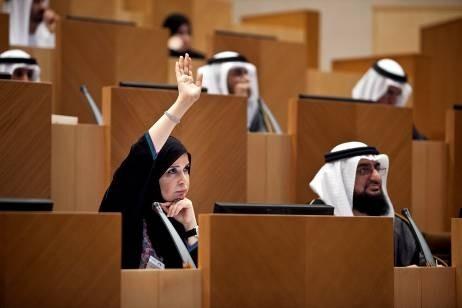
Recent years have seen a steady increase in the number of women in parliament, though the world average of less than 22 percent remains far from the goal of parity between women and men. The election of women to the highest positions of state and government in several countries has also contributed to the changing face of politics.
While the road to election is a difficult one, the challenges for women do not stop there. Once women enter parliament or other bodies, they are faced with many new challenges. Parliament is traditionally a male-oriented domain where the rules and practices have been written by men. It is, therefore, an ongoing challenge to transform parliament into a gender-sensitive environment, to ensure that actions are gender-sensitive and to guarantee that gender is mainstreamed throughout the legislature.
With three weeks having passed since the elections, and accusations of discrepancies in the ballot-count being lodged by more than a dozen districts, the KPUD has finally tallied up the votes from all five electoral districts.
Indian politics’ skewed sex ratio is best illustrated by the composition of the last parliament. It had just 45 women, which is 8.3% of the strength of the House. Those 45 MPs were elected from the 355 women who contested the 2004 general elections. The 15th Lok Sabha looks set to be even worse.
Indonesia’s direct legislative election in April was a resounding success for women candidates. But instead of rejoicing, activists and political observers say it is unlikely to help the cause of women’s rights.
As a female Palestinian MP in Israel's Knesset, this activist has taken up the battle for rights on two fronts.Haneen Zoubi has that most incongruous of job descriptions: a Palestinian member of the Israeli parliament.
Happy to have overcome two decades of electoral drought in the northern Indian states of Uttar Pradesh and Bihar, the Congress party in a symbolic gesture of thanks has put its most prominent leader from the underprivileged Dalit caste, Meira Kumar, in the speaker's chair.
When it comes to female participation in politics, Japan lags far behind other nations.If Japan is going to catch up with the countries that boast a high percentage of female politicians, women must create a nationwide movement, according to panelists at a symposium advocating more women in polit
WITH 17 People's Action Party (PAP) women MPs already in Parliament, the groundwork has begun towards beefing up the ranks with at least half a dozen more - starting with the upcoming General Election, due by early-2012.But even as PAP Women's Wing chairman Lim Hwee Hua (picture) spelt out her ho
Poverty in Cambodia is caused by the failure of the government to combat corruption.
Pagination
- Previous page
- Page 333
- Next page