State not doing enough to encourage more women to enter politics, human rights watchdog warns

Progress on improving the representation of women in Irish politics has been “negligible” in the last six years, a new report has said.
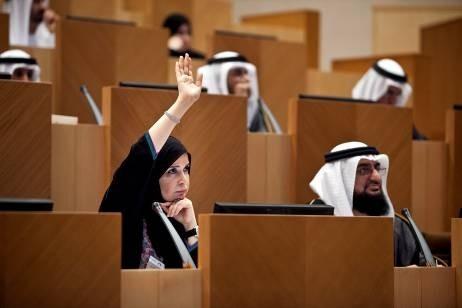
Democracy and the equal participation of men and women in the political arena are closely intertwined. No parliament or any decision-making body can claim to be representative without the participation of both men and women. As stated in the Universal Declaration on Democracy adopted by the Inter-Parliamentary Union’s Member Parliaments in 1997, "The achievement of democracy presupposes a genuine partnership between men and women in the conduct of the affairs of society in which they work in equality and complementarity, drawing mutual enrichment from their differences."
Recent years have seen a steady increase in the number of women in parliament, though the world average of less than 22 percent remains far from the goal of parity between women and men. The election of women to the highest positions of state and government in several countries has also contributed to the changing face of politics.
While the road to election is a difficult one, the challenges for women do not stop there. Once women enter parliament or other bodies, they are faced with many new challenges. Parliament is traditionally a male-oriented domain where the rules and practices have been written by men. It is, therefore, an ongoing challenge to transform parliament into a gender-sensitive environment, to ensure that actions are gender-sensitive and to guarantee that gender is mainstreamed throughout the legislature.
Progress on improving the representation of women in Irish politics has been “negligible” in the last six years, a new report has said.

As Nigeria returns to democracy, concerns continue to grow about the low representation of women in both elected and appointed positions.

Mexico will most probably elect a woman president nine months from now.

In a screeching career gear-change worthy of Matt Hancock, I have hung up my political-adviser boots and become an author.

It is becoming increasingly evident that life in modern politics is presenting women with a stark choice – endure almost constant online threats and abuse or get out of public life.

“The problem is that when a woman is attacked, she gets attacked for her character, but never for her policymaking,” Union minister and BJP leader Smriti Irani.


The 2024 election is expected to be an important milestone for increasing women's representation in parliament, according to Minister of Women's Empowerment and Child Protection (PPPA), Bintang Puspayoga.
