Climbing the ranks: Australia’s gender equity breakthrough

When Kylea Tink, Member for North Sydney, decried the “unconstructive noise and aggression” in Australia’s Parliament this week, she wasn’t merely venting frustration.
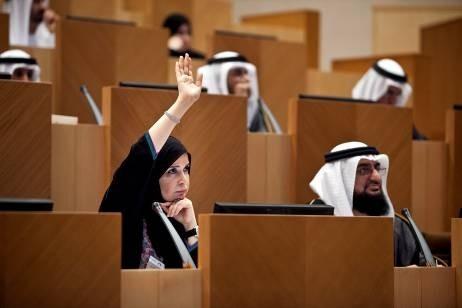
Democracy and the equal participation of men and women in the political arena are closely intertwined. No parliament or any decision-making body can claim to be representative without the participation of both men and women. As stated in the Universal Declaration on Democracy adopted by the Inter-Parliamentary Union’s Member Parliaments in 1997, "The achievement of democracy presupposes a genuine partnership between men and women in the conduct of the affairs of society in which they work in equality and complementarity, drawing mutual enrichment from their differences."
Recent years have seen a steady increase in the number of women in parliament, though the world average of less than 22 percent remains far from the goal of parity between women and men. The election of women to the highest positions of state and government in several countries has also contributed to the changing face of politics.
While the road to election is a difficult one, the challenges for women do not stop there. Once women enter parliament or other bodies, they are faced with many new challenges. Parliament is traditionally a male-oriented domain where the rules and practices have been written by men. It is, therefore, an ongoing challenge to transform parliament into a gender-sensitive environment, to ensure that actions are gender-sensitive and to guarantee that gender is mainstreamed throughout the legislature.
When Kylea Tink, Member for North Sydney, decried the “unconstructive noise and aggression” in Australia’s Parliament this week, she wasn’t merely venting frustration.

Prime Minister Fumio Kishida appointed a record-tying five women to ministerial posts in his Cabinet reshuffle on Wednesday, as well as one to a key position in the ruling Liberal Democratic Party, as he aims to increase female executives in politics

Barring any surprises, Mexico will elect its first ever female president next year.

While G20 leaders have announced the establishment of a new working group on the empowerment of women during the Brazilian G20 Presidency, the situation for Indian women tells a different story.

India is a nation born out of a long freedom struggle that promised to function on equal representation of people from diverse genders, religions, ethnicities Etc.

The absence of women in senior leadership roles is a critical and multidimensional issue that needs to be addressed as the socio-cultural landscape of Pakistan changes.

If we consider how to advance the status of women in Japan, we must consider it from two vantage points.

A prominent Australian politician says she has been subjected to ongoing harassment inside the nation's parliament.

The past twelve months or more have not been so good for women in senior political positions.