Today, the European Parliament has formally adopted the new EU law on gender balance on corporate boards. By 2026, companies will need to have 40% of the underrepresented sex among non-executive directors or 33% among all directors.
Democracy and the equal participation of men and women in the political arena are closely intertwined. No parliament or any decision-making body can claim to be representative without the participation of both men and women. As stated in the Universal Declaration on Democracy adopted by the Inter-Parliamentary Union’s Member Parliaments in 1997, "The achievement of democracy presupposes a genuine partnership between men and women in the conduct of the affairs of society in which they work in equality and complementarity, drawing mutual enrichment from their differences."
Recent years have seen a steady increase in the number of women in parliament, though the world average of less than 22 percent remains far from the goal of parity between women and men. The election of women to the highest positions of state and government in several countries has also contributed to the changing face of politics.
While the road to election is a difficult one, the challenges for women do not stop there. Once women enter parliament or other bodies, they are faced with many new challenges. Parliament is traditionally a male-oriented domain where the rules and practices have been written by men. It is, therefore, an ongoing challenge to transform parliament into a gender-sensitive environment, to ensure that actions are gender-sensitive and to guarantee that gender is mainstreamed throughout the legislature.
Today, the European Parliament has formally adopted the new EU law on gender balance on corporate boards. By 2026, companies will need to have 40% of the underrepresented sex among non-executive directors or 33% among all directors.
Women make up almost 49.6 per cent of the world's population.
Women running for election are more likely to be the victims of personalised, misogynistic abuse - online and at the doorstep - than their male counterparts.
ODIHR organizes this online event as part of the global 16 Days of Activism Campaign against Gender-based Violence.
Women’s representation in India’s Parliament is an important metric to evaluate progress in bridging gender inequities in the country.
The United Nations Security Council resolution 2250 (2015) on Youth, Peace, and Security unanimousl
Violence against women and girls remains the most pervasive human rights violation in the world, affecting more than 1 in 3 women—a figure that has remained largely unchanged over the last decade.
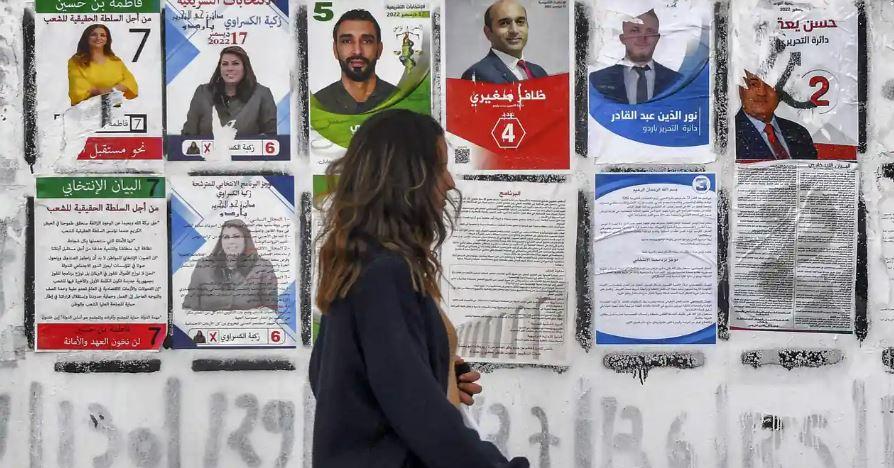
PETALING JAYA: Although women outnumber men in the electoral roll, they only make up 13.5% of candidates in the 15th General Election (GE15).
The Gender Equality Index developed by the European Institute for Gender Equality (EIGE) in 2013, is recognised in the European Union as an important tool for analysing the state of gender equality in a society as well as comparing current trends and the current situa