June 17, 2013
IN AFGHANISTAN, WORKING ACROSS PARTY, GENDER LINES TO BOOST WOMEN IN POLITICS
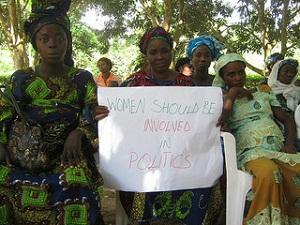
In a representative democracy, political parties function as a link between state institutions and local grassroots organizations. It is political parties that aggregate interests, present political alternatives and nominate candidates. As such, political parties play an essential role for the advancement of women and the promotion of equality. In this section, you will find information on the role of political parties in promoting women's political participation.
The International Institute for Democracy and Electoral Assistance (International IDEA) database on political finance regulation was originally created in 2003 and has since become the leading source of information on political finance regula tion worldwide.
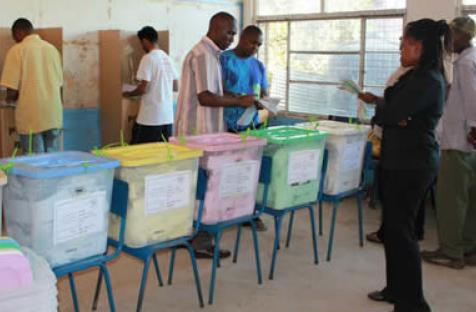
In Kenya’s male-dominated political landscape, women face many barriers to political participation, especially when seeking elective office.
The gender divide is systematic in Pakistan’s electoral system.
After gaining the right to vote and participate in elections in 1952, one would assume that more female politicians would be taking part in Lebanon’s administrative scene.
This primer offers an introduction to the intersection of gender and electoral financing.
According to a 2012 survey by the World Economic Forum, Pakistan is still considered to be one of the worst places in the world to be a woman.