Women’s Candidate Training Program: Trainer's Manual Nepal
This manual provides training tips and workshop techniques for political party trainers to train Nepali women candidates for local government.
In a representative democracy, political parties function as a link between state institutions and local grassroots organizations. It is political parties that aggregate interests, present political alternatives and nominate candidates. As such, political parties play an essential role for the advancement of women and the promotion of equality. In this section, you will find information on the role of political parties in promoting women's political participation.
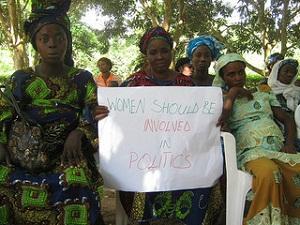
This manual provides training tips and workshop techniques for political party trainers to train Nepali women candidates for local government.
This report presents the research findings of a project conducted by the National Democratic Institute for International Affairs (NDI) and the Council for Asian Liberals and Democrats (CALD) on Political Party Strategies to Combat Corruption.
This paper considers the possible approaches to creating more effective and inclusive political parties. It focuses on the communication channels that parties can use to strengthen their relationships with citizens and to promote fair elections.
This code of conduct, agreed upon by the political parties of Macedonia, sets forth rules and standards for ensuring free and fair parliamentary elections. It focuses particularly on regulations relating to rule of law and electoral conduct.
This manual was prepared for a trainers workshop entitled, "Nominating for Change: Strengthening Women’s Position in Political Parties," delivered in Jakarta, Indonesia in March 2003.
The Parliaments on-Line (PARLINE database) has been developed by the Inter-Parliamentary Union and is regularly updated on the basis of official information provided by national parliaments.
This database contains information about the laws on funding of political parties for more than 100 countries in the world.
This International IDEA handbook aims to increase knowledge about the law and practice of political finance around the world in order to encourage reflection on options for regulatory reform.