Funding of Political Parties and Election Campaigns: A Handbook on Political Finance
All political parties need funding to play their part in the political process, yet the role of money in politics is arguably the biggest threat to democracy today.
In a representative democracy, political parties function as a link between state institutions and local grassroots organizations. It is political parties that aggregate interests, present political alternatives and nominate candidates. As such, political parties play an essential role for the advancement of women and the promotion of equality. In this section, you will find information on the role of political parties in promoting women's political participation.
All political parties need funding to play their part in the political process, yet the role of money in politics is arguably the biggest threat to democracy today.
This e-book with the title “The Success and the Barriers to Women’s Representation in Southeast Asia: Between State Policies, Political Parties and Women’s Movement” is a result of analysis of four regional r
This publication, published in 2013 by the International Institute for Elec
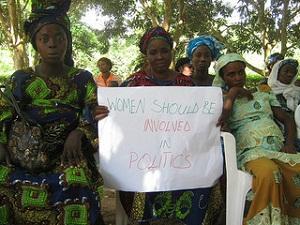
One of the persistent democratic deficits throughout the world is women’s lack of influence in politics. In relation to political parties in particular, the voice of women in decision-making remains insufficient, and, in some cases, is non-existent.
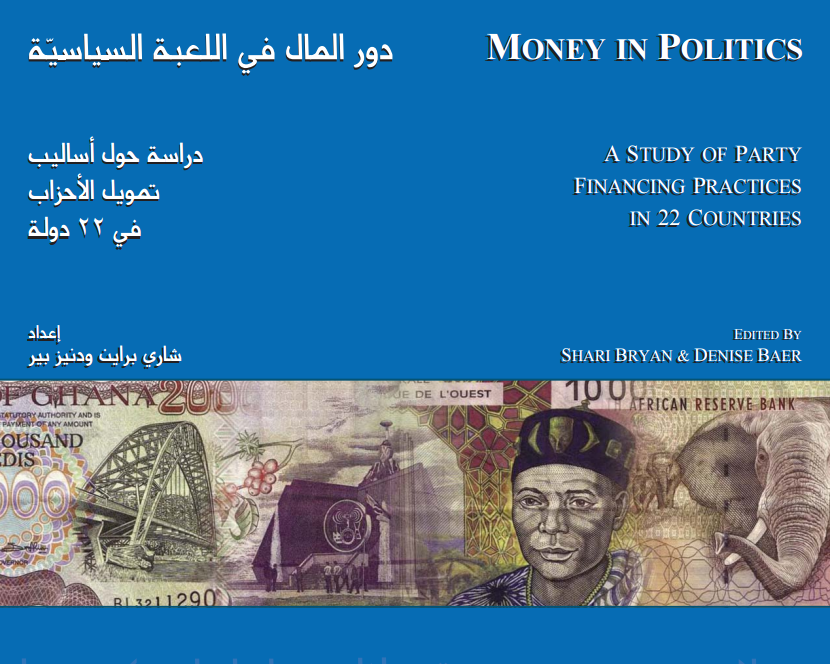
Corruption related to political party financing poses a great threat to democratic development worldwide.The study investigates party financing issues accross 22 countries.
Money is essential for the operations of political parties, and particularly affects candidates in electoral processes. Political financing regulations can effect women’s access to run as candidates, be elected, campaign and reach out to the population. Regulations on political funding are used to level the playing field in electoral competition. They can also work to ensure that women are able to compete on a more equal footing with men. This in turn may result in women’s increased political participation; a key feature of democracy.
IKAT US Component 1 lead by Partnership for Governance Reform in Indonesia (Kemitraan) and in partnership with the NDI for International Affairs along with regional partners: Indonesian Women's Coalition (KPI), Persatuan Komuniti Selangor (EMPOWER) from Malaysia, Women's Caucus from Timor Leste, the Cambodian Center for Human Rights (CCHR), the Center for Popular Empowerment from the Philippines work together to strengthen representative democracy and the political rights of women by advocating the promoti
How do we get more young women engaging in political parties? The Danish Institute for Parties and Democracy will be examining this question at its Copenhagen Seminar on Women in Politics in September 2012, for which a background paper will be prepared. Maryse Helbert, an expert from DIPD would like to use the iKNOW Politics platform to explore this topic and share information about positive and negative experiences.