Post-conflict and Transitional Participation

According to the Ploughshares, in 2005, armed conflicts raged in 27 countries. In five of them, casualties exceeded 100,000 people, and the indirect costs in human capital, infrastructure and effect on future development are beyond estimation. The transition period begins when wars end through negotiated settlements or other means. With international and regional assistance, parties seek ways to deter the cycle of conflict by establishing a stable government to protect and provide for its citizens.

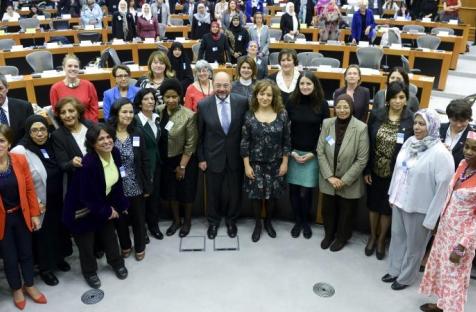
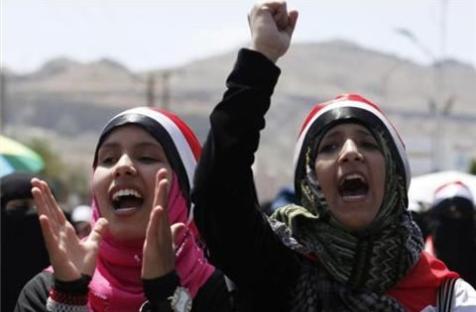
Formally and informally, women around the world are contributing to post-conflict reconstruction in the areas of security, justice and reconciliation, governance and socio-economic development. In 2000, the United Nations (UN) Security Council passed resolution 1325, a landmark decision mandating the participation of women in peace processes. Since the adoption of the resolution, awareness of the importance of including women in peace and reconstruction processes has grown enormously. Yet, implementation of the resolution’s mandate remains sporadic and ad hoc, and the gaps in practice are vast. Nonetheless, women’s participation in post-conflict reconstruction processes continues to increase.

In Sri Lanka, pressure by women’s organizations led to the establishment — within the structure of the formal negotiations — of a ten-member Subcommittee on Gender Issues in 2002. In Northern Ireland, women representatives were trusted as mediators during conflict negotiations, with such trust stemming from the women’s platform of respect for human rights, inclusion and equality. In Haiti, the women’s ministry and women’s organizations participated in a consultative process, resulting in the UN mission incorporating women’s priorities into its mandate and establishing the Disarmament, Demobilization and Reintegration Programme. In Rwanda, women formed the first cross-party parliamentary caucus composed of both Hutus and Tutsis, addressing issues of concern to women from all political parties. In Sierra Leone, a women’s task force was established to foster women’s participation in the design of the Truth and Reconciliation Commission and the special unit investigating war crimes. According to the World Bank, in Afghanistan, efforts by the international community and local women’s organizations have led to girls accounting for 40 percent of all children attending school in 2003, compared to only 9 percent before the war.

While significant and encouraging, such examples and best practices do not equate with the systematic inclusion of women in peace processes. It remains critical to amplify the role and contribution of women during political transitions to capitalize on this window of opportunity.

Tunisia: The Collective Making of a Constitution

Back
June 10, 2014

Tunisia: The Collective Making of a Constitution

Tunisia’s National Constituent Assembly (NCA) session held on 26 January 2014 did not put an end to disagreements among its members. However, it did represent the culmination of the work done by members.

Tunisia’s National Constituent Assembly (NCA) session held on 26 January 2014 did not put an end to disagreements among its members. However, it did represent the culmination of the work done by members.

June 9, 2014
Women’s Parliamentary Caucuses as agents of change

Nation-building processes cannot work and development goals cannot be achieved if women are denied meaningful political participation. To ensure this, Pakistan’s Parliament introduced in 2002 a 17 percent gender quota in all legislative houses.

June 9, 2014
US recognizes Arob Women

Bougainville women have been recognised by the United States Government for their outstanding contribution to peace building before, during and after the Crisis.

Una capacitación en Rescate y Primeros Auxilios en Viet Nam hace parte de la preparación para el riesgo de los desastres. Foto: ONU Mujeres
June 3, 2014
Lives saved in Viet Nam by involving women in disaster planning

Through the training of women in disaster management, as well as national lobbying, the contribution of women has been recognized and a government decree now gives the Women’s Union an official space in decision-making bodies.

Interviews

Event

May 14, 2014
Malian lawyer builds peace and hope

The stories of gang-rape, forced marriage and fathers being forced to rape their own daughters at gunpoint keep her awake at night. Saran Keïta Diakité has listened to countless women recount the atrocities that the people of her war-torn country (Mali

May 13, 2014
More Women Sit on the UN Security Council, but What Does It Mean?

As increasing numbers of women embark on careers as diplomats, the United Nations headquarters in New York is slowly but surely undergoing a big change in demographics: the female-to-male ratio of diplomats is becoming — dare it be possible — more balanced.

Event