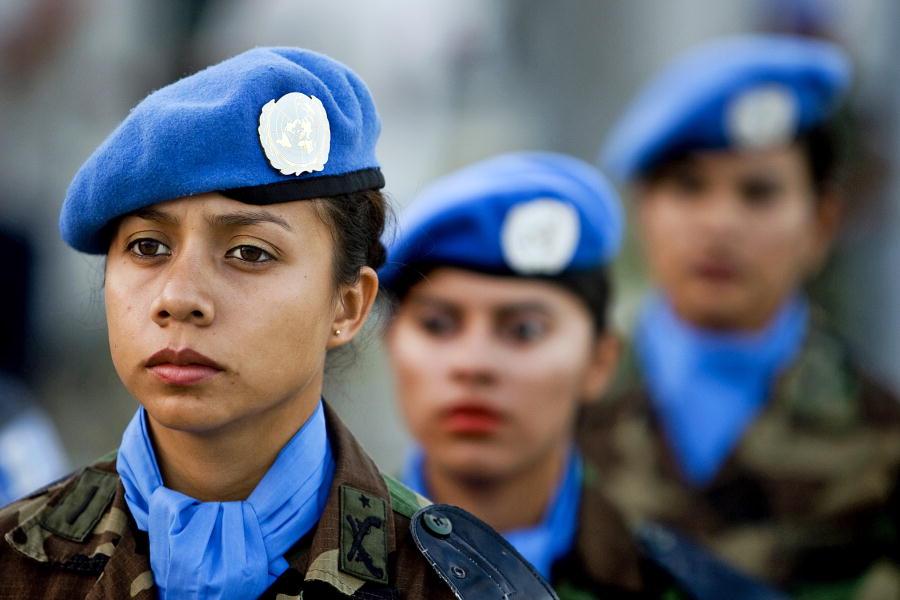
Post-conflict and Transitional Participation

According to the Ploughshares, in 2005, armed conflicts raged in 27 countries. In five of them, casualties exceeded 100,000 people, and the indirect costs in human capital, infrastructure and effect on future development are beyond estimation. The transition period begins when wars end through negotiated settlements or other means. With international and regional assistance, parties seek ways to deter the cycle of conflict by establishing a stable government to protect and provide for its citizens.

Formally and informally, women around the world are contributing to post-conflict reconstruction in the areas of security, justice and reconciliation, governance and socio-economic development. In 2000, the United Nations (UN) Security Council passed resolution 1325, a landmark decision mandating the participation of women in peace processes. Since the adoption of the resolution, awareness of the importance of including women in peace and reconstruction processes has grown enormously. Yet, implementation of the resolution’s mandate remains sporadic and ad hoc, and the gaps in practice are vast. Nonetheless, women’s participation in post-conflict reconstruction processes continues to increase.

In Sri Lanka, pressure by women’s organizations led to the establishment — within the structure of the formal negotiations — of a ten-member Subcommittee on Gender Issues in 2002. In Northern Ireland, women representatives were trusted as mediators during conflict negotiations, with such trust stemming from the women’s platform of respect for human rights, inclusion and equality. In Haiti, the women’s ministry and women’s organizations participated in a consultative process, resulting in the UN mission incorporating women’s priorities into its mandate and establishing the Disarmament, Demobilization and Reintegration Programme. In Rwanda, women formed the first cross-party parliamentary caucus composed of both Hutus and Tutsis, addressing issues of concern to women from all political parties. In Sierra Leone, a women’s task force was established to foster women’s participation in the design of the Truth and Reconciliation Commission and the special unit investigating war crimes. According to the World Bank, in Afghanistan, efforts by the international community and local women’s organizations have led to girls accounting for 40 percent of all children attending school in 2003, compared to only 9 percent before the war.

While significant and encouraging, such examples and best practices do not equate with the systematic inclusion of women in peace processes. It remains critical to amplify the role and contribution of women during political transitions to capitalize on this window of opportunity.

Engendering Macroeconomics and Macroeconomics Policies

Back
February 13, 2007

Engendering Macroeconomics and Macroeconomics Policies

This article discusses the relevance of gender in the context of macroeconomic analysis, arguing that macroeconomic policies are gender-biased in their effects and that gender inequalities at the micro- and meso- levels have macroeconomic implications.

This article discusses the relevance of gender in the context of macroeconomic analysis, arguing that macroeconomic policies are gender-biased in their effects and that gender inequalities at the micro- and meso- levels have macroeconomic implications.

Energy and Women: National Consultation for Swaziland

Back
February 13, 2007

Energy and Women: National Consultation for Swaziland

This report outlines the problems faced by women in the energy sector of Swaziland. It explores solutions for alleviating women's energy problems in the country and identifies means by which they can develop sustainable energy projects that can also lead to income generation.

This report outlines the problems faced by women in the energy sector of Swaziland. It explores solutions for alleviating women's energy problems in the country and identifies means by which they can develop sustainable energy projects that can also lead to income generation.

Energy and Women: Generating Opportunities for Development

Back
February 13, 2007

Energy and Women: Generating Opportunities for Development

This report is the result of the National Consultative Meeting that was held in Blantyre, Malawi in June 1999.

This report is the result of the National Consultative Meeting that was held in Blantyre, Malawi in June 1999.

Crisis Prevention and Recovery

Back
February 13, 2007

Crisis Prevention and Recovery

This report outlines key areas for mainstreaming gender in conflict or potential conflict situations. It argues that attention must be given to early-warning protection and assistance, the role of women in peace processes, and the full participation of women in post-crisis reconstruction.

This report outlines key areas for mainstreaming gender in conflict or potential conflict situations. It argues that attention must be given to early-warning protection and assistance, the role of women in peace processes, and the full participation of women in post-crisis reconstruction.

Constitutional Provisions and Enhancing Participation of Women in Elections

Back
February 12, 2007

Constitutional Provisions and Enhancing Participation of Women in Elections

This paper discusses the participation of women in post-conflict societies and examines the problems they face in their efforts to participate in elections. It also describes the legislative measures that have been taken in several countries to enhance the participation of women.

This paper discusses the participation of women in post-conflict societies and examines the problems they face in their efforts to participate in elections. It also describes the legislative measures that have been taken in several countries to enhance the participation of women.

Conflict and a Gendered Parliamentary Response

Back
February 12, 2007

Conflict and a Gendered Parliamentary Response

This article advances the argument that parliaments confronting situations of crisis and recovery benefit from integrating a gender perspective into their core functions.

This article advances the argument that parliaments confronting situations of crisis and recovery benefit from integrating a gender perspective into their core functions.

Partnerships for Gender Equality: The Role of Multilateral and Bilateral Agencies in Africa

Back
February 12, 2007

Partnerships for Gender Equality: The Role of Multilateral and Bilateral Agencies in Africa

This report documents the work of various multilateral and bilateral donors in Africa to meet the goals set forth during the Beijing +10 Conference.

This report documents the work of various multilateral and bilateral donors in Africa to meet the goals set forth during the Beijing +10 Conference.

Women in Mongolia: Mapping Progress Under Transition

Back
February 12, 2007

Women in Mongolia: Mapping Progress Under Transition

This case study describes the experiences of Mongolian women in the context of the political and economic transformation of their country. It analyzes the current status of these women and describes what they need to do to advance within their society.

This case study describes the experiences of Mongolian women in the context of the political and economic transformation of their country. It analyzes the current status of these women and describes what they need to do to advance within their society.

Pathway to Gender Equality: CEDAW, Beijing and the MDGs

Back
February 9, 2007

Pathway to Gender Equality: CEDAW, Beijing and the MDGs

This handbook provides a preliminary mapping of gender equality issues as raised by each of the Millennium Development Goals (MDGs).

This handbook provides a preliminary mapping of gender equality issues as raised by each of the Millennium Development Goals (MDGs).