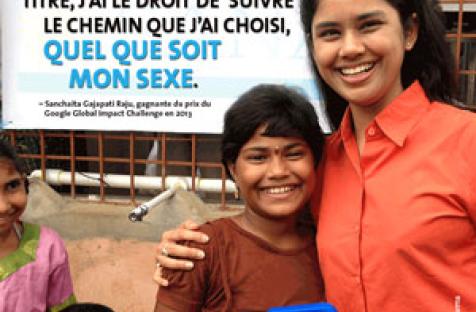
Women's Leadership
THIRTY Bahraini women are being trained to contest the upcoming parliamentary and municipal elections.
The four-phase programme, organised by the Supreme Council for Women (SCW), focuses on skills training, political empowerment of women, knowledge sharing and simulation activities.
Nine Bahraini women have confirmed their candidacy for the upcoming parliament and municipal council elections.
However, they said they will reveal their election campaigns closer to the polls, which are expected to take place in November.
The National Institute of Legislative Studies (NILS) has identified the low number of women in Nigerian parliament as the reason for the failure of gender-based bills in the legislature, adding that it is unacceptable that only seven per cent of lawmakers are women.
The Tibetan Women's Association and its global network of regional chapters said they have successfully organized a series of actions during the 33rd Kalachakra initiation offered by His Holiness the Dalai Lama and held in Ladakh from July 03-14, 2014.
Various stakeholders have stressed the need for greater participation of women in politics by introducing pro-women legislation, policy frameworks and advocacy mechanisms.
Apparently, some people feel that Datuk Seri Dr Wan Azizah Wan Ismail may not be a suitable candidate for the Selangor menteri besar post because she suffers from “uzur syarie” (menses).
Watching glamorous women walk through the doors of No 10 will inspire a whole new generation of young girls to become politicians, Esther McVey has said.
Gender-Specific Election Violence: The Role of Information and Communication Technologies
Pagination
- Previous page
- Page 383
- Next page