Political Participation of Indigenous Women: A Pending Debt of Panamanian Democracy
Source: International IDEA
Democracy cannot be measured solely by the right to vote. It must also be measured by who participates in decision-making, who has access to spaces of power, and what obstacles continue to prevent certain voices from being heard.
In Panama, women represent approximately half of the voter roll and actively participate in democratic life. However, they hold less than 14% of elected public offices. While this reality represents a challenge for women in general, the hurdle takes on different dimensions for indigenous women. According to the 2023 Census, 352,292 indigenous women live in the country, representing 50.5% of the national indigenous population. Many of the social, economic, and territorial gaps take on a distinct form in their lives, especially during childhood and old age. Their opportunities to participate, lead, and exert influence are conditioned by intersecting and mutually reinforcing gender, economic, geographic, and cultural inequalities.
In the frame of International Day of the World's Indigenous Peoples, this reality invites us to ask an essential question for democratic strengthening: Are we creating the conditions so that indigenous women can participate and exert influence with equal opportunities in decision-making spaces?
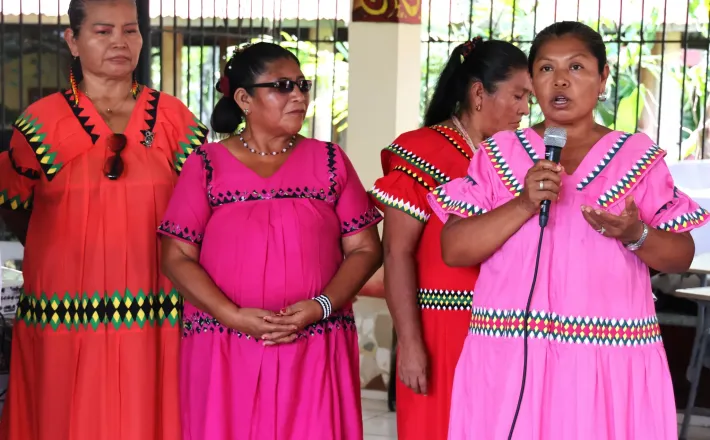

Hear from women leading change in the political space share their experiences and insights.

Explore a wide-range of audio-visual resources on key topics of gender equality.
Hear from a diverse list of panelists and guests as they reflect on critical issues pertaining Women in Politics.