National environments shaping the women who serve should be a central part of discussions about the future of peace operations.
Fundamental shifts are taking place in conversations about the future of peacekeeping. Geopolitical tensions, funding cuts and a legitimacy crisis are prompting questions about whether international peace operations remain effective and relevant.
There is also a growing recognition that traditional peacekeeping approaches do not resolve the political dynamics and local complexities of a conflict, with unique and disproportionate consequences for women and children. Policymakers and global security experts are opting for narrower mandates and more agile interventions to ensure operations are more context-specific and demand-driven.
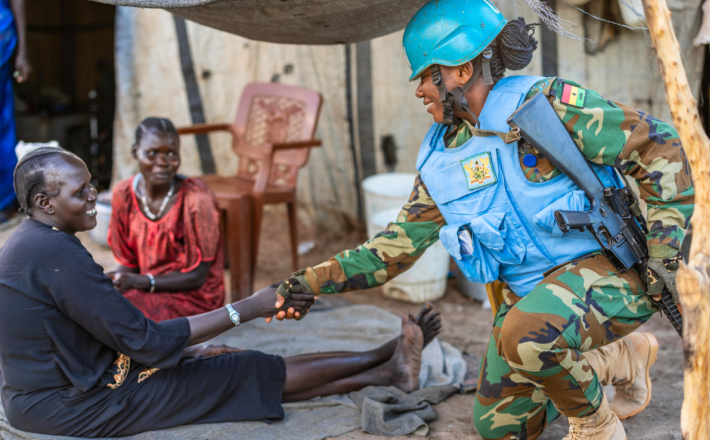
What appears to be missing from these conversations, however, is a focus on the people who serve and the impact of their background, skills and experience on a mission’s effectiveness.
Conflict is gendered – in how it is experienced and perpetuated, and how peace is negotiated. The personnel deployed to address conflicts need to reflect that reality. Research consistently shows that the quality and diversity of peacekeepers, not just their numbers, determine whether operations have the skills and legitimacy to meet their mandates, and above all, protect civilians.
It is precisely this reality that the Women, Peace and Security (WPS) agenda was designed to address. Established by the United Nations (UN) Security Council in 2000 and rolled out on the continent through African Union (AU) frameworks, the WPS agenda promotes women’s participation and protection in conflict settings. That agenda has long faced implementation gaps and is now under increasing threat.

Hear from women leading change in the political space share their experiences and insights.

Explore a wide-range of audio-visual resources on key topics of gender equality.

Hear from a diverse list of panelists and guests as they reflect on critical issues pertaining Women in Politics.