Women in politics face more personal, sexualised attacks than men, a recent analysis shows
Source: Nation Africa
Online spaces, and social media in particular, are forums for vigorous political debate. They provide a space for members of the public to express political opinions, organise, and sometimes even interact directly with politicians. While they clearly have democratising potential, these platforms have also become fertile ground for hate speech, toxic interactions and online violence.
By analysing over 3.2 million responses on X (formerly Twitter) to 88 candidates for the 2024 European Parliament elections, our team at the European Commission’s Joint Research Centre have found significant differences in how women and men in politics get treated online.
Applying a toxicity detection algorithm called Perspective API, we studied both the volume and types of “toxic” replies received by different candidates. The algorithm’s toxicity score ranges from zero to one. It estimates the likelihood that a reader would perceive text as toxic, and defines toxicity as “a rude, disrespectful, or unreasonable comment that is likely to make you leave a discussion”.
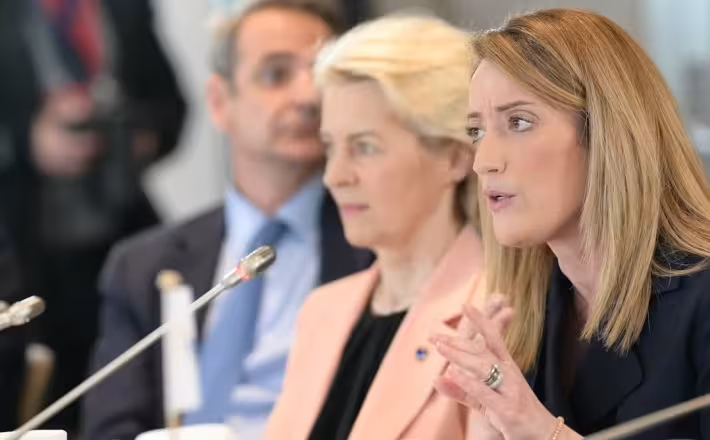

Hear from women leading change in the political space share their experiences and insights.

Explore a wide-range of audio-visual resources on key topics of gender equality.
Hear from a diverse list of panelists and guests as they reflect on critical issues pertaining Women in Politics.