The decisions that shape everyday life, from the availability of childcare to investment in safe drinking water, are still made in political institutions where women hold a minority of seats. Figures supplied by UN Women show that women occupy just 27.5 per cent of parliamentary positions worldwide and 22.4 per cent of Cabinet posts leading policy areas, revealing the distance between commitments to equality and the distribution of political power.
Women's equal participation is central to the Sustainable Development Goals for 2030, with representation carrying consequences far beyond the numbers recorded after an election. A seat in government gives women a direct role in setting spending priorities, shaping public services and writing the laws that affect their lives, responsibilities that remain unevenly shared across much of the world.
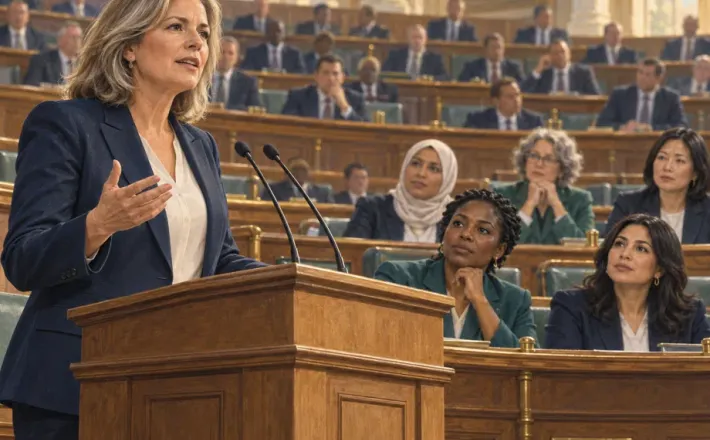

Hear from women leading change in the political space share their experiences and insights.

Explore a wide-range of audio-visual resources on key topics of gender equality.
Hear from a diverse list of panelists and guests as they reflect on critical issues pertaining Women in Politics.