5059: Armenia, 06/30/2026, Referendum

| Quota Information | Parliament Information | ||
|---|---|---|---|
| Are there legislated quotas? | Yes | Structure of parliament | Bicameral |
| For the Single/Lower House? | Yes | >Current members | 107 |
| Percentage of women | 35.51% | ||
| Source: Gender Quotas Database | Source: New Parline | ||
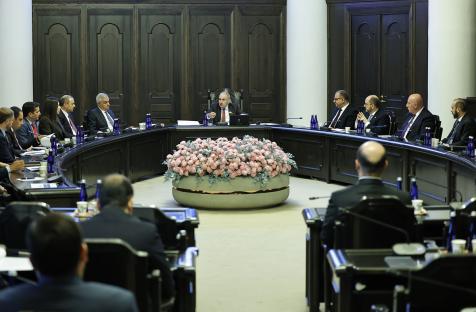
As Armenia moves toward another electoral cycle, the issue of women’s political participation has once again returned to the center of public debate.
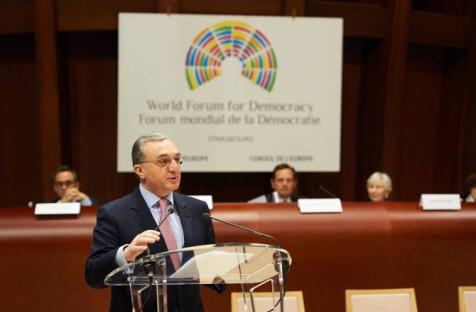
YEREVAN, NOVEMBER 23, ARMENPRESS. Armenia’s caretaker foreign minister Zohrab Mnatsakanyan has delivered remarks at the Plenary Session of World Democracy Forum “Women, security and democratization in the context of multilateralism”.
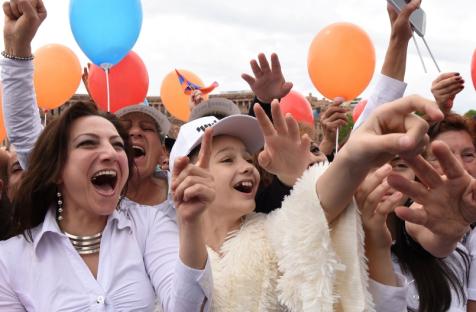
This past spring, as Armenia erupted in protests that would eventually oust the country’s longtime leader, women took to the streets in droves.
Use of the terms “gender” and “gender equality” in Armenia’s new law equal rights stirred major discontent among those believing that the ambiguity of the words set a legal ground for gradual destruction of Armenian families.
Armenian sociologist characterized adoption of gender equality law as a senseless and dangerous move.
To many, it may come as no surprise. Politics is a man’s world in the South Caucasus, where women remain a legislative minority, according to recent data from the World Bank.
On May 7, 2013, USAID/Armenia, Yerevan State University (YSU) and Arizona State University (ASU) marked the official op
The "Women in Local Democracy" Project addresses women’s representation and meaningful participation in decision-making processes in Armenia. WiLD is comprised of three main dimensions: women’s empowerment, strengthening the capacity of local government, and promotion of gender equality.
A gender quota law for political parties is putting more women on the ballot in the May 12 elections in Armenia, where only seven women serve in Parliament. Observers say women are now playing a wider role in local politics
Public opinion polls show 46.6% of respondents believe Armenian women are discriminated, while 41.1% disagree with this opinion, said head of Caucasus Research Center while presenting a “Survey on Gender Dimension of Civic and Political Participation in Armenia”.
Public opinion polls show 46.6% of respondents believe Armenian women are discriminated, while 41.1% disagree with this opinion, said head of Caucasus Research Center.
A group of women intelligentsia has initiated a daily silent sit-in at Yerevan’s central Liberty Square, which according to its organizers, is the logical continuation of Heritage Party leader Raffi Hovannisian’s 15-day hunger strike staged in the same location last month.
Over 150 women leaders from civil society, government, academia, and political parties convened in Yerevan on May 18 for a two-day conference organized by the National Democratic Institute (NDI) and USAID, with support from the British Embassy and the United Nation
U.S. Ambassador Marie Yovanovitch made a case for a greater involvement of women in Armenia's political life on Wednesday, saying that is a necessary condition for democratization and the rule of law.
Armenian Prime Minister Tigran Sargsyan calls on all political forces to include more women in the list of candidates standing for parliamentary election.
More than 300 Armenian women from different political parties, civic organizations, government agencies and geographic regions came together for a two-day conference in Yerevan last month to discuss policy solutions to the challenges they all face.