5047: Bangladesh, 02/12/2026, Referendum

| Quota Information | Parliament Information | ||
|---|---|---|---|
| Are there legislated quotas? | Yes | Structure of parliament | Bicameral |
| For the Single/Lower House? | Yes | >Current members | 350 |
| Percentage of women | 20.86% | ||
| Source: Gender Quotas Database | Source: New Parline | ||
Seven women candidates, majority of them from the BNP, have been elected to Bangladesh parliament in the 13th national election, a media report said on Friday.
It is a striking paradox. For more than three decades, Bangladesh has been led by women—an exceptional continuity across the globe. Yet the outcome of the 13th national election tells a different story.
Concerns Over Women's Political Representation
DHAKA – As the dust settles on Bangladesh’s 13th National Parliamentary Election, with the Election Commission (EC) declaring the 297 candidates elected to our parliament, a major source of disappointment rema
As Bangladesh awaits the result of the 2026 national parliamentary election, one statistic should give us pause. Only 78 women are contesting the election — just under 4% of nearly 2,000 candidates.
A global wave of Gen Z-led protests have called for a fundamental restructuring of government and politics.
Despite decades of pledges to ensure women’s political empowerment, the upcoming national election paints a starkly different picture, with female representation on the ballot remaining alarmingly low.
A 2025 Democracy International poll shows strong public demand in Bangladesh for greater political inclusion, with 96% supporting participation of persons with disabilities, 85% calling for better ethnic minority representation, and 81% backing stronger involvement of r
Human Rights Watch (HRW) has raised alarms over an increase in violence targeting women, children, and religious minorities in Bangladesh as the country prepares for the 13th National Parliamentary Elections scheduled for February 12.
The political structure and processes in Bangladesh remain predominantly patriarchal and under male control.
Speakers at a press conference on Monday said women’s participation in the upcoming election is extremely disappointing, despite some independent female candidates joining the race at the last moment.
Despite women being at the forefront of the August 2024 uprising that toppled the Awami League government, political parties have largely failed to honour their pledge to nominate at least 5 percent women candidates in the parliamentary election.
Women remain largely absent from the electoral race, with 30 of the 51 political parties contesting the upcoming national election fielding no female aspirants at all, Election Commission data shows.
The Royal Norwegian Embassy andthe Embassy of Switzerland in Bangladesh, in collaboration with UN Women,hosted a high-level dialogue titled "Power Without Fear: Ending Digital and Gender-Based Violence Against Women in Politics" as part of the global 16 Days of Activism
Despite calls for inclusive governance, women and youth remain underrepresented in national politics; experts urge the government to address structural barriers, harassment, and tokenistic participation that limit meaningful engagement and hinder the
DHAKA, Sept 23, 2025 (BSS)- Narir Rajnoitik Odhikar Forum (NROF) today demanded that political parties must nominate 33 percent women candidates mandatorily outside the reserved seats in the 13th Jatiya Sangsad elections.
In a bold and unprecedented electoral gambit, Jamaat-e-Islami is deploying its vast, grassroots women’s wing as a central pillar of its strategy for the upcoming national elections signalling a seismic shift in Bangladesh’s political calculus.
The Women's Political Rights Forum has submitted six-point demands to the Election Commission (EC), calling for electoral reforms ahead of the 13th national elections.
Speakers at a press conference have called on the political parties to reconsider their stance on reserved seats for women in the Jatiya Sangsad (parliament).
In Bangladesh, the Forum for Women’s Political Rights has called for comprehensive electoral reforms to ensure fair and inclusive representation of women in the political arena.
In the aftermath of Bangladesh’s historic student-people's uprising in July 2024 that led to the removal of then Prime Minister Sheikh Hasina
Thousands of members of an Islamist group protested proposed gender equality reforms in Bangladesh over the weekend.
The Bangladesh Nationalist Party strongly disagreed with the Constitutional Reform Commission on its proposal for a quota of 10 per cent parliamentary seats for young candidates.
The landscape of women leadership in Bangladesh presents a paradox: despite notable female figures in key political positions, the overarching advancement of women into leadership roles remains stagnant. Despite having a female prime minister, a female speake
TOKYO -- Two strong, prominent female leaders have found themselves facing very different political futures in neighboring countries on the Bay of Bengal.
Since the restoration of democracy in 1991, the reins of the government have always been in the hands of a woman (except during the state of emergency in 2007-08).
In November 2023, an online video showed Prime Minister Sheikh Hasina in Medina, Saudi Arabia, being greeted with slogans of "Bhua, bhua." The original footage of the prime minister's Medina visit had no such sounds in the background, and the audio was fou
Although two women — Sheikh Hasina and Khaleda Zia — served as prime ministers of Bangladesh for 31 out of 33 years since 1991, the representation of women in national politics is still negligible.
It is truly disheartening to observe the glaring absence of female candidates vying for political office in the upcoming general elections.
Normal
0
false
-->
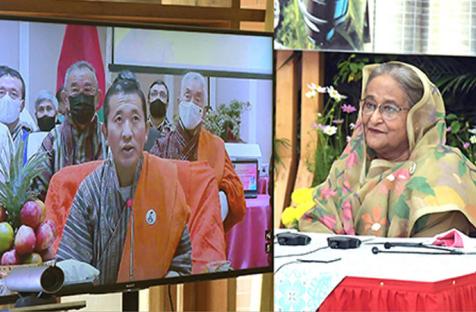
Bhutanese Prime Minister Dr Lotay Tshering today lauded Bangladesh for making striking economic recovery from the COVID-19 pandemic crediting the success to Prime Minister Sheikh Hasina’s leadership.
Bangladesh Prime Minister Sheikh Hasina
Bangladesh ranks 7th in the world in the political empowerment of women.
Romida Begum sat on a chair in her tent home. Nearby, her older male assistant eyed her with a sideways glance. Romida – 27, a woman, and a refugee – couldn’t help but smirk: for once in her life, she was in charge.
There is broad consensus that women’s increased participation in politics is necessary for both the democratic development of the country, as well as women’s empowerment in Bangladesh.
Two powerful women – Sheikh Hasina and Khaleda Zia – have dominated Bangladeshi politics for decades, but the South Asian country's women are still underrepresented in parliament and are politically marginalized.
Narayanganj, Bangladesh — This Muslim-majority nation may have a female prime minister, but at the local level it remains difficult for women to gain and hold political power.
The 10th parliamentary polls see 17 women candidates elected, according to unofficial results of the election. The number is just one less than the historic high of the 2008 election, when 18 women were elected.
Prime Minister Sheikh Hasina has said she has been granted permission by the president to lead the polls-time government. President Hamid has granted her the permission, she said on Wednesday evening during the 19th session of 9th Parliament.
Prime Minister Sheikh Hasina Friday stressed equal participation of women alongside men in political decision making as this only could help achieve the real development and progress of a nation.