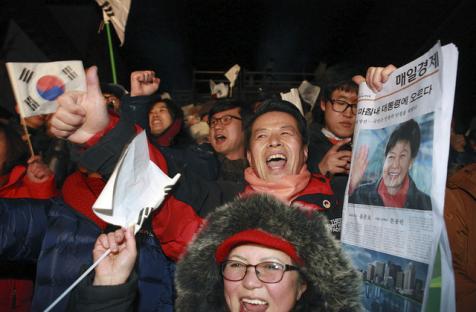
South Korea's president-elect Park Geun-Hye is joining a long list of Asian women whose rise to power has, to varying degrees, been founded on the political legacy of a male sibling, father or husband.
East Asia and the Pacific
A large number of women activists and students on Friday marched towards Rashtrapati Bhavan to protest against the gang-rape of a young girl in a moving bus and demand stringent action against rapists.
Three days before South Korea elected a woman president, Japanese voters significantly reduced the number of women in parliament. As a result of Sunday’s vote, the new lower house will have 38 women, or 7.9% of all lawmakers in that chamber.
Women parliamentarians from both sides of the aisle criticised Pakistan Tehrik-i-Insaaf chairman Imran Khan on Monday over his remarks against reserved seats for women and challenged him to compare his educational credentials with theirs.
Parliament on Tuesday expressed shock and outrage over the barbaric gangrape of a girl inside a moving bus in south Delhi with strong demands being made for capital punishment to perpetrators of such heinous crimes.
Park Geun-hye's election as South Korea's first female president could mean a new drive to start talks with bitter rival North Korea, though it's unclear how much further she will go than the hard-line incumbent, a member of her own conservative party.
Park Geun Hye was elected president of South Korea, becoming the first woman to lead Asia’s fourth- biggest economy more than 30 years after her father’s rule as dictator ended with his assassination.
Conservative candidate Park Geun-hye claimed victory Wednesday in South Korea's presidential election, a result that will make her the country's first woman president.
The return to power of Japan’s conservative and hard-line Liberal Democratic Party (LDP) on Sunday indicates that voters traded urgently needed social and environmental reforms for traditional male-led leadership, according to analysts here.
Pagination
- Previous page
- Page 38
- Next page