
The first time Karla Hernandez ran for office in El Salvador, she kept seeing a male candidate from her party in expensive television adverts, while she scraped by on a shoestring - relying on volunteers to hand out flyers and knock on doors.
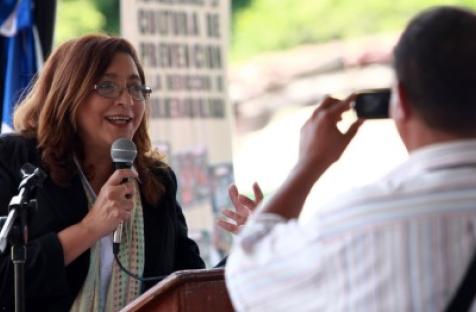
Ana Luisa Rodríguez de González has already served four terms as the mayor of Atiquizaya. She won her first election in 2003. In that same year, of the 262 municipal councils holding elections, only 15 were led by women.
June 12, 2014 became a landmark date in the history of El Salvador and marked a victory for Betty Pérez, coordinator of the Salvadoran National Indigenous Coordinating Council (CCNIS).
El Salvador's left-wing presidential candidate, Salvador Sánchez Cerén, for the Farabundo Marti Front for National Liberation (FMLN), won 49 percent of the vote, just short of the majority needed t
In Honduras and El Salvador, a spotlight on efforts towards addressing electoral challenges through trainings for candidates.
Highlighting news, interviews, resources and events on violence against women in politics
30 Years of Democracy: Riding the Wave? Women’s Political Participation in Latin America. “Ginger Rogers did everything Fred Astaire did, except backwards and in high heels.”
This publication draws together the experiences and lessons learnt by Central American women working on promoting gender equity in local government.
This report describes lessons learned from the implementation of gender equity policies in some Latin American countries and provides recommendations on how to hold successful advocacy campaigns.