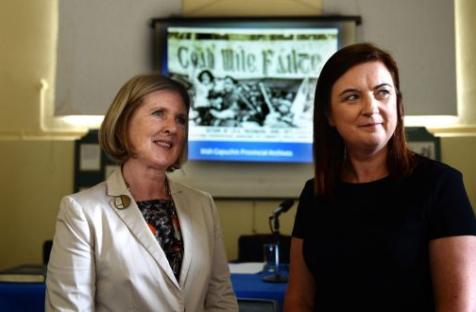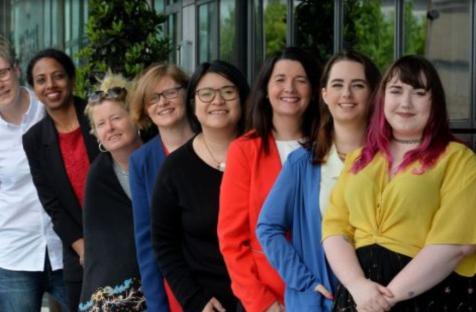
Why does a lower proportion of women get elected than stand for election? That was a key question posed at a meeting held in Dublin to discuss the barriers facing women entering politics, in the wake of the recent local elections.
It’s been suggested that the rise of women's interest in Irish politics could have been directly attributable to the introduction of gender quotas.
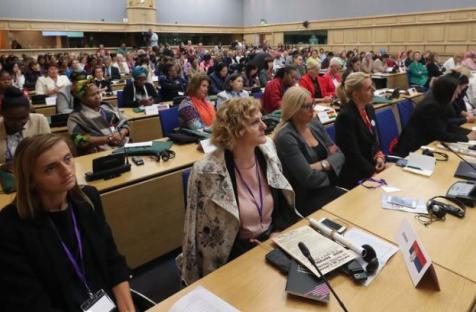
Over 90 women parliamentarians from around the world, as well as members of Irish civil society groups, women in sport and in business have gathered at Dublin Castle for the first International Congress of Women's Caucuses.
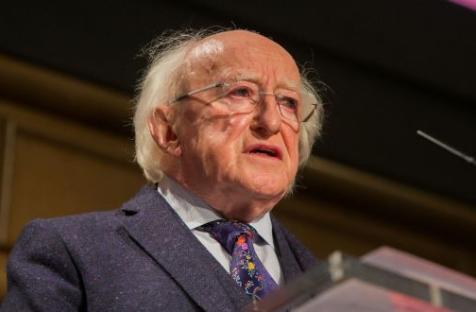
"The proportion of women in national parliaments will be a key measure of success in achieving gender equality and would spur, in turn, further progress”, President Michael D Higgins has said.
Gender quotas should be introduced next year for the local elections, the National Women’s Council of Ireland (NWCI) has said.
By Shawn McCreesh,
By Shawn McCreesh,
The Irish Women's Parliamentary Caucus will host the first International Congress of Parliamentary Women's Caucuses.
This year marks the centenary of the Representation of the People Act 1918 which gave the vote to all British and Irish men over 21 and women over 30 who met minimum property or education qualifications.