Gender rating of political parties of Kyrgyzstan


| Quota Information | Parliament Information | ||
|---|---|---|---|
| Are there legislated quotas? | Yes | Structure of parliament | Bicameral |
| For the Single/Lower House? | Yes | >Current members | 88 |
| Percentage of women | 20.45% | ||
| Source: Gender Quotas Database | Source: New Parline | ||
Normal
0
false
-->
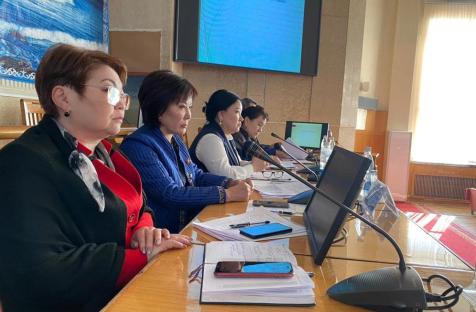
On 21-22 August, women leaders, politicians and civil servants from all provinces of Kyrgyzstan gathered at the second National Forum Women's Leadership – A Breakthrough into a New Era.
Within the first two weeks of 2020, three women were beaten to death by their husbands or partners in Kyrgyzstan. Sadly, these were not isolated incidents.
In 2017, Kyrgyzstan faced a critical turning point in the country's history. For the first time, an elected president would willingly hand power to an elected successor.

Women in Kyrgyzstan face stark barr
The U.S. isn’t the only country deep into an election season.
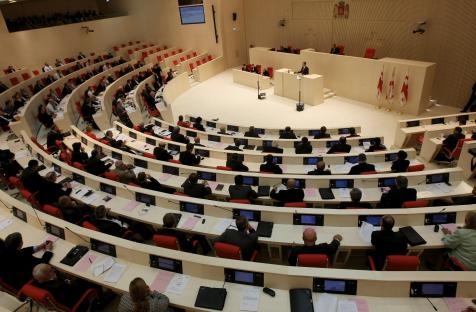
Even though Kyrgyzstan has had a female president and women hold 23 percent of the seats in its 120-member parliament, women are still struggling to carve out leadership roles in the legislature and political parties.
“Kyrgyzstan would not have prosperity without women’s support, Omurbek Tekebayev, deputy head of the interim government said Monday at the National Conference “Women political participation in constitutional reform and parliamentary elections”.
Some 200 people took to the streets in a northern Kyrgyz province earlier this week to protest the longstanding practice of bride kidnapping. The custom -- in which single young men kidnap their bride of choice and pressure them to agree to marriage -- is not uncommon in Kyrgyzstan.
Kyrgyz female civil-society activists called on the supporters of the second- and third-place presidential candidates Kamchybek Tashiyev and Adakhan Madumarov to stop demonstrations in the south.
Even though Kyrgyzstan has had a female president and women hold 23 percent of the seats in its 120-member parliament, women are still struggling to carve out leadership roles in the legislature and political parties.
Highlighting news, interviews, resources and events on violence against women in politics
“Kyrgyzstan would not have prosperity without women’s support, Omurbek Tekebayev, deputy head of the interim government said Monday at the National Conference “Women political participation in constitutional reform and parliamentary elections”.
Some 200 people took to the streets in a northern Kyrgyz province earlier this week to protest the longstanding practice of bride kidnapping. The custom -- in which single young men kidnap their bride of choice and pressure them to agree to marriage -- is not uncommon in Kyrgyzstan.
Kyrgyz female civil-society activists called on the supporters of the second- and third-place presidential candidates Kamchybek Tashiyev and Adakhan Madumarov to stop demonstrations in the south.
A four-day OSCE-supported train-the-trainers event on women’s leadership and political party participation took place in Issyk-Kul province, Kyrgyzstan, from 21 to 24 May.
On October 10th, Kyrgyzstan will choose a new parliament in what are said to be the 'most competitive' elections this region has seen in years.