Nicaragua

Open Society Foundation
November 29, 2023
New fund to advance women's political leadership

Suyen Barahona, as president of the Nicaraguan Unión Democrática Renovadora (UNAMOS), was kidnapped and sent to the country’s infamously grim El Chipote prison for 606 days.

April 1, 2022
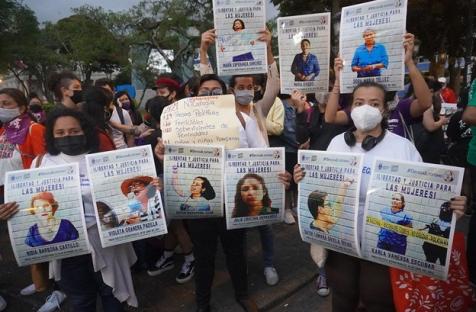
Feminist outcry for Nicaragua’s female political prisoners

Relatives of opposition members imprisoned by the regime addressed the panel, decrying the poor treatment and different types of torture the female prisoners suffer.

November 19, 2013
A ‘Head Start’ for Women Mayors and Councilors in Nicaragua

A revision to Nicaragua’s law on municipal elections last year required political parties to put up equal numbers of women and men as candidates for mayor and city council. It also increased the number of city council seats in each municipality.

Event

Women and Local Democracy - Lessons from Central America

Back
May 21, 2009

Women and Local Democracy - Lessons from Central America

This publication draws together the experiences and lessons learnt by Central American women working on promoting gender equity in local government.

This publication draws together the experiences and lessons learnt by Central American women working on promoting gender equity in local government.

Promoting Gender Equity in Local Governance – a Toolkit

Back
May 21, 2009

Promoting Gender Equity in Local Governance – a Toolkit

This report describes lessons learned from the implementation of gender equity policies in some Latin American countries and provides recommendations on how to hold successful advocacy campaigns.

This report describes lessons learned from the implementation of gender equity policies in some Latin American countries and provides recommendations on how to hold successful advocacy campaigns.

Making Justice Democratic

Back
May 21, 2009

Making Justice Democratic

This report explores how the poorest and most excluded communities can get access to justice that is appropriate, gender-sensitive and accountable, can enjoy personal safety and security for their property, and exercise their full human rights.

This report explores how the poorest and most excluded communities can get access to justice that is appropriate, gender-sensitive and accountable, can enjoy personal safety and security for their property, and exercise their full human rights.