January 12, 2026
Tajikistan Ranks 89th in Global Women’s Security Index
Tajikistan ranked 89th out of 181 countries in the
Tajikistan ranked 89th out of 181 countries in the
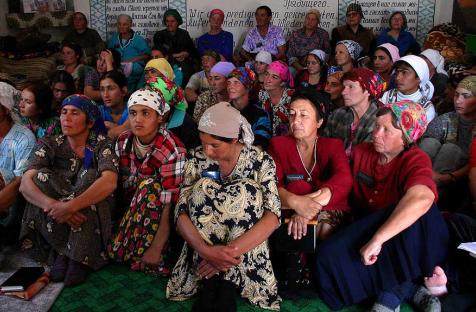
Many women in Tajikistan are subject to all-encompassing control over nearly every aspect of their daily lives: from husbands, family members, and the state.
Normal
0
-->

| Quota Information | Parliament Information | ||
|---|---|---|---|
| Are there legislated quotas? | No | Structure of parliament | Unicameral |
| For the Single/Lower House? | No | >Current members | 63 |
| Percentage of women | 26.98% | ||
| Source: Gender Quotas Database | Source: New Parline | ||
Tajikistan ranked 89th out of 181 countries in the
Many women in Tajikistan are subject to all-encompassing control over nearly every aspect of their daily lives: from husbands, family members, and the state.
Normal
0
-->
Despite legislation designed to secure gender equality, women rarely make it beyond deputy positions in the Tajik government, and instead remain stuck in the lower ranks or hit a glass ceiling after reaching middle management.
Tajikistan's Islamic Renaissance Party (IRP), the only officially registered Islamic party in Central Asia, wants to boost its two-seat presence in the Tajik parliament in the next elections, scheduled for February 2010.
Female representatives from all registered political parties in Tajikistan who took part in the Human Dimension Seminar held by the OSCE Office for Democratic Institutions and Human Rights on 18-20 May 2011 in Warsaw, issued a joint statement outlining a strategy for boosting women's participati
Highlighting news, interviews, resources and events on violence against women in politics
Despite legislation designed to secure gender equality, women rarely make it beyond deputy positions in the Tajik government, and instead remain stuck in the lower ranks or hit a glass ceiling after reaching middle management.
Despite legislation designed to secure gender equality, women rarely make it beyond deputy positions in the Tajik government, and instead remain stuck in the lower ranks or hit a glass ceiling after reaching middle management.
Tajikistan's Islamic Renaissance Party (IRP), the only officially registered Islamic party in Central Asia, wants to boost its two-seat presence in the Tajik parliament in the next elections, scheduled for February 2010.
Female representatives from all registered political parties in Tajikistan who took part in the Human Dimension Seminar held by the OSCE Office for Democratic Institutions and Human Rights on 18-20 May 2011 in Warsaw, issued a joint statement outlining a strategy for boosting women's participati