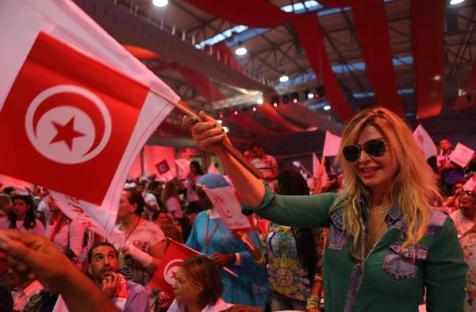
International IDEA’s West Asia and North Africa programme began in 2011 and has been working to support women in politics since as the objective of gender equality is indivisible from International IDEA’s goal of sustainable democracy worldwide.
Tunisia
In a life spanning colonial rule, war, autocracy and revolution, Tunis resident Halima never saw a reason to vote.
Tunisia, despite being the most advanced Arab nation in terms of women's rights, is still fare from adhering fully to the principles enshrined in the January 2014 Constitution and from abiding by the ratification of international treaties in daily life.
Tunisian laws protect women’s equality more than the laws of most other countries of the Arab world.
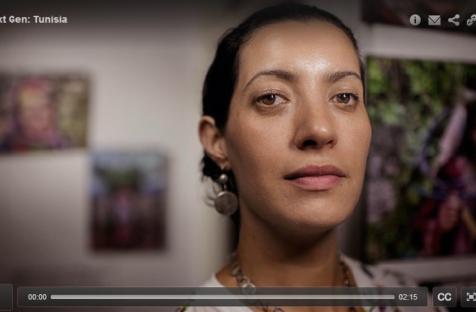
Ikram Ben Said took part in the Arab Spring's first successful uprising — and then realized that the struggle for women's rights in Tunisia was just beginning
Two thirds of Tunisians support women's participation in political life, according to the results of a survey presented Saturday in Tunis.
The new Constitution of Tunisia was adopted by an overwhelming majority of the country’s National Constituent Assembly on Sunday evening, January 26 2014, and signed and promulgated in a ceremony at the Assembly on January 27 2014.
Tunisia's new constitution could usher in momentous change for women, following the adoption of a clause which guarantees gender equality in legislative assemblies and for steps to be taken to protect women against violence, a first in the Arab world.
The new constitution, seen as one of the most progressive in the region, guarantees equal rights for men and women.
Pagination
- Page 1
- Next page