Pasar al contenido principal

Parliaments and Representatives

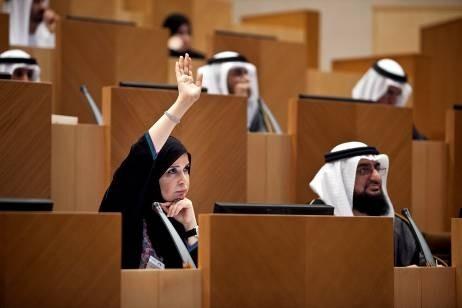
Democracy and the equal participation of men and women in the political arena are closely intertwined. No parliament or any decision-making body can claim to be representative without the participation of both men and women. As stated in the Universal Declaration on Democracy adopted by the Inter-Parliamentary Union’s Member Parliaments in 1997, "The achievement of democracy presupposes a genuine partnership between men and women in the conduct of the affairs of society in which they work in equality and complementarity, drawing mutual enrichment from their differences."

Recent years have seen a steady increase in the number of women in parliament, though the world average of less than 22 percent remains far from the goal of parity between women and men. The election of women to the highest positions of state and government in several countries has also contributed to the changing face of politics.

While the road to election is a difficult one, the challenges for women do not stop there. Once women enter parliament or other bodies, they are faced with many new challenges. Parliament is traditionally a male-oriented domain where the rules and practices have been written by men. It is, therefore, an ongoing challenge to transform parliament into a gender-sensitive environment, to ensure that actions are gender-sensitive and to guarantee that gender is mainstreamed throughout the legislature.

Mayo 30, 2012
México: Se pronuncia Senado por impulsar participación política de la mujer

El presidente del Senado, José González Morfín, reconoció que a pesar de los cambios legislativos que se han logrado en el Congreso, a fin de fomentar una mayor participación de la mujer en los asuntos de la vida pública y política del país, aun “tenemos que redoblar esfuerzos

Mayo 30, 2012
LAS MUJERES EN EL CONGRESO, HAY AVANCES PERO ¿PROGRESO?

El reporte auspiciado por “Esfera Política, Centro de Estudios en Democracia A.C.”, con patrocinio del “Centro Internacional de Investigaciones para el Desarrollo” de Ottawa, Canadá, e “Inclusión Ciudadana, A.C.” establece que sin duda ha habido avances pero a mayor parte de las grande

Género y diversidad en las iniciativas legislativas de los Parlamentos de América Latina y El Caribe: Estudio de caso de 13 países

El siguiente es un análisis de la incorporación de la 'perspectiva de diversidad' en las iniciativas presentadas por las mujeres parlamentarias entre los años 2008 y 2009 en Argentina, México, Perú, Chile, Brasil, Paraguay, Costa Rica, Nicaragua, Colombia, Uruguay, Ecuador, Pa