Sexisme en politique: «Quand on m'appelle cocotte, je trouve que c'est affectueux», dit Marion Maréchal-Le Pen
Marion Maréchal Le Pen n’est pas une femme comme les autres.
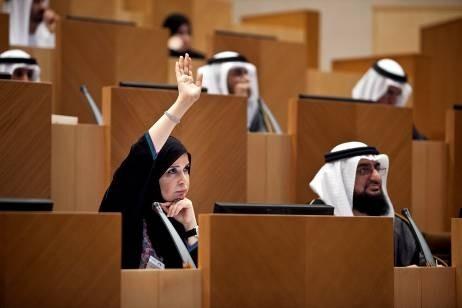
Democracy and the equal participation of men and women in the political arena are closely intertwined. No parliament or any decision-making body can claim to be representative without the participation of both men and women. As stated in the Universal Declaration on Democracy adopted by the Inter-Parliamentary Union’s Member Parliaments in 1997, "The achievement of democracy presupposes a genuine partnership between men and women in the conduct of the affairs of society in which they work in equality and complementarity, drawing mutual enrichment from their differences."
Recent years have seen a steady increase in the number of women in parliament, though the world average of less than 22 percent remains far from the goal of parity between women and men. The election of women to the highest positions of state and government in several countries has also contributed to the changing face of politics.
While the road to election is a difficult one, the challenges for women do not stop there. Once women enter parliament or other bodies, they are faced with many new challenges. Parliament is traditionally a male-oriented domain where the rules and practices have been written by men. It is, therefore, an ongoing challenge to transform parliament into a gender-sensitive environment, to ensure that actions are gender-sensitive and to guarantee that gender is mainstreamed throughout the legislature.
Marion Maréchal Le Pen n’est pas une femme comme les autres.
Loin de l'analyse d'une majorité de femmes...
L'idée d'octroyer un quota aux femmes maliennes en vue de leur participation à la vie publique et politique dans le pays est au centre des échanges d'une rencontre nationale de deux jours à Bamako, a-t-on appris jeudi au démarrage des travaux présidés par le ministre malien de l'Administratio
Selon le ministre délégué aux affaires religieuses, aucune religion ne condamne la participation de la femme à la vie politique d’une nation.
La loi n'a toujours pas permis d'aboutir à une progression significative de la représentation des femmes dans tous les partis...
À ma droite, Muriel Boulmier, tête pensante de l’UDI 47, à ma gauche, Sandrine Laffore, numéro 2 du PS 47. Leur point commun : elles sont engagées, à ce jour, dans les municipales à Agen. L’une a posé quatre questions à l’autre et réciproquement.
Parlementaires et administrateurs parlementaires ivoiriens ont fait un premier pas vers le renforcement du contrôle parlementaire sur les politiques d'égalité des sexes dans leur pays en acquérant des connaissances sur la budgétisation et la répartition des crédits fondées sur le genre.
Presentation de la Professeur Amine-Khaled HARTANI de l'Univeriste d'Alger dans la Canference sur la Participation effective et durable des femmes dans les assemblées élues a Alger, 10 et 11 décembre 2013 sur La loi organique du 12 janvier 2012 fixant les modalités d'élargissement de la repr
Presentation de Sonja Lokar pour la Conference internationale: Participation effective et durable des femmes dans les assemlees elues en Algerie, Decembre 10-11, 2013