2013 a été une année électorale au Cameroun. Mais les élections n’ont pas seulement permis un renouvellement du personnel politique conformément aux usages. Elles ont surtout donné la latitude aux Camerounais d’exposer leur adhésion à l’approche genre.
Parliaments and Representatives
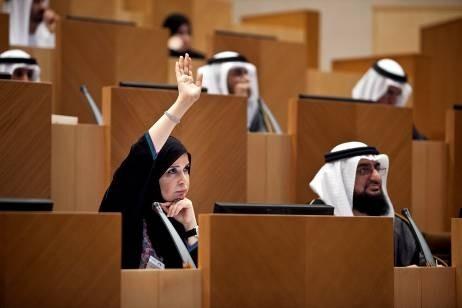
Democracy and the equal participation of men and women in the political arena are closely intertwined. No parliament or any decision-making body can claim to be representative without the participation of both men and women. As stated in the Universal Declaration on Democracy adopted by the Inter-Parliamentary Union’s Member Parliaments in 1997, "The achievement of democracy presupposes a genuine partnership between men and women in the conduct of the affairs of society in which they work in equality and complementarity, drawing mutual enrichment from their differences."
Recent years have seen a steady increase in the number of women in parliament, though the world average of less than 22 percent remains far from the goal of parity between women and men. The election of women to the highest positions of state and government in several countries has also contributed to the changing face of politics.
While the road to election is a difficult one, the challenges for women do not stop there. Once women enter parliament or other bodies, they are faced with many new challenges. Parliament is traditionally a male-oriented domain where the rules and practices have been written by men. It is, therefore, an ongoing challenge to transform parliament into a gender-sensitive environment, to ensure that actions are gender-sensitive and to guarantee that gender is mainstreamed throughout the legislature.
Eva Sas, député écologiste de l'Essonne, donnera naissance à son troisième enfant dans moins d'un mois. La jeune femme s'absentera quelques mois de l'hémicycle, mais ne sera pas remplacée.
Le choix de Mme Katilé Hadiaratou Sène n’est pas fortuit, car elle a marqué de façon positive l’histoire de la vie Associative et politique.
Quels efforts ont été consentis pour les femmes africaines? 5 ans après Beijing - L'émancipation politique de la femme
Ce rapport passe en revue les progrès réalisés sur le continent africain sur le thème « les femmes et la prise de décision » depuis l’adoption des Déclarations de Dakar et de Beijing.
La participation des femmes aux élections municipales de 2013 est en hausse de 11 % par rapport au scrutin de 2009. À quoi attribuer cette augmentation ?
76 femmes, députées et sénatrices, ont répondu à l’appel de Elle pour une photo que le magazine annonce "hautement symbolique". Une mobilisation en réaction aux caquètements d'un député de droite qui ont retenti dans l’Assemblée nationale début octobre.
Au Cameroun, les défenseurs de l’égalité des sexes et de l’autonomisation des femmes ont aujourd’hui une raison de se réjouir suite à la proclamation des résultats des élections législatives organisées le 30 septembre 2013.
Si les femmes restent tristement sous-représentées dans tous les secteurs de la politique, la région Ile-de-France reste un espoir pour les candidates. En effet, de plus en plus de femmes investissent la capitale.
Pagination
- Page précédente
- Page 109
- Page suivante