
Sierra Leone
| Quota Information | Parliament Information | ||
|---|---|---|---|
| Are there legislated quotas? | Yes | Structure of parliament | Bicameral |
| For the Single/Lower House? | No | >Current members | 146 |
| Percentage of women | 12.33% | ||
| Source: Gender Quotas Database | Source: New Parline | ||
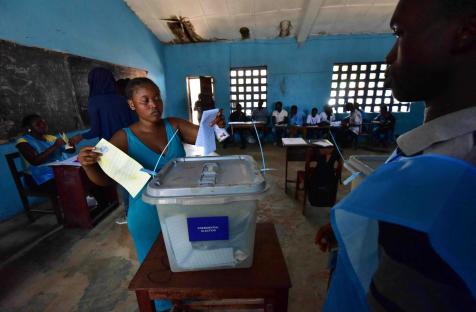
A new law in Sierra Leone will ensure that at least 30% of parliamentarians are women and impose similar quotas in other institutions, including government, local councils, the diplomatic corps and the civil service.
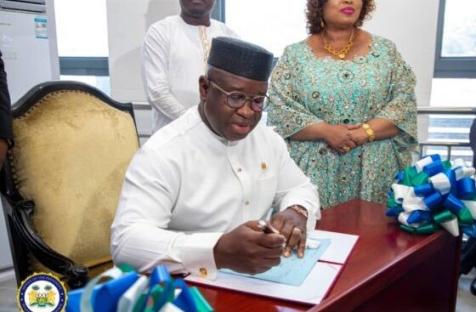
Last Thursday, President Julius Maada Bio signed a new Gender Equality and Women’s Empowerment Bill 2022, known also as the GEWE Act 2022, that is seeking to open up the country’s political space and establish a level playing field for women in politics.
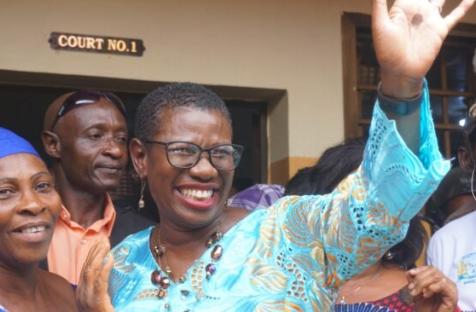
Sierra Leonean lawmakers on Tuesday voted unanimously to pass the Gender Empowerment Act, ensuring that one in three members of parliament, as well as local councillors, is a woman.

Women across Sierra Leone have through a communique submitted to the Speaker of Parliament called for the creation of a Women's Fund to enhance effective political participation and to also advance the interests and concerns of women for the development of the country
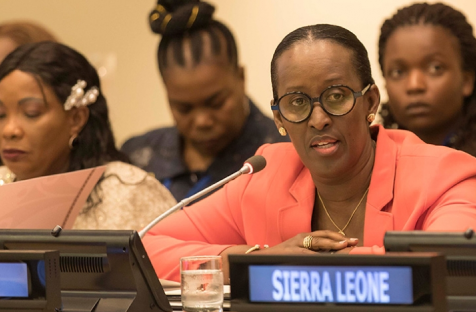
Deliberate effort to put women in political positions, building institutions and strong legal frameworks, as well as strong human resource capacity, are some of the catalysts that will ensure the African woman is empowered.
Civil Society Organizations working on women issues yesterday converged at the YWCA old hall in Freetown to validate the Sierra Leone in-Country monitoring of UNSCRs 1325 and 1820 Sierra Leone Report 2013.
In a bid to promote women in leadership positions, the Sierra Leone Social Aid Volunteers (SLSAV) has concluded a one-day confab on women's participation in leadership and decision-making at local governance level.
Women in Sierra Leone fight to gain more posts during the upcoming general elections in July, 2007. Women activists and leaders claim that their gender is the biggest obstacle for getting elected as there are deep rooted stereotypes and discrimination against women in the country.
The All People's Congress (APC), Sierra Leone People's Party (SLPP) and People's Movement for Democratic Change (PMDC) all come in well below the goal of 30% representation of women in parliament, as set out in the Commonwealth Plan of Action and Millennium Development Goals.
Having the right to vote is one thing; using it properly, or indeed at all, is quite another, as Sierra Leone has shown ahead of general elections this Saturday.
To read the full article, please visit IPS News
At first glance, women are doing better in Sierra Leone. In the last election, women tripled the number of seats they hold in parliament. They now control 14 percent of parliament. A few women have even taken up prominent ministry posts.
The Club of Madrid in Spain in partnership with Campaign for Good Governance under an initiative called African Women Leaders Project (AWLP) are presently in Freetown to implement a programmes to strengthen democracy through Women's empowerment.
Women in Sierra Leone are trying to pass an amendment to the constitution that would set aside 30 percent of all elected and appointed political positions for women. Today, women hold only 13 percent of legislative seats, and three of 20 ministerial positions.
Sierra Leone will hold general elections Saturday with a number of significant achievements in hand, not least maintaining peace for five years
To read the full news story, please visit the IPS News Website.
Political Party Registration Commission (PPRC) Thursday organized a two-day forum on gender and peace building in a bid to empower female politicians ahead of the July 5 local government elections.
As the July 5 2008, Local Government elections draw near, women's participation and representation has carried the headlines on the media and household discussions throughout the country.
The Political Parties Registration Commission (PPRC) will hold a one day forum to discuss women’s participation in the electoral process and the way forward for the implementation of a women’s memorandum that calls for affirmative action that would increase women’s participation in governance.
Despite the fact that Sierra Leone is a signatory to the United Nations resolution 1325 which seeks to promote and protect women in times of war and in peace yet “the strides made are not good enough.” These were the remarks of Hon.
The decision of whether women can stand for a chieftaincy election in Sierra Leone is being challenged here in Kono, the eastern part of Sierra Leone.But now Kono is seeing another revolution.
In Sierra Leone’s highly patriarchal society, where institutionalised gender inequalities are exacerbated by discriminatory customs, one group is singing its way towards changing this.
The Paramount Chief of Bombali Sheborah Chiefdom has called on Politicians to ensure they give safe seats to potential women for November 2012 Presidential, Parliamentary and Local Council elections.