Advocacy & Lobbying
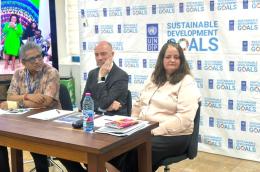
As Ghana prepares for local elections in 2027, new research presented in Accra today warns that violence against women in politics remains a significant barrier to democratic participation at the local level.
At a joint roundtable hosted by the United Nations Development Programme (UNDP) Ghana and the Nordic Africa Institute (NAI), researchers, policymakers, development partners and members of the diplomatic community convened to examine structural barriers to women’s political participation and identify strategies for safer, more inclusive local governance.
Presenting on NAI’s research, Senior Researcher Diana Højlund Madsen shared findings from the newly published book Making Politics Safer – Mitigating violence against women in politics in Africa: insights from Ghana, Kenya and Zimbabwe, released in NAI’s Current African Issues series The book draws on 134 interviews with politically active women and highlights how women in local politics face systematic forms of physical, sexual, psychological, economic and semiotic violence designed to deter their participation and preserve male-dominated political systems.
“In Ghana, only 4.1 per cent of district assembly members are women. If we want inclusive local governance, we must look not only at how to bring women into politics, but at the conditions under which they participate,” said Diana Højlund Madsen. “Violence and intimidation are not isolated incidents. They are structured obstacles that shape who is able to stand for office and remain in politics.”
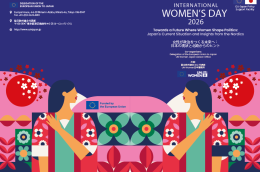
Gender equality and women empowerment remain a globally important priority policy issues. “Women in Politics” is an indispensable part of progress towards nurturing greater gender equality. In this seminar, we focus on key success factors underlying Nordic model of higher female representation in politics and how could this potentially be achieved in Japan. European and Japanese stakeholders will discuss common challenges, share experiences and best practices, and identify potential avenues of cooperation.
Please join us for the online viewing of this seminar.[Deadline - Tuesday, 3 March 2026]:
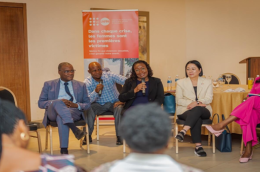
On a visit to the DRC, the UNFPA Regional Director for East and Southern Africa (ESARO), Ms. Lydia ZIGOMO, and the Humanitarian Director, Shoko ARAKAKI, met with women's organizations and Women Leaders (WLOs) in Kinshasa and Goma.
This high-level exchange aimed to reaffirm the United Nations' support for the Women, Peace, and Security (WPS) Agenda in the Democratic Republic of Congo, focusing on the challenges and priorities of women on the ground.
The two Directors hailed the frontline leadership and agility of women operating in high-risk areas, emphasizing their indispensable role in protection against Gender-Based Violence (GBV) and advocating for women's participation in peace processes in the DRC.
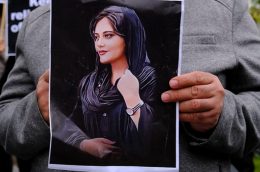
As a wave of protests stemming from the death of a 22-year-old Iranian woman enters its second month, demonstrations have spread worldwide.
Claudia Yaghoobi, an Iranian Armenian American and the director of the Center for Middle East and Islamic Studies, answered questions from The Well about what led to the historic protests, how the fallout compares to previous conflicts and more. Yaghoobi is also the Roshan Institute Associate Professor in Persian Studies in the College of Arts and Sciences’ department of Asian and Middle Eastern studies.
What sparked the protests and who is protesting?
In September 2022, protests broke out spontaneously across the country after images appeared on social media of 22-year-old Mahsa Jina Amini, an Iranian Kurdish woman, unconscious on a hospital bed. She was declared dead on Sept. 16, three days after being arrested on a Tehran street by the morality police.
The Kurdish phrase “Jin, Jiyan, Azadi” (“Woman, Life, Freedom”), derived from years of Kurdish resistance and activism, became the slogan of this moment. Amini’s parents made a conscious decision to hold her funeral publicly even though they had been told not to. This incited protests in Saghez during the funeral when women began taking off their veils and cutting their hair. Thereafter, in almost all cities of Iran protests arose and women began cutting their hair and burning their hijabs in solidarity. The protests, or what’s been called feminist social revolution, continue to this day, as we are in the sixth week.
The protests are different in a few aspects from other protests or revolutions. For instance, they are leaderless, and people from various socio-economic gender, sexual, ethno-religious backgrounds are united. This is no longer the revolution of the educated urban middle class or upper middle class. This is a movement where all sectors of the society — Kurdish and Baluch people, men and women, the trans and queer communities, urban and rural — have come together. Mahsa Jina Amini was an ordinary woman from Saghez visiting Tehran with her family. She was not a dissident or anti-veiling activist. So, this could be anyone. And that’s why she’s united everyone.
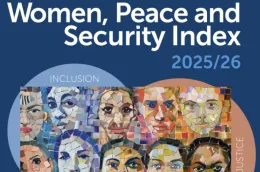
Turkey was ranked 106th out of 183 countries in the 2025/26 Global Women Peace and Security Index (WPS Index), down from 99th in the previous edition, according to a biennial report released by the Georgetown Institute for Women, Peace and Security (GIWPS) and the Peace Research Institute Oslo (PRIO).
Turkey’s overall score of 0.664 was well below both the developed-country average of 0.847 and the 0.715 average for its regional peer group of Central and Eastern Europe and Central Asia.
Published biennially since 2017, the WPS Index measures women’s status across 13 indicators covering three dimensions: inclusion, justice, and security. The inclusion dimension measures women’s achievements in education, employment, parliamentary representation and access to financial services. The justice dimension covers legal discrimination, access to justice and maternal mortality. The security dimension examines community safety as well as violence by intimate partners and during political conflict.
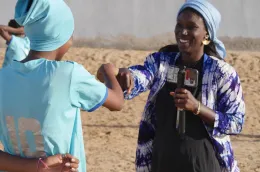
Hawa Bâ is a self-taught journalist based in Mauritania, a country where civic space remains subject to certain limitations and reporting on sensitive issues often comes with risk. She reports for Initiatives News and focuses on women’s rights, gender-based violence, health, and political participation, working in a media environment where journalists face pressure and limited access to information.
In Mauritania, journalists covering protests or public events can have their equipment confiscated, internet access is periodically disrupted, and independent reporting is frequently discouraged. Women journalists encounter additional barriers, including gendered harassment and attempts to discredit their work. Despite these challenges, journalists like Bâ continue to document social realities that would otherwise remain invisible.
Bâ is also the communications lead for a network of journalists working to address violence against women and girls in Mauritania, a collective effort supported by the UN Human Rights Office (OHCHR). Through training, coordination, and international visibility, OHCHR supports journalists working in restrictive environments to strengthen their reporting, protect their rights, and continue informing the public.
In her own words, Hawa Bâ shares how she became a journalist, why she chose mobile reporting, and what it takes to tell women’s stories in a context where speaking openly can carry consequences.
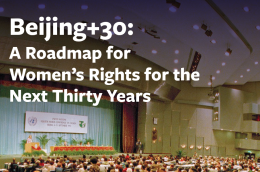
Authors: Jennifer Klein, Rachel Vogelstein, and Lauren Hoffman
This year marks the thirtieth anniversary of the 1995 United Nations (UN) Fourth World Conference on Women in Beijing, a watershed moment in the fight for women’s rights, where 189 nations adopted an ambitious Platform for Action to achieve the full and equal participation of women and girls. While the past three decades have produced important gains, this work remains unfinished, and new challenges threaten to reverse progress for women and girls. This report, produced by the Women’s Initiative at Columbia's Institute of Global Politics and GWL Voices, provides an actionable roadmap to advance the full and equal participation of women and girls in the twenty-first century—including in the areas of democracy and human rights, technology, economic participation, and conflict and climate. The report also proposes key levers designed to accelerate the pace of change, including innovative financing, institutional leadership and reform, coalition building, and improved data and research. It concludes with a call to accelerate action towards fulfilling the Beijing Platform and realizing the promise of women’s human rights once and for all.

A new report from the Environmental Voter Project (EVP), shared first with The 19th, finds that far more women than men are listing climate and environmental issues as their top priority in voting.
The nonpartisan nonprofit, which focuses on tailoring get out the vote efforts to low-propensity voters who they’ve identified as likely to list climate and environmental issues as a top priority, found that women far outpace men on the issue. Overall 62 percent of these so-called climate voters are women, compared to 37 percent of men. The gender gap is largest among young people, Black and Indigenous voters.
The nonprofit identifies these voters through a predictive model built based on surveys it conducts among registered voters. It defines a climate voter as someone with at least an 85 percent likelihood of listing climate change or the environment as their number one priority.
“At a time when other political gender gaps, such as [presidential] vote choice gender gaps, are staying relatively stable, there’s something unique going on with gender and public opinion about climate change,” said Nathaniel Stinnett, founder of the organization.
Read here the full article published by The 19th News on 14 April 2025.
Image by The 19th News
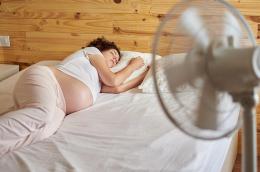
As smoke from wildfires in Canada smothered New York City in a polluted haze in June 2023, some worried patients called the Department of Obstetrics and Gynecology at Columbia University Irving Medical Center asking if it was safe to come in for their appointments. Was the outside air so unhealthy that they should postpone their visits? Pregnant women expressed concern about how the heightened pollution might affect them and their fetuses. If they did venture outside for any reason, what masks should they wear?
The doctors understood the fears but did not want women to postpone visits, especially if the patients were pregnant. “If people cancel their appointments during pregnancy, it can put them and their baby at risk of health problems,” says Blair Wylie, MD, an obstetrician who had joined Columbia eight months prior to lead its new Collaborative for Women’s Environmental Health.
The department changed some appointments to virtual.
Wildfire smoke was not the environmental risk that Wylie expected to address when she moved to New York after leading maternal-fetal medicine at Beth Israel Deaconess Medical Center in Boston. “I was thinking of heat waves. I was thinking of floods,” she says.
Read here the full article published by the Association of American Medical Colleges on 6 June 2024.
Image by the Association of American Medical Colleges

New York, New York
March 10, 2025
AS PREPARED
The United States thanks the Kingdom of Saudi Arabia and co-facilitators Cabo Verde and Costa Rica, as well as all participating delegations and civil society partners, for their efforts in developing the Political Declaration.
While we are not a CSW member this year, we engaged in negotiations because the United States strongly supports protecting women and girls, defending their rights, and promoting their empowerment.
We are pleased the Declaration focuses on respecting, protecting, and promoting the human rights and fundamental freedoms of all women and girls. In signing Executive Orders to defend Americans from unhealthy and extremist gender ideology, President Trump has made clear his Administration “will defend women’s rights and protect freedom of conscience by using clear and accurate language and policies that recognize women are biologically female, and men are biologically male.”
We also appreciate that the text addresses the need to prevent and respond to all forms of violence against women and girls. The Administration of President Trump has committed to protecting women by, among other things, curbing mass migration and securing borders. Violence against women and girls is rampant on migratory routes. Further, as we have seen in many tragic cases in the United States, women and girls are victimized by foreign criminals operating individually or in gangs. We must work against the open-borders ideology that tolerate such assaults on the rights of women.
However, several aspects of the text make it impossible for the United States to support the Declaration. These include, but are not limited to:
Language to Protect Women and Girls
It is the policy of the United States to use clear and accurate language that recognizes women are biologically female and men are biologically male. It is important to acknowledge the biological reality of sex to support the needs and perspectives of women and girls. We are disappointed the Political Declaration did not focus on the needs and perspectives of women and girls through precise terminology.
The United States supports the elimination of discrimination on the basis of all protected classes, including race, color, religion, sex, age, disability, national origin, and genetic information. We note the United States is not a party to the Convention on the Elimination of All Forms of Discrimination against Women (CEDAW) and interpret references to CEDAW as relevant to States Parties and the implementation of their obligations. The United States emphasizes that non-binding declarations such as this Political Declaration do not change the current state of conventional or customary international law or imply that States must join or implement obligations under international instruments to which they are not a party.
Freedom of Opinion and Expression
With regard to paragraph 15(j), we note that in recent years governments have censored speech on online platforms, often by exerting substantial coercive pressure on third parties, such as social media companies, to moderate, deplatform, or otherwise suppress speech. Under the guise of combatting “misinformation,” “disinformation,” and “malinformation,” governments infringed on the constitutionally protected speech rights of Americans. Government censorship of speech is intolerable in a free society.
Right to Development
We regret the Political Declaration includes language on the purported “right to development,” as this term does not have an internationally agreed meaning. We cannot accept references to this as a “right.”
The 2030 Agenda
Another concern we have about this resolution is its reaffirmation of the 2030 Agenda and the Sustainable Development Goals (SDGs). Although framed in neutral language, the 2030 Agenda and the SDGs advance a program of soft global governance that is inconsistent with U.S. sovereignty and adverse to the rights and interests of Americans.
In the last U.S. election, the mandate from the American people was clear: the government of the United States must refocus on the interests of Americans. We must care first and foremost for our own – that is our moral and civic duty. President Trump also set a clear and overdue course correction on “gender” and climate ideology, which pervade the SDGs.
Put simply, globalist endeavors like the 2030 Agenda and the SDGs lost at the ballot box. Therefore, the United States rejects and denounces the 2030 Agenda for Sustainable Development and the SDGs, and we will no longer reaffirm them as a matter of course.
Equal Pay for Equal Work
The United States understands the intention of the inclusion of “equal pay for work of equal value” to promote pay equality between men and women, and accepts the formulation on that basis. The United States works to achieve pay equality by observing the principle of “equal pay for equal work.”
Temporary Special Measures
With respect to so-called “temporary special measures,” and other measures intended to achieve parity for women and girls, the United States opposes the use of quotas, targets, or goals for participation based on sex. It is the policy of the United States to protect the civil rights of all Americans and to promote individual initiative, excellence, and hard work. Every citizen, including women and girls, should have an equal right and opportunities, without discrimination, to take part in the conduct of public affairs.
Climate Change
The United States does not support the inclusion of references to climate change in this declaration.
Original post available here.

Guest Editors
Roopa Dhatt, MD, MPA, Georgetown University, USA
Anna Kalbarczyk, DrPH, Johns Hopkins Center for Global Health, USA
Submission Status: Open | Submission Deadline: 7 December 2025
BMC Public Health is calling for submissions to our Collection on Women's role in politics and public life. We invite research that delves into the role of women in politics and public life, focusing on their leadership, participation, and the challenges they face. We welcome studies that examine gender equality, women's rights, and the impact of women's economic participation on public policy and health outcomes, with the aim of fostering a more inclusive political landscape.
Click here to apply.
Image by BioMedCentral
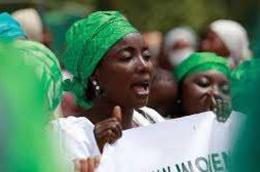
In the ever-evolving political landscape of Nigeria, the struggle for gender equality remains a daunting challenge, particularly in the sphere of elective politics. The ongoingordeals of Natasha Akpoti-Uduaghan and other female politicians serve as painful reminders of the deep-seated misogyny that continues to undermine women’s political participation. Despite constitutional guarantees and international conventions advocating for gender equity, women in Nigeria are still treated as political outsiders, systematically excluded, and viciously maligned.
To opine that there are stubborn walls of misogyny been waged against Nigerian women in politics is not an exaggeration. This is as misogyny is deeply entrenched in Nigeria’s socio-political fabric, manifesting in ways that range from subtle bias to outright violence against women who dare to challenge the status quo. The cultural and traditional expectations placed on women limit their ability to assert themselves in the public sphere. Many still believe that a woman's place is in the kitchen or at best in an appointed, symbolic role rather than in the competitive arena of elective politics.
In fact, Natasha Akpoti-Uduaghan’s political journey is a testament to the relentless opposition faced by women in politics. Despite her competence, courage, and determination, she has been subjected to smear campaigns, character assassination, and physical threats. Her case is not isolated. Women like Remi Sonaiya, ObyEzekwesili, and Aisha Yesufu have all faced virulent attacks simply for daring to seek political relevance. The misogynistic environment discourages many women from aspiring to public office, as they are often reduced to objects of ridicule rather than being recognized for their ideas and leadership capabilities.
Read here the full article published by Modern Ghana on 2 March 2025.
Image by Modern Ghana