Advocacy & Lobbying

New York, New York
March 10, 2025
AS PREPARED
The United States thanks the Kingdom of Saudi Arabia and co-facilitators Cabo Verde and Costa Rica, as well as all participating delegations and civil society partners, for their efforts in developing the Political Declaration.
While we are not a CSW member this year, we engaged in negotiations because the United States strongly supports protecting women and girls, defending their rights, and promoting their empowerment.
We are pleased the Declaration focuses on respecting, protecting, and promoting the human rights and fundamental freedoms of all women and girls. In signing Executive Orders to defend Americans from unhealthy and extremist gender ideology, President Trump has made clear his Administration “will defend women’s rights and protect freedom of conscience by using clear and accurate language and policies that recognize women are biologically female, and men are biologically male.”
We also appreciate that the text addresses the need to prevent and respond to all forms of violence against women and girls. The Administration of President Trump has committed to protecting women by, among other things, curbing mass migration and securing borders. Violence against women and girls is rampant on migratory routes. Further, as we have seen in many tragic cases in the United States, women and girls are victimized by foreign criminals operating individually or in gangs. We must work against the open-borders ideology that tolerate such assaults on the rights of women.
However, several aspects of the text make it impossible for the United States to support the Declaration. These include, but are not limited to:
Language to Protect Women and Girls
It is the policy of the United States to use clear and accurate language that recognizes women are biologically female and men are biologically male. It is important to acknowledge the biological reality of sex to support the needs and perspectives of women and girls. We are disappointed the Political Declaration did not focus on the needs and perspectives of women and girls through precise terminology.
The United States supports the elimination of discrimination on the basis of all protected classes, including race, color, religion, sex, age, disability, national origin, and genetic information. We note the United States is not a party to the Convention on the Elimination of All Forms of Discrimination against Women (CEDAW) and interpret references to CEDAW as relevant to States Parties and the implementation of their obligations. The United States emphasizes that non-binding declarations such as this Political Declaration do not change the current state of conventional or customary international law or imply that States must join or implement obligations under international instruments to which they are not a party.
Freedom of Opinion and Expression
With regard to paragraph 15(j), we note that in recent years governments have censored speech on online platforms, often by exerting substantial coercive pressure on third parties, such as social media companies, to moderate, deplatform, or otherwise suppress speech. Under the guise of combatting “misinformation,” “disinformation,” and “malinformation,” governments infringed on the constitutionally protected speech rights of Americans. Government censorship of speech is intolerable in a free society.
Right to Development
We regret the Political Declaration includes language on the purported “right to development,” as this term does not have an internationally agreed meaning. We cannot accept references to this as a “right.”
The 2030 Agenda
Another concern we have about this resolution is its reaffirmation of the 2030 Agenda and the Sustainable Development Goals (SDGs). Although framed in neutral language, the 2030 Agenda and the SDGs advance a program of soft global governance that is inconsistent with U.S. sovereignty and adverse to the rights and interests of Americans.
In the last U.S. election, the mandate from the American people was clear: the government of the United States must refocus on the interests of Americans. We must care first and foremost for our own – that is our moral and civic duty. President Trump also set a clear and overdue course correction on “gender” and climate ideology, which pervade the SDGs.
Put simply, globalist endeavors like the 2030 Agenda and the SDGs lost at the ballot box. Therefore, the United States rejects and denounces the 2030 Agenda for Sustainable Development and the SDGs, and we will no longer reaffirm them as a matter of course.
Equal Pay for Equal Work
The United States understands the intention of the inclusion of “equal pay for work of equal value” to promote pay equality between men and women, and accepts the formulation on that basis. The United States works to achieve pay equality by observing the principle of “equal pay for equal work.”
Temporary Special Measures
With respect to so-called “temporary special measures,” and other measures intended to achieve parity for women and girls, the United States opposes the use of quotas, targets, or goals for participation based on sex. It is the policy of the United States to protect the civil rights of all Americans and to promote individual initiative, excellence, and hard work. Every citizen, including women and girls, should have an equal right and opportunities, without discrimination, to take part in the conduct of public affairs.
Climate Change
The United States does not support the inclusion of references to climate change in this declaration.
Original post available here.
-
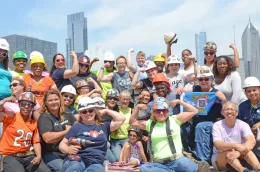
President Donald Trump’s executive orders repealing diversity, equity and inclusion policies could worsen workplace conditions for women in skilled trades, where harassment is common, tradeswomen leaders said.
-
The trades — occupations such as construction, welding and carpentry — have some of the smallest shares of female workers in the U.S., but they offer high salaries and competitive benefits, especially so for those without college degrees.
-
The Trump administration is trying to roll back what it has deemed “illegal DEI” practices, but many nonprofits, including a tradeswomen’s advocacy group in Chicago, are fighting back in court.
President Donald Trump’s executive orders restricting and repealing diversity, equity and inclusion policies bring a rash of uncertainties about what lies ahead for women and other minority groups in the workforce.
These changes create a particularly fraught environment for women in skilled trades — occupations such as construction, welding and carpentry.
Skilled trades offer competitive salaries and benefits, especially so for those without a college education, but they have some of the smallest shares of female workers among all occupations in the U.S., according to a government survey. The Institute for Women’s Policy Research, which compiled data from the U.S. Bureau of Labor and Statistics, also reported that in 2023, women comprised 4.3% of workers in construction and extraction occupations, which include construction laborers, carpenters and electricians.
Kina McAfee, who has been involved in the skilled trades for 40 years, said she has seen discrimination persist across the trades. Harassment is common, she said, and at smaller worksites, a tradeswoman will often find herself the sole female worker.
Read here the full article published by CNBC on 27 March 2025.
Image by CNBC
A summary
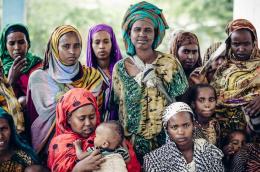
The African Union strategy on Gender Equality and Women’s Empowerment (GEWE) 2018-2028 which was launched during the AU Summit February 2019 is based on an inclusive and multisectoral approach and builds on the lessons learned from the 2009 gender policy. It is transformational in that its outcomes aim to mitigate, if not eliminate the major constraints hindering gender equality and women’s empowerment, so that women and girls may participate fully in economic activities, political affairs and social endeavours.
The GEWE Strategy is a framework document to strengthen women’s agency in Africa and ensure that women’s voices are amplified and their concerns are fully addressed through, among others, effective implementation of legislation and proper financing of gender equality work. It is a guiding document on the implementation of the AU’s GEWE commitments and is to be used to design transformational programmes that bring results for African women and girls on the continent and in the diaspora.
The strategy has four pillars and each pillar outlines outcomes and proposed activities that should be implemented in furtherance of that specific pillar.
-
Pillar 1 focuses on maximising opportunities, outcomes and e-tech dividends. It recognises, amongst others, that for women to be economically empowered, and to be able to effectively contribute to sustainable development, they must have access to quality education and control over productive resources. The GEWE strategy proposes to mount a continental campaign to declare “illiteracy a harmful traditional practice and make “out of school” a punishable offence; and to advocate for and lobby e-Tech firms and financial institutions to fund start-ups and innovation hubs which promote gendered solutions and increase women and girls’ equal and effective participation in the technology space.
-
Pillar 2 focuses on dignity, security, and resilience and recognises that the rights of women and girls to dignity, security and bodily and psychological integrity are often compromised when women are subjected to violence and violations, which often times happen in the context of violence against women and harmful traditional practices such as early-child marriage and female genital mutilation. The GEWE Strategy proposes to implement AU guidelines on Ending Violence against Women and Girls (VAWG) and fund national projects to penalise VAWG.
-
Pillar 3 highlights the need for effective laws, policies and institutions. Whereas Africa has made progress in progressive laws and policies and institutions to promote and protect women’s rights, there is still a huge deficit when it comes to effective implementation and gender machineries remain among the weakest public institutions at a time when they are needed the most to push the gender agenda forward. The GEWE Strategy proposes to design and implement a new initiative called “All for Maputo Protocol Programme”, which will support the full and universal ratification, domestication and implementation of the Maputo Protocol.
-
Pillar 4 focuses on leadership, voice and visibility. This pillar recognises that for women to have a voice, they need to be equally represented in all areas of decision-making and be able to participate with impact, through the removal of all forms of barriers. The strategy proposes to integrate gender in the rewriting of the African narrative. The former AUC Chairperson, H.E Dr. Nkosazana Dlamini-Zuma, once said, “If we don’t put women in history books, they get edited out of history”. WGDD has also prioritised knowledge development and management and will be publishing a number of products: among others, A State of Women’s Rights report in Africa, A Historic African women’s booklet documenting the stories of the African women who gallantly fought in African liberation struggles.
Reah here the full article published by the African Union on 19 March 2025.
Image by African Union

Iranian authorities have escalated their crackdown on women’s rights defenders, journalists, singers and other activists demanding equality or who defy compulsory veiling using arbitrary detention, unjust prosecution, flogging, and even the death penalty in a bid to quash Iran’s women’s rights movement, Amnesty International said today.
Since International Women’s Day (IWD) on 8 March, the Iranian authorities have arbitrarily arrested at least five women’s rights activists. These arrests come amid an intensified crackdown that has included summoning women’s rights activists and journalists for interrogation, and arresting women singers for performing without the mandatory hijab while shutting down their social media accounts. In the lead up to IWD, the authorities flogged a male singer 74 times for performing a protest song against Iran’s discriminatory compulsory veiling laws and, in February 2025, sentenced a women’s rights activist to death.
“In the wake of the Woman Life Freedom uprising of 2022, the Iranian authorities consider the widespread defiance of women and girls demanding their rights as an existential threat to the political and security establishment. Instead of addressing systemic discrimination and violence against women and girls, they are attempting to crush Iran’s women’s rights movement,” said Diana Eltahawy, Amnesty International’s Deputy Regional Director for the Middle East and North Africa Regional Office.
“Ahead of a key UN Human Rights Council session tomorrow to deliver findings on the human rights situation in Iran, and in the context of the Council’s ongoing negotiations to extend the mandates of the Special Rapporteur on Iran and the UN Fact-Finding Mission on Iran, the international community must stand up against impunity and for the rights of women and girls in the country.
Read here the full article published by Amnesty International on 17 March 2025.
Image by Amnesty International

69th Commission on the Status of Women
Interactive Dialogue: Participation, accountability, and gender-responsive institutions
18 March 2025, UNHQ, New York
Statement by International Institute for Democracy and Electoral Assistance
Excellencies,
International IDEA firmly believes that gender equality is essential for democracy, and that democracy is essential for gender equality. One cannot thrive without the other. However, we are deeply concerned about the global backlash against both gender equality and democracy, threatening hard-won gains over the past decades.
Women must have an equal voice in leadership and policymaking at all levels and across all sectors. When women hold power, governance becomes more inclusive, transparent, and effective, leading to stronger policies on economic growth, education, health, and climate resilience—all critical to achieving the 2030 Agenda.
However, achieving gender equality demands gender-responsive democratic institutions. Parliaments, electoral bodies, political parties, civil society organizations must actively dismantle barriers, create space for women to lead, and integrate gender perspectives to:
• Ensure inclusive policymaking that reflects the needs of all citizens.
• Strengthen democratic accountability and public trust.
• Combat discrimination, bias in political financing, and gender-based violence in politics.
The 69th session of CSW is a critical moment for Member States to reaffirm their commitment to accelerating progress on gender equality. But this commitment must go hand in hand with putting democracy at the heart of UN discussions. Democracy is the most powerful instrument to advance gender equality. It is therefore deeply disappointing that Member States failed to reaffirm the essential link between democracy and gender equality in the political declaration approved last week.
International IDEA remains committed to working alongside the UN, Member States, and civil society to ensure that gender equality remains central to the future of democracy and sustainable development.
Thank you.
Statement delivered by Ms. Rumbidzai Kandawasvika-Nhundu, Principal Adviser, Democracy and Inclusion, International IDEA
Taken from International IDEA - published on 18 March 2025.

Feminism in South Asia has been a powerful force for change, but it continues to face significant challenges. In this special International Women’s Day episode of Unraveled, Marvi Sirmed explores the state of women’s rights in South Asia with Syeda Hameed – Scholar, former member of the Planning Commission of India and Women’s Commission, and women’s rights advocate, and Khushi Kabir – a veteran Bangladeshi women's rights activist, environmentalist and Director at Nijera Kori, an organization that fights for the rights of the poor. Together, they discuss key issues such as gender-based violence, political representation, economic empowerment, reproductive rights, and the growing backlash against feminism. They also delve into why women-led governments in Bangladesh, India, and Pakistan have struggled to dismantle patriarchy and how religious nationalism fuels gender oppression. Tune in to hear insightful conversations on the intersection of politics, religion, and patriarchy in South Asia, and the ongoing fight for gender justice across the region.
Click here to see the full video published by The Friday Times on 13 March 2025.
Image by The Friday Times