Advocacy & Lobbying
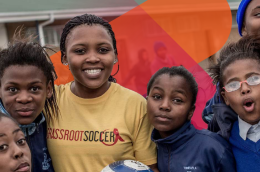
This brief provides an overview of how the UN system has advanced global efforts to prevent and respond to violence against women and girls (VAWG) over the past five years. Drawing from the contributions of 36 UN entities and mechanisms for the Inventory of United Nations activities to end violence against women and girls, the brief highlights collective progress achieved through coordinated action, joint programming and partnerships with governments, civil society and women’s rights organizations. The brief documents the UN system’s role in advancing global norms and standards, with notable developments in violence in the work environment, technology-facilitated violence, conflict-related sexual violence and harmful practices. It showcases how coordination mechanisms and flagship joint initiatives—such as the spotlight initiative, the UN Trust Fund to End Violence Against Women and other inter-agency programmes—have mobilized resources, strengthened laws and policies, expanded access to survivor-centered services, scaled up prevention efforts and improved data and evidence. At the same time, the brief underscores persistent gaps, including uneven implementation of laws, limited financing, fragmented prevention efforts, data challenges and growing backlash against gender equality. It emphasizes the central role of women’s rights organizations and feminist movements in driving sustainable change. Looking ahead to 2030, the brief calls for the UN system to deepen coordination, strengthen accountability, invest in evidence-based interventions at scale and reinforce locally led, whole-of-society approaches to end VAWG.
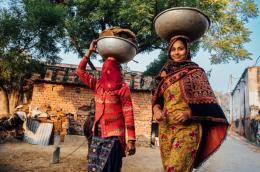
In India, authorities often discuss gender inequality as a multifaceted problem, requiring a multifaceted solution. The existence of multiple social differences, such as caste and class, makes it more complex. Governmental programs such as the Tamil Nadu Textile Industry Coalition (TiC) aim to address this difference.
Over the years, the Indian government has become sensitive to the multidimensional aspects. It has worked to introduce solutions which address not just the issue but also encompass all its nuances. The Tamil Nadu government’s multistakeholder TiC is one such initiative launched in association with the U.N. Women.
The government announced the Council in February 2024. Through this initiative, the state aims to create a safe, secure workspace for women in the textile industry.
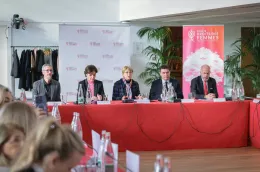
The youngest victim of gender-based violence in Monaco last year was just six years old. The oldest 80.
These shocking figures emerged on Tuesday as the Committee for the Promotion and Protection of Women’s Rights held its seventh annual meeting, revealing that reported cases of violence against women increased from 35 in 2024 to 40 in 2025.
Speaking to the press at the Yacht Club de Monaco following the morning’s plenary session on January 20th, Céline Cottalorda, interministerial delegate for women’s rights, was straightforward about the gravity of the challenge. “We always say that one victim is one too many,” she said. “And indeed, as long as there are victims of violence, we must continue working on this subject.”
The committee’s newly published study, produced by IMSEE, shows that more than 90% of victims of sexual violence and intimate partner violence are women. In 85% of police cases, victims reported physical violence. Moreover, and quite disturbingly, in 66% of cases recorded by the victim support association AVIP, violence occurred in the presence of children.
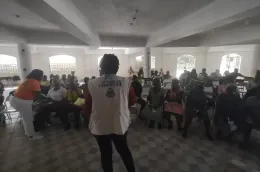
Never before had litigants, coming from the remote communal sections of Quartier Morin, Limbé, and Fort-Bourgeois, had access to justice so close and free of charge. Often, the distance means that people spend hours traveling to a Justice of the Peace court; the high cost of justice; the fear of reprisals; and the extreme slowness of the decisions –all these factors summarize the reality that prevails in these areas, thus limiting access to justice and the exercise of rights.
An entire judicial apparatus – comprisinf of thejustices of the peace and clerks of the courts of the southern and northern districts of Cap-Haitien, Court of first instance and court of appeals representatives, lawyers from the Legal Assistance Bureau (BAL) and the Citizen Protection Office (OPC), Gender-Based Violence (GBV) unit of the Ministry for the Status of Women and Women's Rights (MCFDF), GBV unit of the National Police of Haiti (PNH), GBV unit of the Bureau for the Protection of Minors (BPM), women's rights organizations including AFASDA and AFM, psychologists, social workers, local elected officials, community leaders, –mobilizes with a competent team , to operate as a real court at each mobile court session and travel to the most remote neighborhoods of litigants, thereby making justice accessible to all.
Nearly 224 participants, including 113 women, were reached by the three mobile courts and attended awareness sessions. More than ten (10) cases of violence were recorded and addressed during individual hearings held behind closed doors, outside of the mobile courts. These cases, currently being handled by the BAL lawyers, will soon be referred to a higher level for appropriate legal follow-up and action. The most frequently reported cases of violence include assault, parental irresponsibility, and physical and verbal abuse.
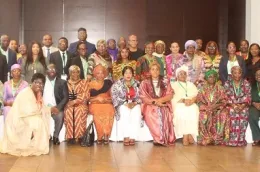
A two-day expert meeting on regional consultation on the political participation and leadership of women and youth in West Africa has been opened in Accra.
The meeting, scheduled for February 17 and 18, forms part of the 50th Anniversary Legacy Project of the Economic Community of West African States (ECOWAS) on gender parity in elected bodies in ECOWAS Member States (2025–2035), which seeks to strengthen women’s and youth representation in political leadership across the sub-region.
Organised under the auspices of the Ministry of Gender, Children and Social Protection, in collaboration with the ECOWAS Gender Development Centre (EGDC), the consultation aims to assess the current state of political participation of women and young people in West Africa, advance dialogue on gender parity in elected bodies, and contribute to the development of a regional model law or guide to promote inclusive governance and leadership by 2035.
In a speech, read on her behalf by the Chief Director of the Ministry, Dr Hafisa Zakaria, the Minister of Gender, Children and Social Protection, Dr Agnes Naa Momo Lartey, reiterated the commitment of the government of Ghana to advancing the political participation and leadership of women and young people as a foundation for inclusive governance and sustainable development in West Africa.
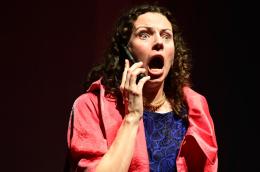
Beyond the campaign trails, podiums, and other public-facing aspects of running for political office, If She Runs depicts the lived experiences of two women who grapple with the desire, and barriers, to enter the world of electoral politics in Newfoundland and Labrador.
Playwright Ruth Lawrence wanted to “pull back the veil” on what it really means to run in an election here, the celebrated actor and director recently told The Independent during one of the play’s dress rehearsals.
She said PerSIStence Theatre asked her to write a play inspired by the 100th anniversary of women’s right to vote, and that she knew of folks who were either running for public office, or considering it, often unaware of everything the election process entails.
“I love an election. I always have,” Lawrence said. “Some of my earliest memories are watching leadership conventions on TV.” So she jumped at the opportunity to write the play.
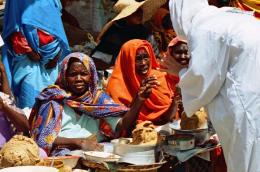
In the ongoing war in Sudan, there is an insufficiently narrated tragedy—the plight of women who are paying a hefty price for this war and are simultaneously being kept from the table in the discussion of how this war can end. International Women's Month coincides with a difficult period in Sudan, where women are facing various forms of violence and violations, including rape, sexual assault, kidnapping and the loss of providers. This is all occurring in a context marked by extreme poverty and lack of medical facilities, especially those related to sexual and reproductive health.
The war that erupted on April 15, 2023 between the Sudanese army and Rapid Support Forces has led to a humanitarian crisis that UN reports have ranked among the largest globally—stating that nearly 8 million people have been displaced due to the war, 88 percent of whom are women and children. There are more than 4 million women and girls at risk of sexual assaults, and alarming reports have appeared of women being sold in markets in Sudan.
The painful irony is that Sudanese women were at the forefront of the Sudanese revolution that overthrew Omar al-Bashir's government on April 11, 2019. Despite their contributions and sacrifices, they found themselves marginalized and excluded from decision-making positions in the subsequent transitional government. The promises of allocating 40 percent of the Sudanese parliament’s seats for women remained unfulfilled. When the actual figures emerged, they reflected a failure to meet Sudanese women's aspirations and acknowledge their vital role in society and the political process.
Read here the full article published by the Washington Institute on 25 March 2024.
Image source: Washington Institute

With Victorian council elections to be held in October, the state government’s target of reaching 50-50 gender representation at the local level is under threat.
While the state achieved a record 43.8% of women elected to councils in 2020, outperforming most federal and state parliaments, and succeeded in achieving gender parity in 47 out of 76 councils, the overall 50-50 gender representation target by 2025 will still be difficult to reach.
Globally, gender quotas have been a tried and tested way of lifting women’s political representation. But research also shows quotas can divide public opinion, and they work better in some contexts than others. With this in mind, we wanted to test alternative measures to support women in politics, which also attract public support.
Click here to read the full article published by The Conversation on 8 February 2024.
Image source: The Conversation
Abstract
Violence against women politicians is increasingly recognized as an issue that undermines women's presence in politics. Latin America has been at the vanguard of this global discussion. In 2012, Bolivia became the only country in the world to criminalize “political violence and harassment against women.” Several other countries have similar legislation in the works. What explains the emergence of these bill proposals? This article argues that the creation of these bills is the result of three processes: activism at the local level used international norms to propose an innovative solution to a problem; women politicians and “femocrats” worked within the state apparatus to overcome resistance; and international actors worked to foster connections among activists and politicians across the region. In this process, international norms have been transformed, with important implications for women's political representation.
Click here to read the full article published by the Cambridge University Press on 27 July 2020.
Image by Cambridge University Press
.
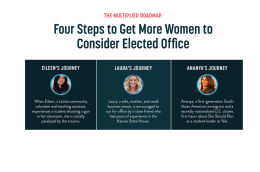
Today, we announced the release of our new report, The State of Women: 2023 Multiplier Report and Roadmap, a comprehensive report drawing on insights from extensive data gathered from a wide-ranging network of women nationwide. Utilizing data collected from She Should Run participants and research conducted between 2020 and 2023, we found that most women—across demographics and ideologies—need multiple points and types of encouragement over several years in order to consider running for office.
Click here to read the full report published by She Should Run on 6 November 2023.
The 2023 edition of the global Women Peace and Security Index (WPS Index) scores and ranks 177 countries in terms of women’s inclusion, justice, and security.
No country performs perfectly on the WPS Index and the results reveal wide disparities across countries, regions, and indicators. The WPS Index offers a tool for identifying where resources and accountability are needed most to advance women’s status - which benefits us all.
The WPS Index is published by the Georgetown Institute for Women, Peace and Security and the PRIO Centre on Gender, Peace and Security with support from the Norwegian Ministry of Foreign Affairs.
Click here to read the full report published by the Georgetown Institute for Women, Peace and Security and the PRIO Centre on Gender, Peace and Security on 26 October 2023.
Nearly a quarter of a century after the adoption by the Security Council of its resolution 1325 (2000), women’s full, equal and meaningful participation in building peace should be the norm, not an aspiration or an afterthought, but the data show that this is far from being a reality. In peace processes, negotiating parties continue to regularly exclude women, and impunity for atrocities against women and girls is still prevalent. Women continue to face entrenched barriers to direct participation in peace and political processes, and women’s organizations struggle to find resources, while military spending continues to grow every year. This remains the case even though there is ample evidence that women’s participation contributes to more robust democracies and longer-lasting peace.
Click here to read the full report published by Relief Web on 24 October 2023.