Advocacy & Lobbying
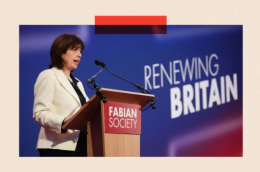
Is there a boys' club in politics? I ask a smart, tough, very experienced woman who has worked at the highest level of government.
"Yes," comes the answer - without a second's hesitation. "The end."
Yes, many more women than ever have taken up perches on the green benches - but that's not the same as having access to the inner sanctum where decisions are made.
Yes, there are many more women working at senior levels in Whitehall - and all the main parties have made big efforts to get more women into parliament. But that's not the same as being listened to.
And yes, as part of Sir Keir Starmer's efforts to prop up his administration, three senior men have used the exit – the boss of the civil service, his chief of staff, and his head of communications, to be replaced, at least in part, by women.
But this week, a serving member of the cabinet, Lisa Nandy, suggested Labour had been operating as a "boys' club" and went on to complain "some of the briefings have absolutely been dripping with misogyny".
Read More here.
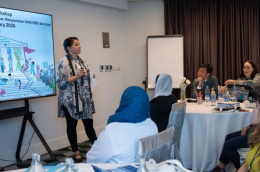
From 19 to 23 January 2026, UN Women organized an exchange visit on integrated and gender-responsive gender-based violence (GBV) services, with support from the European Union (EU) under the Deliver Justice Project, bringing a delegation from Pakistan to Thailand to strengthen learning, dialogue and South-South cooperation on coordinated responses to violence against women and girls.
The visit brought together government officials, law enforcement representatives, health professionals and civil society actors from Pakistan, alongside UN Women teams from Pakistan, Thailand and the Asia-Pacific Regional Office (ROAP). Over five days, participants engaged with Thailand’s multisectoral approach to GBV response while sharing experiences from Pakistan’s own efforts to strengthen coordination, accountability and survivor-centred services.
Read More Here.
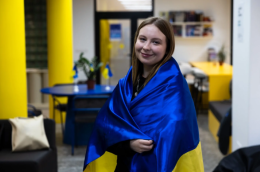
Today, the European Union and UN Women Ukraine signed a project agreement to establish the Gender Equality Facility (GEF), to drive Ukraine’s gender responsive and inclusive recovery and European integration.
The ceremony took place in the presence of Deputy Prime Minister of Ukraine for European and Euro-Atlantic Integration Taras Kachka and EU Ambassador to Ukraine Katarína Mathernová.
The GEF is a technical assistance initiative. It is designed to accelerate gender-responsive reforms as Ukraine advances on its path to EU membership. The EU-backed project will provide the Ukrainian government with the necessary expertise and tools to mainstream gender equality across all sectors of public policy, recovery planning, and legislative development.
Read More here.
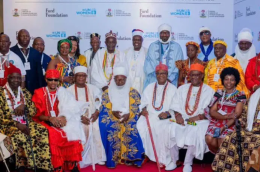
The Conference of African Traditional and Cultural Leaders on Gender-Based Violence (GBV) Prevention have reaffirmed commitment to accelerate coordinated action towards ending Gender-Based Violence across the African continent. The made the commitment at a conference convened by the Ford Foundation and UN Women, in collaboration with the Nigerian government in Lagos.The conference drew eminent leaders from across Africa, including traditional authorities, government representatives, and development partners to mobilise cultural authority as a force for protection, justice, and social transformation.
Read more here.
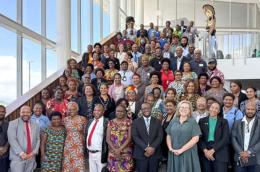
More than 150 participants – including political party representatives, government officials, civil society leaders, young people and aspiring women candidates – gathered on 3–4 December in Port Moresby for the National Forum on Women’s Political Leadership. Convened under the Women Make the Change programme, which is funded by the Australian Government, the two-day event marked a pivotal step in strengthening inclusive political pathways ahead of the Papua New Guinea (PNG) 2027 national general elections.
Convened in partnership with the country’s Integrity of Political Parties and Candidates Commission (IPPCC), the Department for Community Development and Religion (DFCDR), UN Women and the United Nations Development Programme (UNDP), with support from the Government of Australia, the Forum spotlighted the role of political parties and institutions in enabling women’s full participation and leadership in political processes.
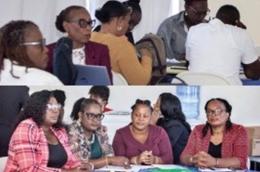
On Saturday, January 17, the Ministry for the Status of Women and Women's Rights (MCFDF) took a decisive step for 2026. The Ministry launched a three-day strategic and professional retreat at the Montana Hotel in Pétion-ville. This retreat brought together the institution's senior staff to structure future actions in support of gender equality in Haiti.
Objectives of the 2026 Annual Work Plan (AWP) :
The main objective of this meeting was to validate the Annual Work Plan (AWP). Directors, Coordinators, and staff members worked on several key areas:
Strategic Alignment with the National Action Plan resulting from the National Consultations :
The 2026 AWP builds upon the actions undertaken during the National Consultations, ensuring their concrete implementation and impact on the ground;
Institutional Strengthening of MCFDF Entities :
The AWP includes actions to consolidate the capacities of MCFDF entities, enabling them to better meet the needs of the population and contribute effectively to the country's development.
Administrative Roadmap for the Adoption of New Organic Decrees :
A detailed roadmap has been developed to support the adoption of the new organic decrees, ensuring smooth and effective implementation.
Women's Political Participation and the Electoral Context :
The AWP pays particular attention to promoting women's political participation, especially in the context of the upcoming elections. Actions will be implemented to prevent Gender-Based Violence (GBV) and advocate for equitable representation of women in decision-making bodies.

The Committee on the Elimination of Discrimination against Women today considered the combined seventh to tenth periodic report of Nicaragua in the absence of a delegation.
Committee Experts raised questions on the treatment of women human rights defenders in Nicaragua, and the lack of sufficient health services for women, among other issues.
Click here to read the full report published by the United Nations News on 23 October 2023.

Violence against women in politics (VAWIP) is an urgent problem worldwide. At the time of this writing, U.S. House of Representatives Speaker Nancy Pelosi’s husband had just been violently assaulted by a conspiracy theorist, shouting “Where is Nancy?” after breaking into their house. In Canada, women, Indigenous, Black, racialized, and queer political actors face harassment and threats on a regular basis. During the 2022 Québec provincial election, politician Marwah Rizqy received death threats from a man who allegedly called the police to inform them where they could find her body (she was pregnant at the time). In 2022, federal Deputy Prime Minister Chrystia Freeland was accosted by a man who yelled profanities at her while she was with her all-women staff. These are not isolated incidents, and the political science community has an important role to play in addressing them.
Click here to read the article by Cambridge University Press on 15 September 2023.
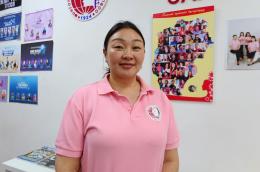
In the vast landscape of Mongolia, the traditional nomadic lifestyle is deeply rooted in the fabric of its culture.
Gers, the round white felt tents, have served as the traditional homes of the Mongolian people. They have supported their nomadic way of life and culture since before the time of Chinggis Khan.
In the heart of these nomadic homes, two columns, known as "Bagana (Багана),” stand equally in their position. But these are not mere architectural elements supporting the Gers; they are like quiet messengers with a powerful story to tell. These columns serve as symbols of gender equality, with each one representing men and women, beautifully embodying the core principles of harmony and balance in Mongolian culture.
Despite this rich culture, gender inequality still prevails in Mongolia; men and women have not been equally seen in decision-making processes. The country currently ranks 133rd in terms of women's representation in decision-making, with only 17.1 percent of parliamentary seats held by women, falling below the global average of 26.5 percent.
But the narrative runs deeper. Today, Mongolian women continue to face insufficient support during their pregnancy and child-rearing while continuously battling against deeply ingrained gender stereotypes.
The recent UNDP Gender Social Norms Index report confirms this sobering reality. It shows that 97% of Mongolians hold biases against women, often believing men are better political leaders. These biases, rooted in patriarchal values, create systematic barriers for women in politics and public decision-making.
It is an undeniable reality that Mongolian women face every day.
Read here the full article published by the UNDP Mongolia on 13 September 2023.

In September 2022, I had the opportunity to organize a roundtable at the Annual Meeting of the American Political Science Association (APSA), connected to my 2021 APSA Distinguished Award for Civic and Community Engagement. First conferred in 2020, the award honors “significant civic or community engagement activity by a political scientist which merges knowledge and practice and has an impact outside of the profession or the academy.” In my case, it recognized work I had been doing since 2015 with the National Democratic Institute and other global practitioners to recognize and combat violence against women in politics as a distinct form of violence aimed at preventing and undermining women’s political participation.
Click here to read the full article published by Cambridge University Press on 9 August 2023.

Normal
0
false
false
false
EN-US
X-NONE
X-NONE
DefSemiHidden="false" DefQFormat="false" DefPriority="99"
LatentStyleCount="376">
UnhideWhenUsed="true" QFormat="true" Name="heading 2"/>
UnhideWhenUsed="true" QFormat="true" Name="heading 3"/>
UnhideWhenUsed="true" QFormat="true" Name="heading 4"/>
UnhideWhenUsed="true" QFormat="true" Name="heading 5"/>
UnhideWhenUsed="true" QFormat="true" Name="heading 6"/>
UnhideWhenUsed="true" QFormat="true" Name="heading 7"/>
UnhideWhenUsed="true" QFormat="true" Name="heading 8"/>
UnhideWhenUsed="true" QFormat="true" Name="heading 9"/>
Name="index 1"/>
Name="index 2"/>
Name="index 3"/>
Name="index 4"/>
Name="index 5"/>
Name="index 6"/>
Name="index 7"/>
Name="index 8"/>
Name="index 9"/>
UnhideWhenUsed="true" Name="toc 1"/>
UnhideWhenUsed="true" Name="toc 2"/>
UnhideWhenUsed="true" Name="toc 3"/>
UnhideWhenUsed="true" Name="toc 4"/>
UnhideWhenUsed="true" Name="toc 5"/>
UnhideWhenUsed="true" Name="toc 6"/>
UnhideWhenUsed="true" Name="toc 7"/>
UnhideWhenUsed="true" Name="toc 8"/>
UnhideWhenUsed="true" Name="toc 9"/>
Name="Normal Indent"/>
Name="footnote text"/>
Name="annotation text"/>
Name="header"/>
Name="footer"/>
Name="index heading"/>
UnhideWhenUsed="true" QFormat="true" Name="caption"/>
Name="table of figures"/>
Name="envelope address"/>
Name="envelope return"/>
Name="footnote reference"/>
Name="annotation reference"/>
Name="line number"/>
Name="page number"/>
Name="endnote reference"/>
Name="endnote text"/>
Name="table of authorities"/>
Name="macro"/>
Name="toa heading"/>
Name="List"/>
Name="List Bullet"/>
Name="List Number"/>
Name="List 2"/>
Name="List 3"/>
Name="List 4"/>
Name="List 5"/>
Name="List Bullet 2"/>
Name="List Bullet 3"/>
Name="List Bullet 4"/>
Name="List Bullet 5"/>
Name="List Number 2"/>
Name="List Number 3"/>
Name="List Number 4"/>
Name="List Number 5"/>
Name="Closing"/>
Name="Signature"/>
UnhideWhenUsed="true" Name="Default Paragraph Font"/>
Name="Body Text"/>
Name="Body Text Indent"/>
Name="List Continue"/>
Name="List Continue 2"/>
Name="List Continue 3"/>
Name="List Continue 4"/>
Name="List Continue 5"/>
Name="Message Header"/>
Name="Salutation"/>
Name="Date"/>
Name="Body Text First Indent"/>
Name="Body Text First Indent 2"/>
Name="Note Heading"/>
Name="Body Text 2"/>
Name="Body Text 3"/>
Name="Body Text Indent 2"/>
Name="Body Text Indent 3"/>
Name="Block Text"/>
Name="Hyperlink"/>
Name="FollowedHyperlink"/>
Name="Document Map"/>
Name="Plain Text"/>
Name="E-mail Signature"/>
Name="HTML Top of Form"/>
Name="HTML Bottom of Form"/>
Name="Normal (Web)"/>
Name="HTML Acronym"/>
Name="HTML Address"/>
Name="HTML Cite"/>
Name="HTML Code"/>
Name="HTML Definition"/>
Name="HTML Keyboard"/>
Name="HTML Preformatted"/>
Name="HTML Sample"/>
Name="HTML Typewriter"/>
Name="HTML Variable"/>
Name="Normal Table"/>
Name="annotation subject"/>
Name="No List"/>
Name="Outline List 1"/>
Name="Outline List 2"/>
Name="Outline List 3"/>
Name="Table Simple 1"/>
Name="Table Simple 2"/>
Name="Table Simple 3"/>
Name="Table Classic 1"/>
Name="Table Classic 2"/>
Name="Table Classic 3"/>
Name="Table Classic 4"/>
Name="Table Colorful 1"/>
Name="Table Colorful 2"/>
Name="Table Colorful 3"/>
Name="Table Columns 1"/>
Name="Table Columns 2"/>
Name="Table Columns 3"/>
Name="Table Columns 4"/>
Name="Table Columns 5"/>
Name="Table Grid 1"/>
Name="Table Grid 2"/>
Name="Table Grid 3"/>
Name="Table Grid 4"/>
Name="Table Grid 5"/>
Name="Table Grid 6"/>
Name="Table Grid 7"/>
Name="Table Grid 8"/>
Name="Table List 1"/>
Name="Table List 2"/>
Name="Table List 3"/>
Name="Table List 4"/>
Name="Table List 5"/>
Name="Table List 6"/>
Name="Table List 7"/>
Name="Table List 8"/>
Name="Table 3D effects 1"/>
Name="Table 3D effects 2"/>
Name="Table 3D effects 3"/>
Name="Table Contemporary"/>
Name="Table Elegant"/>
Name="Table Professional"/>
Name="Table Subtle 1"/>
Name="Table Subtle 2"/>
Name="Table Web 1"/>
Name="Table Web 2"/>
Name="Table Web 3"/>
Name="Balloon Text"/>
Name="Table Theme"/>
Name="List Paragraph"/>
Name="Intense Quote"/>
Name="Subtle Emphasis"/>
Name="Intense Emphasis"/>
Name="Subtle Reference"/>
Name="Intense Reference"/>
UnhideWhenUsed="true" Name="Bibliography"/>
UnhideWhenUsed="true" QFormat="true" Name="TOC Heading"/>
Name="Grid Table 1 Light Accent 1"/>
Name="Grid Table 6 Colorful Accent 1"/>
Name="Grid Table 7 Colorful Accent 1"/>
Name="Grid Table 1 Light Accent 2"/>
Name="Grid Table 6 Colorful Accent 2"/>
Name="Grid Table 7 Colorful Accent 2"/>
Name="Grid Table 1 Light Accent 3"/>
Name="Grid Table 6 Colorful Accent 3"/>
Name="Grid Table 7 Colorful Accent 3"/>
Name="Grid Table 1 Light Accent 4"/>
Name="Grid Table 6 Colorful Accent 4"/>
Name="Grid Table 7 Colorful Accent 4"/>
Name="Grid Table 1 Light Accent 5"/>
Name="Grid Table 6 Colorful Accent 5"/>
Name="Grid Table 7 Colorful Accent 5"/>
Name="Grid Table 1 Light Accent 6"/>
Name="Grid Table 6 Colorful Accent 6"/>
Name="Grid Table 7 Colorful Accent 6"/>
Name="List Table 1 Light Accent 1"/>
Name="List Table 6 Colorful Accent 1"/>
Name="List Table 7 Colorful Accent 1"/>
Name="List Table 1 Light Accent 2"/>
Name="List Table 6 Colorful Accent 2"/>
Name="List Table 7 Colorful Accent 2"/>
Name="List Table 1 Light Accent 3"/>
Name="List Table 6 Colorful Accent 3"/>
Name="List Table 7 Colorful Accent 3"/>
Name="List Table 1 Light Accent 4"/>
Name="List Table 6 Colorful Accent 4"/>
Name="List Table 7 Colorful Accent 4"/>
Name="List Table 1 Light Accent 5"/>
Name="List Table 6 Colorful Accent 5"/>
Name="List Table 7 Colorful Accent 5"/>
Name="List Table 1 Light Accent 6"/>
Name="List Table 6 Colorful Accent 6"/>
Name="List Table 7 Colorful Accent 6"/>
Name="Mention"/>
Name="Smart Hyperlink"/>
Name="Hashtag"/>
Name="Unresolved Mention"/>
Name="Smart Link"/>
/* Style Definitions */
table.MsoNormalTable
{mso-style-name:"Table Normal";
mso-tstyle-rowband-size:0;
mso-tstyle-colband-size:0;
mso-style-noshow:yes;
mso-style-priority:99;
mso-style-parent:"";
mso-padding-alt:0in 5.4pt 0in 5.4pt;
mso-para-margin-top:0in;
mso-para-margin-right:0in;
mso-para-margin-bottom:8.0pt;
mso-para-margin-left:0in;
line-height:107%;
mso-pagination:widow-orphan;
font-size:11.0pt;
font-family:"Calibri",sans-serif;
mso-ascii-font-family:Calibri;
mso-ascii-theme-font:minor-latin;
mso-hansi-font-family:Calibri;
mso-hansi-theme-font:minor-latin;
mso-bidi-font-family:"Times New Roman";
mso-bidi-theme-font:minor-bidi;
mso-font-kerning:1.0pt;
mso-ligatures:standardcontextual;}
Somalia grapples with unique cultural, societal, and structural hurdles that hinder women’s access to political processes. Despite introducing a non-legally binding quota, the most recent federal elections in 2022 saw a decline in women’s parliamentary representation. Beyond this, women’s leadership in public spaces remains inadequate at all levels. Patriarchal norms, gender stereotypes, and cultural barriers hinder women’s full participation in decision-making, with women predominantly perceived as homemakers, with caregiving responsibilities.
Click here to read the full article published by Relief Web on 01 August 2023.