Advocacy & Lobbying
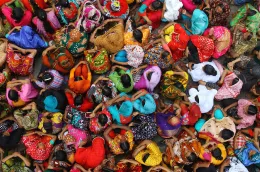
The empowerment of women in the Islamic Republic of Pakistan is increasingly being seen as a social goal only, it is viewed as the ‘enabler’ of the above-mentioned development and the source of overall economic growth for the nation.(Arab News) The principles of justice, dignity, and equality that are established in the Constitution of Pakistan and the national policy discourse, which are the very core of Islamic teachings, serve as the support for women’s complete involvement in the economic, social, and political spheres of life.(UNFPA Pakistan) As Pakistan is getting ready to have the 9th Organization of Islamic Cooperation (OIC) Ministerial Conference on Women in 2026, the country’s emerging role as a leader in the promotion of women’s empowerment in the Muslim world is becoming more and more important.(Dawn)
Women empowerment in Pakistan has been envisioned since the inception of the country when the founder of the nation, Quaid-e-Azam Muhammad Ali Jinnah, highlighted the indispensable contributions of women to the development of the state and called for their equal rights and opportunities. (UNFPA Pakistan) Gradually over the years, this vision has been realized in the form of important policy measures that included the National Policy for Development and Empowerment of Women (2002) which was the first step towards subsequent legal, economic, and political reforms aimed at broadening women’s rights and participation. (pakistan.unwomen.org)
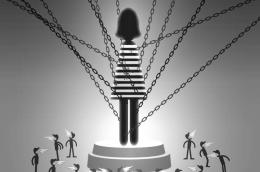
It has been more than 40 years since I was imprisoned in Iran for speaking out against human rights abuses and state executions, and for defending women’s rights. I spent eight years behind bars in Iran’s notorious Evin prison. I was tortured. I remember it as if it happened yesterday.
Every few years, uprisings erupt across Iran — and each wave of resistance is deeper and more widespread than the one before. In 2022, it was women who led the Woman, Life, Freedom movement after the murder of 22-year-old Mahsa Amini by the country’s “morality police,” and it revolutionized my country. Today, women wear what they want, go out in public with their boyfriends — even live with them — without fear of being arrested. Women earned these rights with their lives. In late December last year, the spark was once again lit — this time in an old bazaar in Tehran.
The demands are the same ones we raised in the 1980s: an end to poverty, corruption and unemployment, the right to organize, and freedom from repression. Despite the gains for women’s freedoms made since 2022, workers are still denied basic labor rights. Students are arrested and even executed for peaceful protest. Women are still fighting for fundamental rights. People are still risking their lives to stand up to torture and state violence.
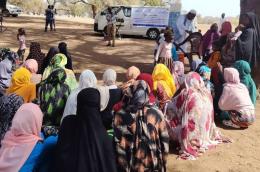
UN rights chief bears witness to trauma and resilience in Sudan
Volker Türk briefed journalists in the Kenyan capital following a five-day mission to Sudan, where “a chronicle of cruelty is unfolding before our very eyes”.
He called on “all those who have any influence, including regional actors and notably those who supply the arms and benefit economically from this war” to act urgently to bring it to an end.
Mr. Türk last visited Sudan in November 2022. Back then, he was deeply inspired by civil society—particularly the young people and women who spearheaded the 2018 revolution.
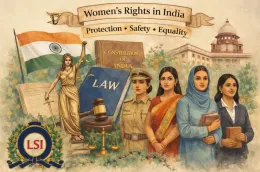
India has established a comprehensive legal framework to protect women’s rights and ensure their safety, dignity, and equality. These laws address various forms of discrimination, violence, and exploitation that women face in society. Understanding these rights empowers women to seek justice and protection when needed.
Constitutional Protections
The Indian Constitution provides fundamental safeguards for women. Article 14 guarantees equality before the law, while Article 15 specifically prohibits discrimination based on sex. Article 21, which protects the right to life and personal liberty, has been interpreted by courts to include the right to live with dignity, free from violence and exploitation. Article 23 prohibits trafficking in human beings and forced labor, offering crucial protection against exploitation.
Deadline: 05-Feb-2026
Women’s Fund Armenia (WFA) provides grants up to 500,000 AMD to feminist-led initiatives that advance women’s rights, challenge harmful social norms, and promote inclusivity. The fund supports events and projects that are intersectional, inclusive, and impactful, emphasizing meaningful engagement with diverse and marginalized communities.
Overview
The Women’s Fund Armenia (WFA) supports feminist-led events and initiatives that advance women’s rights, challenge societal norms, and promote inclusivity through intersectional feminist values. The initiative encourages creative and innovative approaches to advocacy and awareness, ensuring that feminist action is both feasible and impactful.
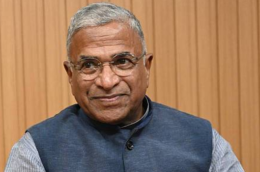
The Deputy Chairman of the Rajya Sabha, Harivansh, today highlighted India’s experience of women’s participation in governance across the three-tier democratic framework, comprising Parliament at the Union level, State Legislatures, and Local Self-Government institutions.
Addressing a session of the 28th Conference of Speakers and Presiding Officers of the Commonwealth (CSPOC) in New Delhi, Mr Harivansh noted that nearly 1.5 million women currently serve as elected representatives in local self-governing bodies, describing it as the largest experiment in women’s political representation anywhere in the world. He further highlighted that women-led local bodies demonstrate higher levels of transparency, closer monitoring, and stronger accountability.

A core component of the three-year regional OECD-MENA Transition Fund project on “Promoting women’s participation in parliaments and policy-making,” is conducting a country-based, peer-reviewed assessment of the existing opportunities and current challenges faced by women candidates. The purpose of this report is to present the findings of this assessment, with a view to identifying targeted policy recommendations that can be implemented to accelerate progress towards gender equality and women’s political empowerment in Jordan. Recommendations are based on findings of the assessment and international good practices.
This report presents both the enabling factors and obstacles in the election of more women to parliament and municipal councils. A second assessment analysed the parliament’s workplace operations, processes, internal procedures and policy-frameworks through a gender lens. The report reviews Jordan’s current legal framework, including adherence to international standards, and assesses the existence and effectiveness of the country’s institutions in promoting women’s political participation. Legal, institutional and social norms that serve as barriers to women’s political participation are highlighted in chapters 1, 2 and 4.
Click here to access the report.

Violence against women politicians is increasingly recognized as an issue that undermines women’s presence in politics. Latin America has been at the vanguard of this global discussion. In 2012, Bolivia became the only country in the world to criminalize “political violence and harassment against women.” Several other countries have similar legislation in the works. What explains the emergence of these bill proposals? This article argues that the creation of these bills is the result of three processes: activism at the local level used international norms to propose an innovative solution to a problem; women politicians and “femocrats” worked within the state apparatus to overcome resistance; and international actors worked to foster connections among activists and politicians across the region. In this process, international norms have been transformed, with important implications for women’s political representation.
Click here to access the article.

Violence against women and girls (VAWG) in digital contexts is not a new phenomenon, however it has rapidly escalated in the shadows of the COVID-19 pandemic as women’s lives shifted online for work, education, access to services, and social activities. While there continue to be significant gaps in data, one global report suggests that prevalence ranges from 16 per cent to 58 per cent.
Online VAWG occurs as part of a continuum that is often connected to offline violence and can encompass many forms including sexual harassment, stalking, zoom bombing, and these continue to multiply in a context of rapidly expanding digitalization. The impact of online VAWG can be as harmful as offline violence with negative effects on the health and wellbeing of women and girls as well as serious economic, social and political impacts.
This paper provides a brief overview of the existing data and evidence on online and technology facilitated VAWG, outlines some of the key developments, gaps, challenges, and emerging promising practices, and makes recommendations to be considered by governments, international organizations, civil society organizations, and the technology sector.
Click here to access the report.

- Gender equality has suffered since the pandemic began.
- It will now take an estimated 135.6 years to close the worldwide gender gap between men and women.
- However, progress is being made in areas including science and politics.
- Improving paternity policies and representation of women will help.
There is still a huge amount of work to do to achieve gender equality around the world.
The time it will take to close the gender gap grew by 36 years in just 12 months, according to the World Economic Forum’s Global Gender Gap Report 2021. This means it will now take an estimated 135.6 years for men and women to reach parity, according to the report, which assesses areas including economic participation and opportunity, educational attainment, health and political empowerment.
Click here to read the full article published by The World Economic Forum on 3 March 2022.

This report and accompanying policy brief is intended to trigger a UN ‘rethink’ about women’s participation in transitional justice at both the policy and programme levels.
Fundamentally, ‘meaningful’ women’s participation in transitional justice does not only involve women being present—instead, it involves the convergence of several elements and manifests when women from diverse backgrounds: have the ability to enter; are present; possess self-efficacy; deploy their agency; and exert influence over transitional justice processes.
It recommends several adjustments for UN policy and programming—both in general and in relation to the updating of the UN Secretary-General’s 2010 Guidance Note on transitional justice—to better promote women’s meaningful participation in transitional justice.
Click here to access the report.

This report assesses women’s access to justice and women’s political participation in parliament, local councils and civil society organisations in Colombia. It examines existing legal, political and institutional frameworks in order to better understand successes, challenges and implementation gaps in the government’s pursuit of access to justice and gender equality. The report also offers examples of different approaches in OECD member and partner countries to support Colombia in closing gender gaps. Based on this analysis, the report proposes actionable solutions to help Colombia design and deliver policies that effectively promote women’s political participation and access to justice, including for survivors of gender based violence.
Click here to download the full report published by the OECD on 11 July 2020.