Advocacy & Lobbying
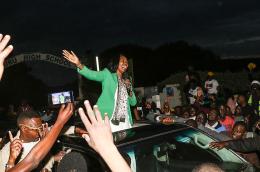
Mitigating violence against women in politics in Africa – insights from Ghana, Kenya and Zimbabwe
A new book maps how electoral violence affects women in local politics in Ghana, Kenya and Zimbabwe, showing how they are systematically targeted in ways that limit their participation and help maintain male-dominated political systems.
Drawing on 134 interviews with politically active women, this new book – Making politics safer –documents a wide range of violence and abuse, including physical and sexual attacks, psychological pressure, economic manipulation and symbolic humiliation. It also highlights intimidation, online harassment, disinformation and violence within political parties as common tools used to sideline women.
Younger and unmarried women, those from marginalised ethnic groups, and those in opposition parties are found to face the highest risks. Even in countries where gender quotas exist, such as Kenya and Zimbabwe, a higher number of women in elected positions has not resulted in safer conditions.
Hello there, friend. I should be direct with you right from the start: this piece represents months of research into Nigerian cultural dynamics and years of experience observing how gender roles shape daily life across Nigeria’s diverse communities. What I’ve learnt during this time has fundamentally changed how I understand the relationship between tradition, modernity, and identity in Nigerian society.
I remember sitting in a Lagos restaurant last year, watching a young couple navigate who would pay the bill. The man reached for his wallet immediately, almost reflexively. The woman protested, insisting they split it. The waiter looked confused, unsure where to place the card machine. That moment encapsulated the complex dance between traditional expectations and contemporary realities that defines gender roles in Nigeria currently.
Gender roles in Nigerian culture operate across multiple dimensions. They influence everything from household responsibilities to career choices, from courtship protocols to political participation. Understanding these dynamics requires looking beyond simple generalisations to recognise how ethnicity, religion, education, and geography all shape what Nigerian society expects from men and women.
But here’s what makes this topic particularly fascinating (and occasionally frustrating): Nigerian gender roles are currently undergoing significant transformation. The traditional frameworks that governed gender relations for generations now exist alongside modern ideas about equality, autonomy, and shared responsibility. The result is neither purely traditional nor completely contemporary. Rather, it’s something distinctly Nigerian, shaped by our history whilst responding to present realities.
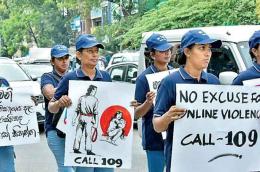
Digital platforms are now central to political campaigning in Sri Lanka. During the 2025 local elections, they offered a clearer view of how political engagement unfolds online, particularly for women in public life.
Drawing on Democracy Reporting International’s recent work on Sri Lanka’s 2025 local elections, analysis of Facebook and YouTube comments shared during the campaign period highlights how candidates were discussed on social media, the tone of those conversations, and the contrasting patterns of online responses directed at women and men in politics.
Social media is often viewed as a space that can broaden participation and diversify political debate. In practice, however, online engagement around women candidates frequently extends beyond policy positions, shifting instead toward personal and gendered lines of commentary.
A global pattern
Women who step into public political life face coordinated campaigns of online abuse designed to silence them. In Europe and Central Asia, a 2023 UN Women study across 13 countries found that 53 percent of women online had experienced technology-facilitated violence. Across the Asia-Pacific region, 60 percent of women parliamentarians report facing online gender-based violence. In Brazil, analysis of online content during the 2020 São Paulo mayoral election found that female candidates were targeted with substantially higher levels of abusive and sexist commentary on social media platforms than their male counterparts. This has documented persistent attacks on women candidates’ competence, appearance, and morality, while male candidates were more frequently discussed in relation to policies and political performance.
Similar findings emerged from another analysis conducted in the Middle East and North Africa. Analysing online political discourse across several countries, reveals that women politicians were disproportionately targeted with gendered insults, sexualised language, and threats of violence. The volume and nature of abuse contributed to self-censorship, with many women limiting their online engagement to avoid harassment.
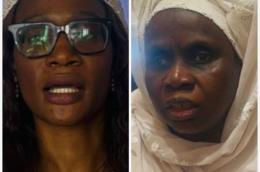
Two former National Assembly Members have expressed concern over the low representation of women in political affairs, citing a lack of empowerment as well as cultural and religious barriers.
Speaking in separate interviews, Ndey Yassin Secka and Yakumba Jaiteh described the situation as a major setback to inclusive governance and national development.
Ndey Yassin Secka says women’s limited participation in decision-making processes undermines democracy, stressing the need for greater empowerment to enable women to contest presidential and parliamentary elections.
She noted that although women play leadership roles in society, they remain largely excluded from senior political positions.
“We understand that not all women are interested in politics, but even the few involved can make a significant difference,” Secka said, adding that politics should be transparent and inclusive.
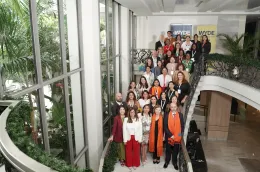
“As highlighted by CEDAW General Recommendation No. 40, parity and the full participation of women are the only way to guarantee the exercise of all other rights. It also serves as a safeguard against the discrimination and violence that women face in their daily functions and trajectories in public and political life” affirmed Bibiana Aido, UN Women Regional Director for the Americas and the Caribbean, opening the Regional Intergenerational Dialogue on Women’s Leadership.
Echoing this call, Marcela Ríos Tobar, Regional Director for Latin America and the Caribbean at International IDEA, emphasized: “Effective parity has helped improve democracies in Latin America. Moving toward balanced representation between women and men in politics is an effective mechanism to strengthen the connection and legitimacy of institutions and to make equality a reality as a pillar of democracy.”
Referring to the European Union’s shared values, Minister Councillor Jesús Moreno Díaz from the Delegation of the European Union to Panama affirmed: “Gender equality is a fundamental pillar of democracy, peace and prosperity. In particular, equal participation in decision-making not only provides a balance that strengthens democracy and promotes its proper functioning, but also reflects in a more accurate way the composition of society, including the interests of women”.
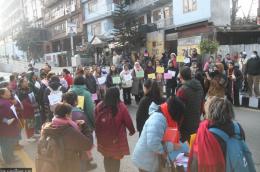
Women’s rights activists and civil society organisations staged a protest in Kathmandu on Friday, accusing political parties of undermining the constitutional principles of inclusive democracy while selecting candidates under the proportional representation (PR) category for the House of Representatives elections scheduled for March 5.
The demonstration under the banner ‘‘Pressure campaign for women’s rights’’ began at Maitighar Mandala and concluded at Hotel Everest, New Baneshwar. Over 200 people participated.
The campaign was coordinated by the Women’s Rehabilitation Centre (WOREC) Nepal, an organisation working on women’s rights and gender equality, and the Federation of Non-Governmental Organisations Nepal, which supports and coordinates civil society initiatives across the country.

In 2016 at the launch of the #NotTheCost campaign, NDI presented a list of strategies to address and prevent violence against women in politics, focusing on a wide range of potential change-makers, from the global to the grassroots levels. While a deeper understanding of the issue has emerged, new problems have arisen. The world is grappling with a global pandemic. Many countries have seen their democratic institutions severely weakened. Technological innovations have created new contexts and means of perpetrating violence against women. On the fifth anniversary of the #NotTheCost campaign, NDI is renewing its call to action and presenting new opportunities to end both prevailing and newly emerging types of violence against women in politics. In the 2021 call to action, NDI identifies new opportunities to end both prevailing and newly emerging types of violence against women in politics.
Click here to read the full report.
The OSCE Office for Democratic Institutions and Human Rights (ODIHR) organized the conference "Promoting the political participation of women with disabilities" in Vienna on 16 and 17 April 2018. The event was held as part of ODIHR’s project “Our right to participate – Promoting the participation of Persons with Disabilities in political and public life (Phase II)”, implemented across the OSCE region.
The conference served as a platform to raise awareness about the limited participation of women with disabilities in political life across the OSCE region and to identify positive measures which can facilitate more diverse and inclusive democratic institutions and parliaments. It explored ways to strengthen linkages between the women’s movement and the disability movement, drawing on common experiences, challenges and opportunities.
Click here to read the meeting report.
Inclusive politics remains an elusive goal in Pakistan, which has a history of military interference in governance institutions, unstable elected governments and internecine conflict. Women’s voices, within the corridors of power or as constituents whose interests must be accounted for, have been weak but are growing stronger.
Activism, led by the women’s movement and civil society advocacy groups since the 1980s, has yielded results. The state has opened up democratic spaces to women in elected legislatures and local bodies through an expanded reserved seats quota; and recently legislators revised electoral rules to mandate a minimal level of women’s greater inclusion as candidates and voters.
This paper aims to contribute to the growing body of literature around how feminist mobilisation and political voice leads to progressive policy outcomes. It does this through exploring three questions:
How did the women’s movement lead to the decision to restore and increase the quota for women in elected bodies?
How have women used their elected positions, and worked in caucuses, to promote their interests? What other measures will further strengthen their political voice?
Can we gain insight into pro-women policymaking by looking at women’s activism, political voice, and other factors within a broader contextual framework to identify patterns that may predict further progress?
Click here to see the paper.
Given that 2018 is the centenary of some women gaining the vote in the UK, the British Council has commissioned this research to map and understand the key developments in women’s role in politics in the UK and around the world over the last 100 years, contrasting the UK’s progress with international examples.
This report will form a basis for developing international discussion and debate about these vital issues and generating opportunities to do even more to support women’s political participation. This is in furtherance of Sustainable Development Goal (SDG) 5.5 – ‘Women’s full and effective participation and equal opportunities for leadership at all levels of decision-making in political, economic and public life’ and supports the British Council’s role of creating opportunities, building connections and engendering trust as the UK’s international organisation for cultural relations and educational opportunities.
The research engaged a range of participants from the UK as a whole, the nations of Northern Ireland, Scotland and Wales and internationally through 40 individual interviews; six roundtables with 77 stakeholders and over 60 talking head short films to reflect many different experiences and a range of expertise. There was a desire to understand the direct experiences of participants, and their voices and views were drawn on directly throughout. Participants were mainly women and ranged from those with direct experience as politicians, to those who are experts as academics, international consultants and activists in the field of women’s political participation.
Click here to read the full report.

Today’s political landscape poses complex global challenges to democracies.
The landscape is shaped by globalization, geopolitical power shifts, changing roles and structures of (supra)national organizations and institutions, and the rise in modern communications technologies. Transnational phenomena such as migration and climate change influence the dynamics of conflict and development, citizenship and state sovereignty. Rising inequalities, and the social polarization and exclusion they generate, skew political representation and voice, reducing the vital moderate centre of the electorate.
These dynamics have contributed to a widely contested view that democracy is in decline. Events around the world continue to challenge the notion of democracy’s resilience and make democratic systems appear fragile and threatened. Yet democratic values among citizens, and within institutions at the national and international levels, continue to be expressed and defended.
This Overview of International IDEA’s The Global State of Democracy 2017: Exploring Democracy’s Resilience outlines the key current challenges to democracy and the enabling conditions for its resilience. Based on newly developed Global State of Democracy indices as a key evidence base to inform policy interventions and identify problemsolving approaches, the publication presents global and regional assessments of the state of democracy from 1975—at the beginning of the third wave of democratization—to 2015, complemented by a qualitative analysis of challenges to democracy up to 2017.

A single moment can spark a revolution, collective actions can transform laws, creative expression can change attitudes and an invention can alter the course of history. It’s these threads that weave together to propel the women’s movement — even in the face of obstacles. Discover how some of these strands, big and small, have shaped your lives, and the rights and lives of women and girls worldwide.
Explore women’s activism from generations past and present with this UN Women interactive platform.