Elections
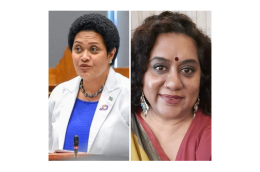
THE lack of women representation in parliaments across the world remains a vexed and contentious issue.
In Fiji, this problem again surfaced for debate in response to Deputy Prime Minister Manoa Kamikamica’s call for a quota system to increase women’s representation in Parliament.
Mr Kamikamica was speaking at the “Capacity building training for prospective women and youth candidates in local elections” workshop in Suva in November last year.
The workshop was organised by Suva-based civil society organisation, Dialogue Fiji, in collaboration with Emily’s List Australia and funded by Misereor.
Mr Kamikamica noted that women’s representation in Fiji’s Parliament peaked at 20 per cent in 2018, only to drop to 14 per cent after the 2022 elections.
Read here the full article published by The Fiji Times on 11 Janurary 2025.
Image by The Fiji Times

Handicraft market trader Tui Johnson has barely had time to think about politics ahead of Vanuatu’s national election as she struggles to survive after last month’s earthquake.
Fourteen people were killed, more than 200 seriously injured and 80,000 people displaced or adversely affected when the 7.3 magnitude quake struck just off the capital Port Vila on Dec. 17.
As the Pacific nation comes to terms with the devastation of its major city, it will still go to the polls on Jan.16 after a snap election was called in November.
The city center – where Johnson’s handicraft market is located – suffered major damage and access is still restricted for safety reasons.
Read here the full article published by Benar News on 13 January 2025.
Image by Benar News

In recognition of the gender gap in political representation, the Inter-Party Advisory Council (IPAC) Nigeria has expressed support for the passage of a bill before the National Assembly to reserve special seats in national and state legislatures for women.
As part of its commitment to strengthen the country’s democracy, the group has also resolved to intensify its role in promoting credible elections and democratic governance, by supporting more electoral reforms.
IPAC has also resolved to uphold the rule of law, adhere to constitutional provisions by political parties and help to address issues such as voter apathy, electoral violence, and vote-buying through advocacy and civic engagement initiatives.
These resolutions were part of the communique issued by IPAC Nigeria, at the end of a three-day constitution review session held in Ikeja, Lagos recently.
Read here the full article published by The Nation Online on 8 January 2025.
Image by The Nation Online

Only 28 women stood for parliament out of 258 contestants, representing 10.85 per cent. Only three women won their seats. This represents 4.92 per cent of the 61 seats. It’s a drop from 5.26 per cent in the 2019 elections.
In Botswana, women make up 54 per cent of the eligible voters. Yet few occupy the corridors of power, where decisions and policies that affect them are made.
The country has been praised for being a model democracy. One of the reasons is that it has held regular elections since independence in 1966.
There are, however, flaws in Botswana’s democracy. One is that women are woefully under-represented in government.
I am a scholar of public policy in southern Africa. I am also a proponent of equal representation of women, who are a marginalised majority. In my research, I argue that women’s limited participation hinders the consolidation of democracy.
Democracy is inconceivable without political parties. They put into practice the principle of representation. They select, nominate and support candidates for political office. Botswana needs to focus attention on improving the role of political parties as gatekeepers to the democratic space.
Read here the full article published by The Eastleigh Voice on 15 December 2024.
Image by The Eastleigh Voice
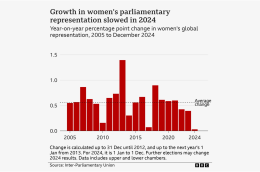
Nearly half the world's population - 3.6 billion people - had major elections in 2024, but it was also a year that saw the slowest rate of growth in female representation for 20 years.
Twenty-seven new parliaments now have fewer women than they did before the elections - countries such as the US, Portugal, Pakistan, India, Indonesia and South Africa. And, for the first time in its history, fewer women were also elected to the European Parliament.
The BBC has crunched numbers from 46 countries where election results have been confirmed and found that in nearly two-thirds of them the number of women elected fell.
The data is from the Inter-Parliamentary Union (IPU) - a global organisation of national parliaments that collects and analyses election data.
There were gains for women in the UK, Mongolia, Jordan and the Dominican Republic, while Mexico and Namibia both elected their first female presidents.
However, losses in other places mean that the growth this year has been negligible (0.03%) - after having doubled worldwide between 1995 and 2020.
Read here the full article published by the BBC on 29 December 2024.
Image by BBC

There’s a question that has consistently gripped Botswana’s politics: bomme ba kae? (where are the women?). It became even more urgent with the country’s 2024 general elections.
Only 28 women stood for parliament out of 258 contestants, representing 10.85%. Only three women won their seats. This represents 4.92% of the 61 seats. It’s a drop from 5.26% in the 2019 elections.
In Botswana, women make up 54% of the eligible voters. Yet few occupy the corridors of power, where decisions and policies that affect them are made.
The country has been praised for being a model democracy. One of the reasons is that it has held regular elections since independence in 1966.
There are, however, flaws in Botswana’s democracy. One is that women are woefully under-represented in government.
I am a scholar of public policy in southern Africa. I am also a proponent of equal representation of women, who are a marginalised majority. In my research I argue that women’s limited participation hinders the consolidation of democracy.
Read here the full article published by The Conversation on 13 December 2024.
Image by The Conversation

Women participation in different aspects of elections is increasing in Tanzania, but candidates still have to contend with many challenges, the Tanzania National Elections Gender Assessment report says. The report by the International Republican Institute (IRI), notes, however, that while the percentage of women representation through affirmative action is picking up, many of the women are still reluctant to go for competitive elective posts. The IRI notes in the report that the 2015 General Election saw noteworthy developments in the women's participation in politics. For more details, read the report here.
Source: AllAfrica Global Media
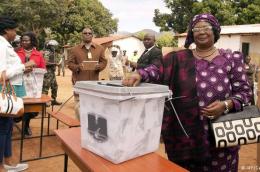
In the 2014 elections in Malawi, the incumbent female president Joyce Banda lost the presidency, and the number of women MPs was reduced from 43 to 33. This decline in women representation came despite opinion polls showing strong support for women’s political rights and for equal gender representation in politics. Why has women’s representation gone down when public attitude surveys indicate strong support for women? Click here for the answer.
By Tiyesere Mercy Chikapa, Lecturer of Public Administration and Human Resource Management, Department of Political and Administrative Studies (PAS), Chancellor College, University of Malawi.
Chr. Michelsen Institute (CMI) Brief, vol. 15 no. 6, 4 p.

Abstract: Though more than 100 countries have adopted gender quotas, the effects of these reforms on women's political leadership are largely unknown. We exploit a natural experiment—a 50–50 quota imposed by the national board of the Swedish Social Democratic Party on 290 municipal branches—to examine quotas’ influence on women's selection to, and survival in, top political posts. We find that those municipalities where the quota had a larger impact became more likely to select (but not reappoint) female leaders. Extending this analysis, we show that the quota increased the number of women perceived as qualified for these positions. Our findings support the notion that quotas can have an acceleration effect on women's representation in leadership positions, particularly when they augment the pool of female candidates for these posts. These results help dispel the myth that quotas trade short-term gains in women's descriptive representation for long-term exclusion from political power.
Click here to access the article.
The authors:
Diana Z. O’Brien is Assistant Professor in the Department of Political Science at Indiana University.
Johanna Rickne is Research Fellow at the Research Institute of Industrial Economics and Affiliated Researcher at the Uppsala Center for Labor Studies.
Conventional knowledge on the effectiveness of gender quotas for enhancing women’s political participation has, to date, been unanimous on the superiority of quotas in proportional representation (PR) systems. Yet this view overlooks the many possible alternatives to implementing gender quotas in single-member district (SMD) systems. This paper studies gender quotas (or temporary special measures, TSMs) in SMD electoral systems. Drawing on case examples from Uganda, France, India and elsewhere, we refute the myth of the incompatibility of quotas in SMDs. Our research investigates and presents multiple ways in which quotas can be successfully implemented in SMDs.