
Elections

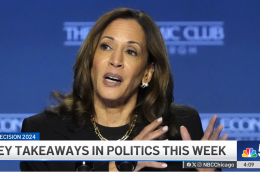
Hillary Clinton's loss in 2016 made some voters question whether a woman can be president.

Now, eight years later, a second woman, Vice President Kamala Harris, tops the presidential ticket. Comparisons have been drawn between the two candidates and their campaigns; however, Dr. Malia Bowers, a professional lecturer from DePaul University, notes a big difference: Clinton made the historic nature central to her campaign.

"'I'm with Her.' You think back at the DNC when she came out to give her speech, and there was that huge thing of the glass ceiling shattering. That kind of imagery, that kind of rhetoric, has not really been present for Kamala Harris," said Bowers, who teaches courses in public law and American politics.

"There's really good research showing that sexism did play a role in Hillary Clinton's loss in 2016. So, I think that it is a strategic move to kind of shift the conversation away from identity markers," Bowers said.

Instead, Bowers believes Harris has positioned herself as the "change" candidate.

Read here the full article published by NBC 5 Chicago on 18 October 2024.

Image by NBC 5 Chicago


There were back-to-back firsts for women in Maritime politics over the last few days.

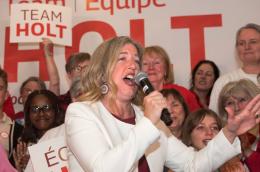
New Brunswick Liberal Leader Susan Holt will become the first woman to be the province’s premier. During her victory speech Monday night, Holt thanked those who paved the way for her.

“I also want to take a moment to recognize a couple particular people who came before me. Brenda Robertson. Shirley Dysart, the first woman leader of the Liberal party. Elizabeth Weir, the first woman to lead in the legislature. Aldea Landry, and all the women who came before me to make tonight possible,” said Holt.

Even those across party lines were impressed.

“As a woman, I am proud. I understand that as a member of the PC Party, I’m certainly disappointed, but you can’t help but be proud as a woman tonight,” said former New Brunswick PC MLA Andrea Anderson-Mason during CTV Atlantic’s election coverage Monday night.

Read here the full article published by CTV Atlantic News on 22 October 2024.

Image by CTV Atlantic News


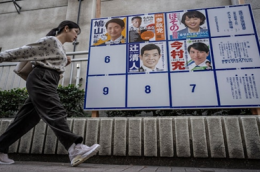
Karen Makishima is the only female running for Japan's ruling party in her 20-seat prefecture for the Oct 27 general election, reflecting the tough battle women face in breaking into the country's male dominated politics.

Her Liberal Democratic Party (LDP) has promised to narrow one of the widest gender gaps among lawmakers in the democratic world, but even with a record fifth of all election candidates being women, it and other parties will likely fail to hit a government target of 35% female lower house candidates by 2025.

While surveys show societal attitudes towards women in Japan are a barrier, some also say the ruling LDP, which has governed for almost all the post-war period, is not serious about shrinking the gender gap in lawmakers, citing its failure to implement bolder measures.

Only 16% of LDP candidates in the upcoming poll are women, compared with 22% for the opposition Constitutional Democratic Party of Japan (CDPJ), according to a Reuters' analysis.

Gender inequality may not be a top issue in the snap election, but the scandal-hit LDP, which also faces an upper house poll by July, needs every vote, both from men and women, with polls suggesting it may lose its long-held majority.

Read here the full article published by Japan Today on 23 October 2024.

Image by Japan Today

 

Gender remains a significant indicator for political preference. While the 'gender vote gap' isn't new, recent polling data on the US election indicates the gap in voting preference between men and women seems to be widening. But why? And how significant is it?

Has there always been a gender vote gap?

Gender has long been a powerful indicator for voting choice. Not since Bush Snr in 1988 have more women voted for a Republican candidate than for a Democrat. In the last two elections, polling company Edison found that women were 15% more likely to vote for Joe Biden and 13% more likely to vote for Hillary Clinton than for Donald Trump. Only twice since 1988 have men turned out more for a Democrat than a Republican - Bill Clinton in 1992 and Barack Obama in 2008. Men were 8% and 11% more likely to vote for Trump in 2020 and 2016 respectively. Unsurprisingly, considering electoral history, a recent study found that men are 18% more likely to vote for Trump, whilst women are 7% more likely to support Kamala Harris. 

This 25% cumulative gender gap is the largest since 1984 and worryingly seems to show a growing disconnect. Over the past 25 years the partisan gap between young men and women has risen dramatically - Gen Z women are the most progressive group in American history, but Gen Z men are increasingly conservative. Polling of swing states by the New York Times found that whilst young men preferred Trump by 13 points, young women favoured Harris by 38 points - a staggering 51% gender gap amongst young Americans, by far the largest of any age group. 

Read here the full article published by Best For Britain on 22 October 2024.

Image by Best For Britain


A record number of women are running in Japan’s general election this month, although they still account for less than a quarter of candidates, local media said Wednesday.

New Prime Minister Shigeru Ishiba is seeking to shore up his mandate in the October 27 vote by retaining a majority for the long-ruling Liberal Democratic Party.

Japan has never had a woman prime minister and Ishiba narrowly beat one of its few prominent female politicians, nationalist Sanae Takaichi, to the top job in a party leadership vote.

The 1,344 lower house candidates who kicked off their campaigns on Tuesday for all 465 seats include a record 314 women, Japanese media including the Yomiuri and Asahi dailies said.

The ratio of women candidates – around 23 percent – is also a record high, according to the Yomiuri.

Read here the full article published by the First Post on 16 October 2024.

Image by First Post


What are the issues?

On October 11, Mongolians head to the polls for nationwide local elections. This latest round of elections, which follows the country’s June parliamentary elections, features more than 17,000 candidates competing for more than 8,000 seats across a vast expanse of territory roughly the size of western Europe. Available seats include sub-national, provincial, and soum (county) Citizen Representative Khural (local governing councils).

The two-week campaign period kicked off on September 26, and 15 political parties and one coalition are competing vigorously. Despite the wide variety of political parties competing, most of the political parties are only competing in the capital city, Ulaanbaatar, while Mongolia’s two major political parties, the center-left Mongolian People’s Party (MPP) and center-right Democratic Party (DP), which have dominated local and rural politics over the last three decades, are running in constituencies across the country. Ulaanbaatar is home to half the country’s population, making the political parties’ agendas for addressing pressing issues in the city particularly impactful. The Democratic Party (DP), led by mayoral candidate T. Battsogt, is running under the slogan “City for Children” and is focusing on child-friendly urban development, addressing the housing crisis, improving employment, and promoting transparency in city governance. The DP is criticizing the Mongolian People’s Party (MPP) for what it describes as the party’s mismanagement of the past eight years in the capital. In the eight local elections held since 1992, the DP has won only once, in 2012.

Read here the full article published by the International Republican Institute on 10 October 2024.

Image credits: International Republican Institute