Elections
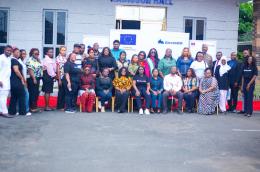
ElectHER, a pan-African non-partisan organisation advancing gender-inclusive democracy, has concluded a two-day engagement in Anambra State combining a multi-stakeholder roundtable with an advocacy visit to security agencies, as part of efforts to ensure an inclusive, peaceful and secure governorship election on November 8, 2025.
The stakeholder engagement roundtable, held on Wednesday at the Radisson Onyx Hotel, Awka, brought together representatives of the Independent National Electoral Commission, security agencies, political parties, civil society, academia, journalists and grassroots leaders.
Discussions centred on voter mobilisation, women’s participation and strategies to deliver credible, inclusive and peaceful polls. The engagement was convened with support from the European Union Support to Democratic Governance in Nigeria programme, which partners with civil society to deepen electoral integrity and inclusion.
Speaking during the event, the Chief Executive Officer, ElectHER, Ibijoke Faborode, noted that Anambra State has a legacy of women’s political visibility, starting from Dame Virginia Etiaba’s tenure as Nigeria’s first female.

In the 9th Assembly, a constitutional amendment bill to create special or reserve seats for women in parliament failed to see the light of day as both the Senate and the House of Representatives failed to vote positively for the bill. This attracted protests from women’s groups at the gate of the National Assembly for about a week. The bill, which was reintroduced in the 10th Assembly, has continued to generate serious attention from members of the House of Representatives, with the Speaker, Abbas Tajudeen, being the chief driver. Unfortunately, it has not gained the same momentum in the Senate. This has raised a series of questions about whether or not the bill will sail through when the lawmakers vote on the bill. TONY AKOWE reports
For several years, Nigerian women have clamoured for what they called equal representation in the political affairs of the country. Beginning from the 35 percent affirmative action canvassed at the Beijing conference, the agitation has grown by the day. With less than 20 women out of about 469 lawmakers in Nigeria’s National Assembly, the under-representation of women has continued to grow. Incidentally, this number has been on a downward trend since 1999. With only 3 women in the Senate and 13 women in the House of Representatives in 1999, the figure rose to 4 Senators and 21 Representatives in 2003 and 9 female Senators in 2007, with 27 House members becoming the highest ever women representation in the National Assembly. The figure dropped to 7 Senators and 26 House members in 2011. While the number of Senators increased to 8 each in 2015 and 2019, the number of House members continued to drop, dropping to 22 in 2015 and 13 in 2019.
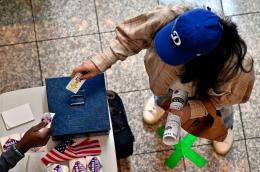
Polls and pundits have offered up plenty of predictions, but in a democracy, voting rules. The elections this fall will provide hard data on President Donald Trump and the GOP’s prospects for retaining a majority in the U.S. House, as the country and the world take stock of the national mood leading into next year’s midterms. On the ballot are state
offices in Virginia and New Jersey, U.S. congressional seats, control of the Pennsylvania Supreme Court and more.
In all contests, women’s votes will be key—and not just because women vote more than men.
Celinda Lake, a leading pollster and president of Lake Research Partners, has studied public opinion for decades. She told Ms. that women “are our own voters, we make up our own minds. … Women really want government to be a help for their families. They believe that they could depend on a social safety net program.”
This is one reason why there’s been a marked gender gap in U.S. elections since at least 1980, with women more often favoring Democratic candidates than men—often decisively.
Statewide races offer the best barometers of public sentiment toward the current administration, and we’ll be closely watching the gubernatorial races in New Jersey and Virginia.
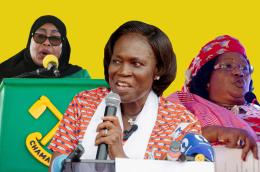
For much of her political life, Simone Gbagbo has been known as the combative partner of Côte d’Ivoire’s former president, Laurent Gbagbo. Her sharp rhetoric earned her the nickname “The Iron Lady.” Now, the onetime first lady is charting her own course.
Côte d’Ivoire’s Constitutional Council cleared Gbagbo to run in October’s presidential election, making her one of two women on the ballot in a race long dominated by men. Her candidacy carries weight beyond her party base in a country where just 13.4 percent of lawmakers are women. Her entry into the field is described as both politically consequential and symbolically resonant.
Full article here.

Since April 2024, UNIEAT has delivered 38 BRIDGE training workshops nationwide, in all ten States and the Greater Pibor Administrative Area, to 1,003 participants (637 men and 366 women) representing the National Elections Commission (NEC), State High Election Committees (SHECs), State-level government authorities, women organizations, youth groups, disability persons organizations and media. The workshops, supported by the United Nations Integrated Electoral Assistance Team (UN IEAT), covered topics including Introduction to Electoral Administration, Building Institutional Excellence in Elections, Civic and Voter Education, Operational Planning, Gender Equality, Violence Against Women in Elections, Access to Electoral Processes, Boundary Delimitation and Voter Registration.
BRIDGE (Building Resources in Democracy, Governance and Elections) is an internationally renowned election training curriculum which draws on comparative examples from different countries on all aspects of electoral administration using 17 training modules.
The program stands out for its participatory methods, focusing on inclusion and engagement. Sessions are designed to be practical and interactive, with group work, role plays and energizers to keep everyone involved. The program successfully developed a cadre of 19 South Sudanese facilitators by a group of accrediting workshop facilitators. Of those, 6 facilitators were awarded BRIDGE certification after completing a minimum of 30 hours of module workshop facilitation, placing them as the first cohort of BRIDGE accredited trainers in the country.
Introduction
In several countries, including in Venezuela, El Salvador, Thailand, and Tunisia, electoral contests were indeed manipulated by incumbents to further entrench their power. But the global picture was not uniformly negative. Whether in Sri Lanka, Bangladesh, Senegal, or Guatemala, citizens mobilized from below to push back against executive overreach and bad governance. Although far-right leaders and parties made gains in several Western democracies, including in Austria, France, Germany, Portugal, and the United States, this same pattern was not evident in many other parts of the world, where politics were shaped by other issues and cleavages.
Despite these varied political outcomes, the past year’s record number of elections brought no uptick in women’s political representation. Globally, women’s parliamentary representation and the number of countries led by women failed to increase.
The barriers to reaching gender parity in politics are mounting, from continuing democratic erosion and rising ethno-nationalism to a widening pushback against progressive gender norms in different parts of the world. Yet looking beyond global and regional averages also reveals surprising bright spots. In countries as diverse as Mongolia, Sri Lanka, and the United Kingdom, more women are serving in political office than ever before. Several countries elected their first-ever female presidents, including Mexico and Namibia.
This report analyzes advances and setbacks in women’s political representation in 2024, building on the mid-year assessment published by the Colmena Fund for Women’s Political Power in October. It begins by examining global trend lines in women’s parliamentary and executive representation, highlighting both progress and backsliding. It then turns to four countries that held significant elections over the past year and interrogates their impact on women’s political power: the Dominican Republic, India, South Africa, and Sri Lanka. To close, the analysis draws attention to several broader themes that emerged from the electoral contests of the past year.
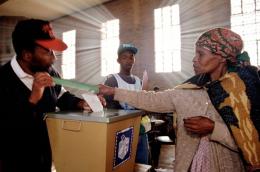
This year marks the centennial of the ratification of the 19th Amendment to the United States Constitution, which guarantees women the right to vote. But the United States was hardly the first country to codify women’s suffrage, and barriers to vote persisted for some groups of U.S. women for decades. At least 20 nations preceded the U.S., according to a Pew Research Center analysis of women’s enfranchisement measures in 198 countries and self-administering territories. Today, none of these 198 countries and territories bar women from voting because of their sex; some countries do not hold national elections.
Here is a closer look at the history of women’s suffrage around the world. This analysis focuses on when women in each country won the right to vote in national elections, not regional or local elections.
Click here to read the full article published by the Pew Research Center on 5 October 2020.
RepresentWomen tracks women's representation and leadership in the United States and around the world to identify the "best practices" for creating a more representative government. Our research indicates that even as more women run, electoral rules and systems play a major role in determining electoral outcomes. As seen in both our 2016 and 2020 reports, we find that electoral outcomes for women and people of color are overall better in jurisdictions that have implemented ranked choice voting (RCV).
The 2020 ranked choice voting report, "In Ranked Choice Elections, Women WIN" provides a thorough review of ranked choice voting in the United States and how it is impacting women's representation in the cities that have implemented it. Over the last decade, 19 cities and counties have used ranked choice voting to elect sitting city officials, including 13 mayors and the city councilmembers in 14 jurisdictions. Over the last decade (2010-2019), women have won 45% of all municipal ranked choice elections. As of April 2020, nearly half of all mayors (46%) and 49% of all city council seats decided by RCV are held by women.
Click here to see the report.
Political campaigns online have demonstrated that they can help candidates win elections, include more citizens’ concerns in political debates or allow upcoming parties to gain political exposure.
However, social media can also have a negative effect on political and electoral integrity by attacking an essential principle of democracy: the fundamental right of citizens to access trustable, reliable information to form their political opinions and, ultimately, decide their votes.
In this context of potential manipulation of public opinion through digital information operations, electoral management bodies, monitoring authorities, legislators and political parties face increasing difficulty in protecting the integrity of the political process.
Based on International IDEA’s work in Tunisia, Panama and Bolivia, this Fact sheet seeks to identify some overarching recommendations and a way forward based on how these types of activities may have potentially influenced their recent elections.
Click here to see the fact sheet.
In late 2018 and early 2019 UN Women interviewed 87 per cent of the women who ran for Parliamentary election (75 of the 86 women; of the 113 women who registered to run, 86 made it on to candidate lists). This report summarizes their stories and experiences as candidates and looks at issues of: violence against women in politics, financial constraints and campaign management, media and image portrayal, violence harassment and discrimination.
Click here to see the report.
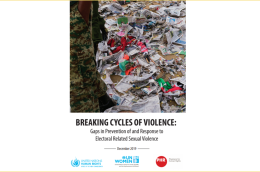
Introduction
I was targeted because my husband is from a different community that was perceived to hold a differing political opinion from the one of the dominant community we live in.’
Survivor of sexual violence during the 2017 elections interviewed in this research Electoral-related sexual violence (ERSV) is a form of sexual violence, including rape, gang rape, sexual assault and defilement, associated with electoral processes and/or intended to influence or achieve a political end within an electoral process. In Kenya, sexual violence has been a recurrent feature of elections, which have been marred by deadly violence, unrest and serious human rights violations and abuses. Outbreaks of sexual violence during elections have been documented since the 1990s.Following the post-election violence in 2007/2008, the Commission of Inquiry into the Post-Election Violence (CIPEV), known as the ‘Waki Commission’, documented 900 cases of sexual violence perpetrated by security agents, militia groups and civilians against both men, boys, women and girls in a context of large scale violence, mass displacement and more than 1,000 deaths.
CIPEV provided critical recommendations for reform and was followed by the historic adoption in 2010 of a progressive Constitution with a robust Bill of Rights. Since 2010, an impressive set of laws, policies and standard operating procedures have been developed on prevention and response to sexual violence. Yet, during the general elections held in August and October 2017, within a context of localised violence, large numbers of cases of sexual violence perpetrated by persons in uniform and civilians were again documented. According to the Kenya National Commission on Human Rights (KNCHR), at least 201 Kenyans – most of them women and girls — were subjected to rape and other forms of sexual violence; [4] however the actual figure is likely higher due to under-reporting and the fact that KNCHR documented these in 11 of the 47 counties.
Click here to see the report.
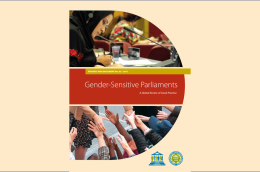
The Report on Gender-Sensitive Parliaments is the result of a two-year research project. It follows up on a previous IPU publication, Equality in Politics: A Survey of Women and Men in Parliaments (2008). That Survey had found that women were overwhelmingly the main drivers of progress in gender equality in parliament, but that parliaments, as institutions, must also shoulder their share of the responsibility. This finding begs the questions: What are parliaments doing to foster gender equality? What policies inform gender equality efforts? Are the institutional structures of parliaments around the world mindful of both men and women? In short, are parliaments gender-sensitive?
The Report seeks to provide answers to these questions. Simply put, a gender-sensitive parliament is one that responds to the needs and interests of both men and women in its structures, operations, methods and work. This publication not only provides an important assessment of the gender sensitivity of the world's parliaments, but also identifies key steps parliaments can take to become gender-sensitive institutions that contribute to the achievement of gender equality.
Click here to see the report.