Women's Leadership
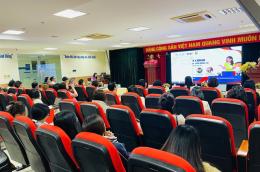
HÀ NỘI — Women’s participation in politics is widely seen as a key measure of social progress and an important driver of socio-economic development, gender equality and sustainable growth.
Speaking at the seminar themed 'Women in Politics – A Story That Belongs to Everyone', held on Wednesday in Hà Nội, Associate Professor Dương Kim Anh, deputy director of the Việt Nam Women’s Academy (VWA), highlighted the growing role of women in shaping public policy and governance.
The event was organised by the VWA in co-ordination with the Australian People for Health, Education and Development Abroad Office in Việt Nam (APHEDA) to mark the upcoming election of the 16th National Assembly and people’s councils at all levels for the 2026–31 term.
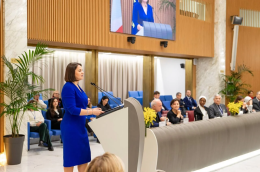
Sviatlana Tsikhanouskaya is on a visit to Rome, where she joined the “Women of My Time” event, organized on the occasion of International Women’s Day by the Italian Ministry of Foreign Affairs and the ecclesiastical advisor to Minister Antonio Tajani.
In her speech, Sviatlana Tsikhanouskaya emphasized that women in Belarus have historically carried a great deal of responsibility: “In Belarus, life has always rested on the shoulders of women. It was women who rebuilt the country after the wars. Women raised children alone when their husbands were taken away by war, prison, or exile. This is still happening today. It was women who, in 2020, raised the flag and led the peaceful protests. And I believe that it will ultimately be women who dismantle the dictatorship and turn our country toward democracy and the European future we are fighting for”.
She highlighted Belarusian women who show courage despite repression: “Courage is 80-year-old Nina Bahinskaya, who walks the streets with the white-red-white flag, and when the police confiscate it, she simply sews a new one. Courage is Maryia Kalesnikava, who tore up her passport at the border so the regime could not deport her. She spent five years in solitary confinement but did not break. There is always a smile on her face”.
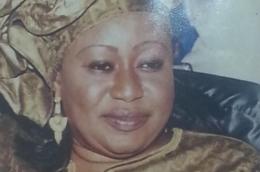
Women contribute socially, economically and culturally, yet their voices are not adequately reflected in governance. Increasing women’s participation strengthens democracy and inclusive development,’’ the seasoned parliamentarian stated.
Jagne, served in The Gambia’s parliament from 2007 to 2017 and concurrently represented the country at the ECOWAS Parliament from 2007 to 2015. In 2010, she became the first President of ECOFEPA, transforming it into a structured regional platform for female lawmakers across West Africa.
At the national level, she was among the few women elected through the ballot in 2007 and notably seconded the landmark Women’s Act 2010, which strengthened legal protections for women.
She challenged political parties to remove structural barriers, reduce high nomination fees, and adopt gender quotas to increase female representation.
Similarly, she called for more opportunities to enhance women’s inclusion in politics, while also urging for mentorship and training opportunities so as to create safer internal party environments for women aspirants,
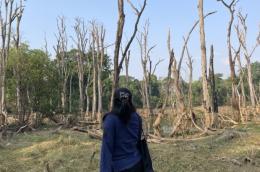
Exile Hub is one of Global Voices’ partners in Southeast Asia, emerging in response to the 2021 coup in Myanmar, focusing on empowering journalists and human rights defenders. This edited article is republished under a content partnership agreement.
As a Burmese filmmaker shaped by her grandmother’s quiet defiance, Verse uses storytelling to challenge gender bias and uplift women whose voices are too often erased.
Verse began her professional journey in 2018 as a reporter at a local news agency in Myanmar. She dreamed of covering political news, but quickly encountered systemic gender bias. During a major assignment, male reporters were sent to Nay Pyi Taw to cover parliament-related matters, and she was told to stay behind.
She recalled the moment: “I was told women weren’t given those opportunities. I could not accept a workplace that denied my growth simply because I was a woman.”
She left journalism and joined a women’s rights organization, shifting her focus to human rights and feminist advocacy.
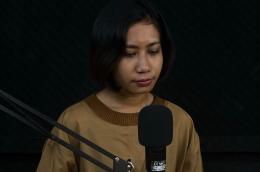
Exile Hub is one of Global Voices’ partners in Southeast Asia, emerging in response to the 2021 coup in Myanmar, focusing on empowering journalists and human rights defenders. This edited article is republished under a content partnership agreement.
Nay Nay’s journey began not in a bustling newsroom, but on the serene Rakhine coast of Myanmar. Yet fate had a different path in store, one that led her into the heart of truth-telling during Myanmar’s darkest moments.
The military coup shattered Myanmar’s fragile peace in 2021. Journalists quickly became targets, and the danger of arrest grew impossible to ignore. As the risk to her partner, also a woman journalist, intensified, Nay Nay made the agonizing decision to flee their homeland together. They sought refuge along the Thai–Myanmar border, a place of safety from persecution. In exile, Nay Nay continues her work as a news presenter at Lay Waddyi FM and, above all, a storyteller.
When Nay Nay first applied for the Feminist Storytelling Grant under Exile Hub, they planned to tell a deeply personal story of a lesbian couple navigating journalism amid conflict and displacement. It was a story of love, survival, and resilience. But as conversations unfolded, a broader and more urgent truth emerged.

Analysis of new candidates suggests visible minority women are disproportionately steered toward unwinnable ridings, reinforcing long-standing inequities in party recruitment.
Examining the diversity of first-time candidates in last year’s federal election is a revealing exercise on many levels and serves as a sharper measure of distinct party efforts to recruit visible minority candidates.
By taking this analysis a step further and breaking down first-time visible minority candidates by gender, we find further evidence of a persistent gap in female candidates, whether visible minority or not.
Recent analyses have focused on women being nominated as sacrificial lamb candidates in unwinnable or swing ridings. Some exceptions have focused on visible minorities, either in the form of experimental polling or actual results.
Read More here.
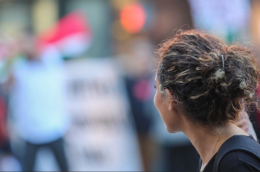
Women of Iran, similar to those across many parts of the region, benefit from a long history of feminist activism. Refusing to remain silent to discriminatory laws, practices, and behaviors, women have been struggling for equality, freedom, and justice through grassroots mobilization against conservative religious rule.
The latest spark of feminist resistance on a mass level occurred in September 2022 over the killing of Kurdish-Iranian Mahsa Jina Amini from injuries she sustained while in police custody for allegedly violating Iran’s conservative hijab laws. Under the banner of, “woman, life, freedom,” women led vast street protests for months in demand for basic rights and liberties, risking their lives and freedoms in the face of a violent state crackdown. Building on decades of women’s rights organizing, women across Iran rose to express their frustrations from systemic gender discrimination codified in Iran’s laws, as well as their intentional marginalization from politics.
In this latest wave of protests, large sections of the population, regardless of gender, region, ethnicity, age, and religious identity, also joined in—recognizing that women’s demands for equality and freedom form the foundations of broader demands for democracy, human rights, and justice.
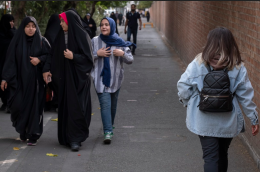
Large-scale protests that erupted in 2022 across Iran, centering on women’s rights, captured the world’s attention.
Iranians peacefully protested in the streets of places ranging from Tehran to small towns across the country, chanting, “Woman, life, freedom.” The protests reflected many Iranians’ growing frustration with the political regime in power since 1979 – and its ongoing violation of citizens’ basic rights, especially those of women and other historically marginalized groups.
While the latest wave of street protests dwindled by the first few months of 2023, nonviolent protests for freedom, democracy and equality have a long history in Iran and continue today.
The Nobel Peace Prize committee granted its 2023 prize to Narges Mohammadi, a prominent and currently imprisoned women’s rights advocate in Iran. This recognized popular resistance to Iran’s authoritarian regime.
As a scholar of women’s rights in Muslim cultures, I have documented women’s political activism in Iran and other Middle Eastern countries. My research shows that even when women are not demonstrating en masse in the streets, they consistently fight against gender discrimination, often at their own peril.
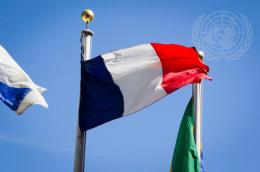
OPEN DEBATE ON « WOMEN, PEACE AND SECURITY »
STATEMENT BY MR. JAY DHARMADHIKARI
DEPUTY PERMANENT REPRESENTATIVE OF FRANCE TO THE UNITED NATIONS
TO THE SECURITY COUNCIL
(TRANSLATED FROM FRENCH)
New York, 6 of October 2025
Mr. President,
I would first like to thank the Secretary-General and the Executive Director of UN Women, Ms. Sima Bahous, for their statements and their commitment to the Women, Peace and Security agenda.
Twenty-five years after the adoption of Resolution 1325, this agenda has led to significant progress.
The protection of women in armed conflict and their participation in peacekeeping are now at the heart of peace operation mandates, like MONUSCO and UNMISS, as well as peace agreements—I am thinking, for example, of the peace agreements in Colombia and South Sudan.
Although they remain underrepresented, women continue to grow in number in national diplomatic services, military contingents, police contingents, and the United Nations more broadly.
However, the brutal deterioration of the situation of women in armed conflict and the increasing attacks on their rights are today putting this agenda at risks.
In Gaza, Sudan, the Democratic Republic of Congo, Haiti, Myanmar, and many other conflicts, the exposure of women and girls, their proportion among the victims, and the number of cases of sexual violence verified by the United Nations are unprecedented.
In Ukraine, the armed forces of a permanent member of this Council—Russia—are committing rape and other form of sexual violence against civilians and prisoners of war. In Afghanistan, the segregation of women by the Taliban is so severe that it could amount to a crime against humanity.
In response, we must protect the achievements of the past two decades and place the Women, Peace and Security agenda back at the heart of a reformed United Nations and effective multilateralism.
I would like to emphasize four key areas for action which are within reach for the members of this Council.
Firstly, continue to strengthen women’s participation in all aspects of peacekeeping.
In line with CEDAW Committee General Recommendation No. 40, we must enhance women’s representation in decision-making systems, moving towards the goal of parity—including in United Nations governance.
We must encourage initiatives that aim at promoting women’s participation in peace processes and peace operations. I am thinking in particular of training for women in uniform.
Secondly, we must effectively implement the Council’s Women, Peace and Security resolutions on the ground.
France will continue to negotiate to ensure that these resolutions remain at the heart of peace operation mandates.
France also calls for strengthening the presence of women’s protection advisers and military advisers on gender issues in these operations.
Thirdly, we need to fight impunity and ensure that victims obtain reparation.
We must provide greater support to national authorities in this regard, particularly judicial authorities. We commend the work of the Special Representative of the Secretary-General on Sexual Violence in Conflict, Ms. Pramila Patten, as well as her efforts to create an international network of prosecutors to combat impunity for perpetrators of sexual violence in conflict.
We call for the strengthening of the Council’s use of targeted sanctions against those responsible for these crimes.
France reiterates its full support for the International Criminal Court and for international mechanisms that investigate sexual crimes.
Fourth, support the United Nations and civil society organizations, which play a key role on the ground.
France welcomes the commitment of UN Women and UNFPA to implementing the Women, Peace and Security Agenda. We also support feminist organizations through a dedicated national fund, one of the world’s largest both in terms of geographical scope and financial scale.
Mr. President,
As France is about to adopt its fourth national action plan on women, peace, and security for 2026-2030, which will take into account emerging issues such as digital technology and climate change, I would like to pay tribute to the negotiators, mediators, women in uniform, female humanitarian workers, representatives of civil society, and so many other women who work daily to promote peace. Their courage compels us to act.
As a sign of this commitment, the Women, Peace and Security agenda will be among of priorities of the 4th Ministerial Conference on Feminist Diplomacy, to be held in Paris on October 22 and 23.
Thank you.
Newswise — Washington, D.C. - October 6, 2025 − As the non-partisan Women & Politics Institute at American University marks its 25th anniversary, a new nationwide survey underscores both the progress women have made in politics and the barriers that remain. The poll, She Leads: Progress and Persistent Barriers for Women in Politics, finds that while voters strongly support electing more women and trust them on key issues, lingering biases and double standards continue to shape the path to the presidency.
The poll of 801 registered voters, conducted September 3–6, 2025, by Breakthrough Campaigns in conjunction with WPI’s Gender on the Ballot project, highlights a paradox in public opinion: progress in attitudes toward women leaders coupled with persistent resistance to a woman in the Oval Office.
“These findings capture both the momentum and the headwinds for women in politics,” said Betsy Fischer Martin, Executive Director of the Women & Politics Institute. “As we mark WPI’s 25th anniversary, the results remind us why our mission matters. Voters clearly value the perspective women bring and want to see more women in office. But when it comes to the presidency, stereotypes and double standards still cast a long shadow. That tension will define the next chapter in women’s political leadership.”
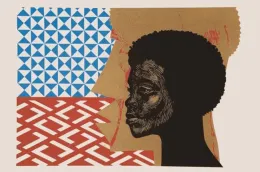
In times of great political turmoil, it can be instructive and reassuring to read about people who have been in similar situations, and have persevered in fighting for something better. While writing my new book about the contributions Black women have made in the global struggle for human rights, I was humbled to see, over and over, how many of these women did not come from rich families, or hold positions of great power, or even have all that much education. But they did the hard and dangerous work required, day in and day out, because they believed in equal rights for everyone, around the world.
Closer to home, I’m recommending here five books that everyone should read about Black women in the United States who have persevered against great and terrible odds, to try to make the world better for the next generation. Their stories are just the inspiration we need today.
Full article here.
In her rightfully celebrated 1969 article, “The Political Economy of Women’s Liberation,” Margaret Benston articulated several of the enduring themes and theoretical insights of feminist theories, especially those developed by socialist and Marxist feminists. For example, she located the material basis of women’s secondary status in their responsibility for the production of use values for home consumption and their ensuing economic dependence upon male breadwinners; the effects of domestic responsibilities on women’s opportunities; and the material conditions for women’s liberation, that is, equal access to employment and an end to the privatized nature of housework and child rearing.2
As a graduate student in the late 1960s, I struggled to make sense of the notion that women were oppressed as women and that men or patriarchy were the source of their oppression—an idea that, at the time, seemed strange to me.3 In contrast, Benston’s perspective that the causes of the secondary status of women were structural, rooted in the capitalist economy, and resulted in women’s responsibility for child care and the production of use values for family consumption, made sense to me. It showed how the functioning of the capitalist economy, given that the organization of social and biological reproduction remained still in a “premarket stage,” placed working-class men and women in different structural positions. This, I inferred, gave some men power over women. Working-class men had to earn wages to survive economically, whereas working-class women, whether married or unmarried, could theoretically either work for wages or work at home, unpaid and dependent on the wages of the male head of the household.4 Abstractly, under capitalism, being an unpaid domestic worker is for working-class women a functional alternative to earning wages.5 In retrospect, having read her article again, I can say that my account of the oppression of women and conceptualization of what, in the early 1970s, I called the mode of reproduction, owes much to Benston’s views about the “structural definition of women” and the household as a place of production and reproduction.6
Full article here.