Women's Leadership

The pantheon of autocratic leaders includes a great many sexists, from Napoléon Bonaparte, who decriminalized the murder of unfaithful wives, to Benito Mussolini, who claimed that women “never created anything.” And while the twentieth century saw improvements in women’s equality in most parts of the world, the twenty-first is demonstrating that misogyny and authoritarianism are not just common comorbidities but mutually reinforcing ills. Throughout the last century, women’s movements won the right to vote for women; expanded women’s access to reproductive health care, education, and economic opportunity; and began to enshrine gender equality in domestic and international law—victories that corresponded with unprecedented waves of democratization in the postwar period. Yet in recent years, authoritarian leaders have launched a simultaneous assault on women’s rights and democracy that threatens to roll back decades of progress on both fronts.
Click here to read the full article published by Foreign Affairs.
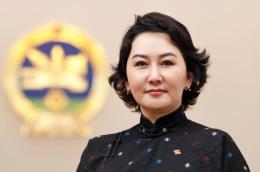
The achievement is part of a long trek toward gender equality in Mongolia’s foreign policy.
Last year, Mongolia celebrated its 110th anniversary as an independent country. Along with that, modern Mongolia has notched 110 years of national diplomacy. Amid the task of foreign policymaking, the foreign ministry has also made developments in diversifying its workforce. The current office of the foreign ministry appointed the highest number of female ambassadors in the history of modern Mongolia.
Click here to read the full article published by The Diplomat on 31 February 2022.
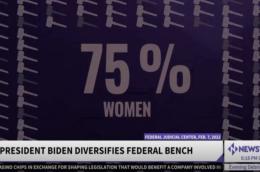
The White House says adding more diverse judges to the federal courts remains a priority for the president.
Ebony M. Scott on Monday became the twelfth Black woman confirmed to a seat on the federal court under President Biden, continuing his pledge to diversify the federal bench. "President Biden gets an A-rating for his judicial appointments," Judith Browne Dianis said.
Click here to read the full article published by Newsy on 9 February 2022.
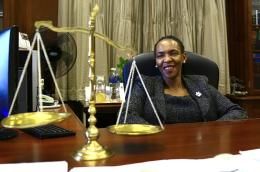
Mandisa Maya, Judge President of South Africa’s Supreme Court of Appeal, was recently recommended by the country’s Judicial Services Commission to become the next Chief Justice of the Constitutional Court.
The position became vacant after the 12-year term of Chief Justice Mogoeng Mogoeng ended in October 2021.
It is now up to President Cyril Ramaphosa to decide if she actually ascends to the highest judicial position in the country. This follows what many consider to have been a shambolic selection process.
If appointed, she’ll be the first woman Chief Justice since South Africa became a constitutional democracy following the end of apartheid in 1994.
Click here to read the full article published by The Conversation on 10 February 2022.
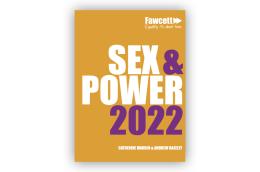
Fawcett's Sex and Power 2022 Index is a biennial report which charts the progress towards equal representation for women in top jobs across the UK. Yet again, the report reveals the pace of change is glacial in the majority of sectors and shows that women are outnumbered by men 2:1 in positions of power.
Women of colour are vastly under-represented at the highest levels of many sectors and alarmingly, they are missing altogether from senior roles such as Supreme Court Justices, Metro Mayors, Police and Crime Commissioners and FTSE 100 CEOs.
Click here to download the report.

Very little research has considered how media discrimination could impact men and women’s political ambition. Yet, media discrimination could impact both beliefs about gender roles and political competence, and beliefs about voter bias, both of which could decrease women’s political ambition and increase men’s. Alternatively, media discrimination could lead women to react against discrimination and be motivated politically. This study tests how political ambition of men and women is impacted by media discrimination in a campaign and election lab experiment. Media discrimination in this experiment under-reports on women and uses traditional, stereotypical depictions of men and women. The results suggest that in certain conditions, media discrimination in political news may lead to a reactance or positive challenge effect for women, increasing their political ambition. Men, instead, may feel an aversion to entering politics, lowering their political ambition.
Click here to read the full article published by Sage Journals on 22 October 2022.