Women's Leadership
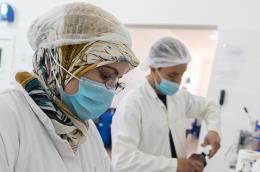
On July 31, 2021, the Moroccan Parliament adopted a reform that did not receive much attention but did represent a big step forward in helping close the country's gender gap. It involved a new amended law on public limited companies to promote balanced representation of women and men in corporate governance bodies (law 19.20 modifying and completing law 17-95 related to public limited companies). It set mandatory quotas for women on the boards of publicly traded companies, with a target of (at least) 30% female representation by 2024, and 40% by 2027.
This law is the result of exemplary cooperation between the government, the parliament, and civil society, supported by the creation of a task force by UN Women, including women personally involved in gender advocacy, and several representatives of the 'Club des Femmes Administrateurs' in Morocco.
Click here to read the full article published by Market Screener on 19 January 2022.
UNITAMS made further concrete steps to broaden the scope of consultations process launched earlier this month, with emphasis on engaging groups in all states of Sudan. SRSG Volker Perthes led a full day of consultations sessions, on Monday, with several Darfur-based groups including Darfur Resistance Committees, Darfur Women’s Groups, Darfur IDP representatives and Mr. Gibril Ibrahim, head of the Justice and Equality Movement (JEM).
Earlier this week the SRSG and UNITAMS team held sessions with representatives from MANSAM, the Baath Arab Socialist Party and Mr. Alsadiq Samal, a vocal Sudanese activist and parent of martyr.
Click here to read the full article published by OCHA on 24 January 2022.

This year, South Africa will celebrate 28 years of democracy, and as a younger generation, none of us can deny the validity of the statement, “I am my ancestors' wildest dreams” — a quote that gained noteriety after film director Ava Duvernay wore it on a t-shirt five years ago.
While the country still suffers many inequalities, the division of race does not define the nation as strongly as it did throughout the apartheid era, and there are so many incredible leaders to thank for that. There were many freedom fighters involved in creating the united republic we live in today, including former president Nelson Mandela, leader of the Black Consciousness movement Steve Biko, mother of the nation Winnie Madikizela Mandela, and former president of the African National Congress Oliver Tambo, to name a few.
Click here to read the full article published by Global Citizen
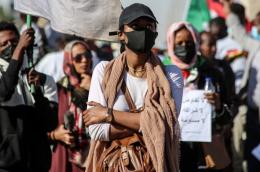
Armed men have arrested prominent Sudanese women’s rights campaigner Amira Osman in a night-time raid on her home in Sudan’s capital Khartoum, her sister said. Osman’s arrest comes amid, what activists say, a campaign of arrests of civil society and pro-democracy figures since a military takeover in October.
The United Nations mission in Sudan said on Twitter it was outraged by Osman’s arrest, citing a “pattern of violence against women’s rights activists” that risked reducing their participation in politics.
Click here to read the full article published by Al Jazeera on 23 January 2022.
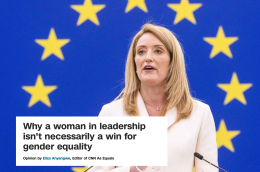
By Eliza Anyangwe
The appointment of a woman into a position long-held by men is often believed to be a sign; a harbinger of good things to come for other women and in the fight for gender equality. But is it ever?
On Tuesday, Roberta Metsola became the new President of the European Parliament, the youngest person ever to hold the position and just the third woman since the Parliament was established in 1952.
Click here to read the full article published by CNN on 20 January 2022.
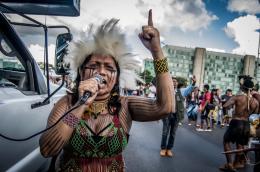
At the COP26 climate summit, the leaders of Estonia, Tanzania and Bangladesh were the first to sign the Glasgow Women’s Leadership statement, calling for countries to support the leadership of women and girls on climate action at all levels of society and politics. Yet these three women comprised nearly a third of all female leaders at the conference, out of 140 heads of delegation.
On Gender Day at the COP, countries including the United Kingdom, the United States and Canada pledged to further integrate gender into their climate finance arrangements. While the pledges reflect a growing awareness of “gender-responsive” finance, which promotes gender equality, the amount of money mobilised so far falls short of what is needed around the world. Attention to gender in climate finance negotiations remains negligible. Making the Glasgow Women’s Leadership statement a reality will require scaled-up funding for women’s capacity-building and community-level climate action.
Click here to read the full article published by Eco-Business on 19 January 2022.