Women's Leadership
In her rightfully celebrated 1969 article, “The Political Economy of Women’s Liberation,” Margaret Benston articulated several of the enduring themes and theoretical insights of feminist theories, especially those developed by socialist and Marxist feminists. For example, she located the material basis of women’s secondary status in their responsibility for the production of use values for home consumption and their ensuing economic dependence upon male breadwinners; the effects of domestic responsibilities on women’s opportunities; and the material conditions for women’s liberation, that is, equal access to employment and an end to the privatized nature of housework and child rearing.2
As a graduate student in the late 1960s, I struggled to make sense of the notion that women were oppressed as women and that men or patriarchy were the source of their oppression—an idea that, at the time, seemed strange to me.3 In contrast, Benston’s perspective that the causes of the secondary status of women were structural, rooted in the capitalist economy, and resulted in women’s responsibility for child care and the production of use values for family consumption, made sense to me. It showed how the functioning of the capitalist economy, given that the organization of social and biological reproduction remained still in a “premarket stage,” placed working-class men and women in different structural positions. This, I inferred, gave some men power over women. Working-class men had to earn wages to survive economically, whereas working-class women, whether married or unmarried, could theoretically either work for wages or work at home, unpaid and dependent on the wages of the male head of the household.4 Abstractly, under capitalism, being an unpaid domestic worker is for working-class women a functional alternative to earning wages.5 In retrospect, having read her article again, I can say that my account of the oppression of women and conceptualization of what, in the early 1970s, I called the mode of reproduction, owes much to Benston’s views about the “structural definition of women” and the household as a place of production and reproduction.6
Full article here.
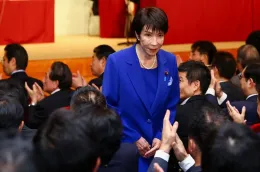
Respected figure: Baroness Margaret Thatcher. Personal goal: To become Japan's Iron Lady.
It was only after two failed attempts that, on Saturday, Sanae Takaichi finally achieved her long-held ambition.
The 64-year-old was elected leader of Japan's ruling Liberal Democratic Party (LDP) on its 70th anniversary - putting her on course to become the country's first female prime minister.
A former government minister and TV host, and once a drummer in a heavy metal band, she will now face the challenge of leading not only a party struggling to regain voter trust after scandals and battling with the far right - but a country facing low birth rates and rising geopolitical tensions.
Born in Nara Prefecture in 1961, Takaishi's father was an office worker and her mother a police officer. Politics was far removed from her upbringing.
Once an avid heavy metal drummer, she was famous for carrying many sticks because she would break them during intense drumming. She was also a scuba diver and a car enthusiast - her beloved Toyota Supra is now displayed in a Nara museum.
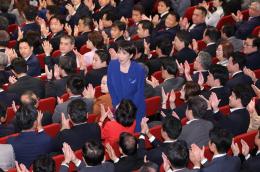
Sanae Takaichi is poised to make history as Japan’s first female prime minister. Having lost to Fumio Kishida in 2021 and again to Shigeru Ishiba last year, she emerged victorious on her third attempt in the male-dominated contest to lead the ruling Liberal Democratic Party (LDP) on 4 October. As the LDP remains the biggest party in parliament despite substantial losses in the last election, Takaichi is widely expected to be elected prime minister when the parliament meets on 15 October.
Takaichi’s triumph marks a significant milestone in Japanese politics, opening the door for women to reach top political office. Currently, the incumbent cabinet under Ishiba includes only two female ministers, and women make up just 16% of parliament. Takaichi has pledged to improve gender balance in her cabinet to “Nordic levels”, and introduce family-friendly policies such as partial tax deductions for babysitting fees and corporate tax breaks for companies that provide in-house childcare.
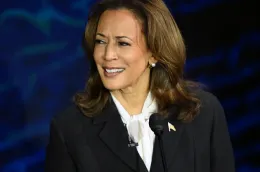
Voters under 50 are the least open to electing a female president, and four in 10 Americans personally know someone who would not elect a woman to the White House, a new poll finds.
The American University poll, shared first with POLITICO, reveals a complicated portrait of how voters view women in politics. A majority supports electing more women to office, yet female politicians face persistent headwinds over trust on key issues like national security. They also run up against double standards, with voters saying a female president must be both “tough” and “likable.”
Nonetheless, most voters support electing more women and believe the government gets more done with women in office, according to the national poll of 801 registered voters conducted last month. It was commissioned by the university’s Women and Politics Institute and had a 3.5-point margin of error.
Nearly one in five voters said they or someone they are close to would not elect a woman presidential candidate. That includes one-quarter of women under 50 and 20 percent of men under 50, who said they would not back a qualified female candidate for president, while 13 percent of men and women over 50 said they wouldn’t be open to supporting a woman for president.
Full article here.
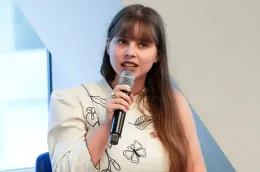
On the sidelines of the 80th session of the United Nations General Assembly (UNGA80), a powerful, intergenerational and intersectional group of women leaders called for urgent action to centre women’s leadership in global peace efforts.
The event, hosted by the UN Women Leaders Network, in partnership with the Government of Iceland and the UN Foundation, was held ahead of the 25th anniversary of UN Security Council resolution 1325, which launched the Women, Peace and Security agenda. This year also marks the 30th anniversary of the Beijing Declaration and Platform for Action on gender equality, elevating women and girls’ leadership in peace and decision-making as fundamental to building a peaceful and sustainable future for all.
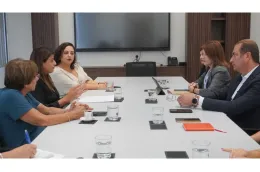
Gender equality commissioner Josie Christodoulou on Friday voiced concern over the low level of female participation in Cyprus’ political life ahead of the 2026 parliamentary elections, warning that unbalanced representation in decision-making creates a democratic deficit.
“Political parties need to demonstrate the same commitment to strengthening gender equality in politics to ensure the equal participation of all citizens in shaping the country’s future,” she said.
Christodoulou noted that women currently hold only 14 per cent of seats in parliament and 37 per cent of positions in the Council of Ministers.
At the local government level, female representation remains similarly low, while Cyprus is represented exclusively by men in the European parliament.
Gender parity is not recovering, according to the Global Gender Gap Report 2022. It will take another 132 years to close the global gender gap. As crises are compounding, women's workforce outcomes are suffering and the risk of global gender parity backsliding further intensifies.
The Global Gender Gap Index benchmarks the current state and evolution of gender parity across four key dimensions (Economic Participation and Opportunity, Educational Attainment, Health and Survival, and Political Empowerment). It is the longest-standing index which tracks progress towards closing these gaps over time since its inception in 2006.
Click here to access the report.
More than 100 years after women gained full citizenship rights through the 19th Amendment, women are still under-represented in government. While it is widely known that no woman has become president, it is not only the highest executive offices where women have not had access: women also face barriers at the state level.
Even in 2022, the vast majority of state cabinets are dominated by men. Cabinet members hold a vital position of power: running state agencies and serving as trusted advisors to the governor, helping them make important decisions. In nearly all states, most, if not all, cabinet members are appointed by the governor.
Click here to access the report.

Tunisia has seen a marked shift in attitudes towards women political leaders since Najla Bouden became the first female prime minister in the Arab world. However, this doesn't mean that life has dramatically improved for Tunisia's women, writes BBC News Arabic's Jessie Williams.
Bochra Belhaj Hmida has spent her whole life fighting for both gender equality and democracy in Tunisia - "one of which cannot be achieved without the other," she says.
After the revolution in 2011 - which saw her take part in the mass demonstrations that led to autocrat President Ben Ali being ousted - Tunisia passed a gender parity law. It requires political parties to have an equal number of men and women on their list of candidates to serve in parliament after elections.
It was around this time that Ms Belhaj Hmida joined a political party, Nidaa Tounes.
But being a woman in politics in Tunisia - and a woman fighting for equal rights - is not easy.
Click here to read the full article published by BBC on 12 July 2022.
[[{"fid":"20763","view_mode":"media_original","fields":{"format":"media_original","field_file_image_alt_text[und][0][value]":"Arab Barometer","field_file_image_title_text[und][0][value]":"Arab Barometer"},"link_text":null,"type":"media","field_deltas":{"2":{"format":"media_original","field_file_image_alt_text[und][0][value]":"Arab Barometer","field_file_image_title_text[und][0][value]":"Arab Barometer"}},"attributes":{"alt":"Arab Barometer","title":"Arab Barometer","class":"media-element file-media-original","data-delta":"2"}}]]
Women around the world are facing unprecedented levels of targeted political violence. This is also true in West Africa. Women can be targeted in a myriad of ways, by an array of types of perpetrators, during and outside of periods of conflict and contentious crises. The result though is consistent: such targeted violence has worrying implications for women’s political participation as well as their involvement in the public sphere. Political violence targeting women (PVTW) in West Africa has become increasingly common, with this trend increasing even more dramatically in recent years. The threat and risks, however, have not been uniform: different types of violence and different primary perpetrators dominate the gendered violence landscape across countries. Using data from ACLED, this paper tracks how women are targeted, and who is targeting women. Only by understanding how threats and risks that women face differ across countries can strategies be created to protect women.
Click here to access the report.
The overlapping impacts of the COVID-19 pandemic, accelerating climate disasters, and geopolitical conflict are a threat to gender equality and women’s rights across the globe. This report from UN Women and UNDP shows what governments can do now to prevent further rollbacks and recover lost ground, while enhancing resilience and preparedness for future shocks.
Drawing on a unique global dataset of close to 5,000 measures adopted by 226 countries and territories in response to COVID-19, the report finds that, overall, government responses paid insufficient attention to gender dynamics. At the same time, instances of innovation and learning hold important lessons for gender-responsive policymaking in times of crisis.
For the first time, the report provides analysis on the factors that led to a strong gender response, generating key lessons for governments:
- In a context of growing threats to democratic and open societies, strong institutions proved critical for an inclusive gender response.
- Feminist movements and women’s rights organizations provided an early warning system on the gender impacts of the pandemic, particularly on violence against women and girls.
- Women’s representation and leadership in executive positions, parliaments, and public administration was critical for translating feminist advocacy into policy action.
- Countries with robust public services and gender-responsive social protection systems were in a better position to respond, while others had to improvise, under pressure, and with varying degrees of success.
- Digital tools sustained feminist activism online and enabled policy innovations and rapid support roll-out, reaching groups of women often left behind in “normal times”.
- Real-time gender data on the impact of the pandemic on women and girls was critical to making the case for gender-sensitive response measures, as was tracking what worked in government responses.
Click here to download the report.
Uganda adopted the Sustainable Development Goals (SDGs) and was one of the first countries to integrate them into its National Development Plan. Under Goal 5, countries commit to promoting and guaranteeing women’s full and effective participation and equal opportunities for leadership at all levels of decision-making. This survey report is a follow-up of the baseline survey of women in local governments that was conducted by the Uganda Bureau of Statistics in 2017 and addresses three specific objectives:
1) To update and track progress towards attainment of gender parity in political representation at LG level;
2) To assess the extent to which women in LGs effectively contribute to local decision-making processes; and
3) To provide a deeper understanding of the factors that hinder elected women in LGs from effectively fulfilling their mandate.
The study was undertaken using Local Government (LG)’s election data from the Electoral Commission and survey data collected through key informant interviews with political leaders at the LG levels and focus group discussions with community people. The survey was conducted in Gulu, Nwoya, and Pader in the North; Napak, and Morotoin Karamoja sub-region; Pallisa and Bugiri in the East; and Kiryandongo in the West. Survey data was analysed using both quantitative (descriptive statistics) and qualitative techniques, which involved qualitative data from focus group discussions and open-ended survey responses from individual respondents was analysed through the following steps: transcribing the qualitative responses; pooling the transcribed responses from the various FGDs according to specific research questions; identifying the main ideas that occur in the answers to each question and creating themes; and writing narratives to describe the themes.
Click here to download the report.