Women's Leadership
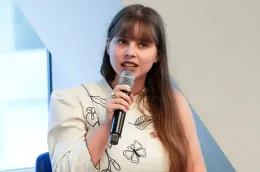
On the sidelines of the 80th session of the United Nations General Assembly (UNGA80), a powerful, intergenerational and intersectional group of women leaders called for urgent action to centre women’s leadership in global peace efforts.
The event, hosted by the UN Women Leaders Network, in partnership with the Government of Iceland and the UN Foundation, was held ahead of the 25th anniversary of UN Security Council resolution 1325, which launched the Women, Peace and Security agenda. This year also marks the 30th anniversary of the Beijing Declaration and Platform for Action on gender equality, elevating women and girls’ leadership in peace and decision-making as fundamental to building a peaceful and sustainable future for all.
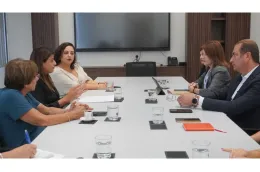
Gender equality commissioner Josie Christodoulou on Friday voiced concern over the low level of female participation in Cyprus’ political life ahead of the 2026 parliamentary elections, warning that unbalanced representation in decision-making creates a democratic deficit.
“Political parties need to demonstrate the same commitment to strengthening gender equality in politics to ensure the equal participation of all citizens in shaping the country’s future,” she said.
Christodoulou noted that women currently hold only 14 per cent of seats in parliament and 37 per cent of positions in the Council of Ministers.
At the local government level, female representation remains similarly low, while Cyprus is represented exclusively by men in the European parliament.
For several years, Nigerian MPs have been blocking legislation aimed at better representation for women in politics. The country's women – who make up the majority of the electorate – are pushing for a bill that would reserve at least 35 percent of seats in parliament for women.
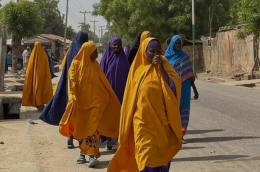
Hundreds of women descended on the Nigerian capital, Abuja, on Monday to push for a bill that would add women-only seats in the Senate and House of Representatives.
Several African countries, from Senegal to Rwanda, have increased their number of female legislators by using quota systems.
Nigeria, which has some of the lowest numbers of women in parliament worldwide, has no such system.
It counts just four women senators out of 109, and 16 women in the 360-member House of Representatives, according to the Policy and Legal Advocacy Centre (PLAC), a local NGO.
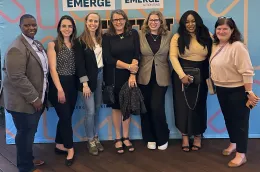
Weekend Reading on Women’s Representation is a compilation of stories about women’s representation in politics, on boards, in sports and entertainment, in judicial offices and in the private sector in the U.S. and around the world—with a little gardening and goodwill mixed in for refreshment!
Milestones for notable women this week include birthdays for: Mary Church Terrell, African American civil rights activist and suffragist (1863); Muthoni Wambu Kraal, partner at NEWCO Strategies; New York City council member Diana Ayala; U.S. Rep. Erin Houchin; Mehrnaz Teymourian, RepresentWomen board member; Erin Loos Cutraro, founder & CEO of She Should Run; U.S. Rep. Doris Matsui; U.S. Rep. Marilyn Strickland; Onida Coward Mayers, RepresentWomen board member; Sophie Dorf-Kamienny, RepresentWomen alum; Serena Williams; Corinne Bennett, RepresentWomen alum; Fatma Tawfik, RepresentWomen international research manager; Vi Alexander Lyles, mayor of Charlotte, N.C.; Madeleine M. Kunin, former Governor of Vermont; Poppy McDonald; and Katharine Pichardo-Erskine, executive director of Latino Victory Project.

The immediate past Accountant General of the Federation, Dr Oluwatoyin Madein, has decried the under-representation of women in the country’s political space, saying that efforts must be intensified to address this imbalance.
In a statement issued on Saturday by the Media Consultant to the former Accountant General, Temitope Oyekan and made available to journalists, Dr Madein described Nigerian women as very brilliant, resourceful, resilient, courageous and possessing all the required capacity to provide adequate leadership for the betterment of the country.
She remarked while speaking at the Ogun East Conference for Women, held at the Akarigbo Palace Hall in Sagamu.
This year’s conference, themed “Women in Leadership: Building Capacity, Enhancing Participation and Securing Tomorrow,” brought together leaders, professionals, entrepreneurs, and grassroots advocates in a vibrant exchange of ideas, celebrating women’s achievements and charting pathways for greater inclusion in governance and economic development.
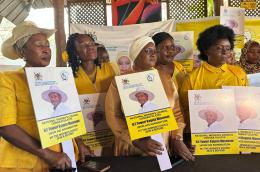
Women leaders under the National Women’s Council have appealed to all stakeholders in Uganda’s electoral process to champion peace and prevent acts of violence during and after the forthcoming elections.
Addressing the media in Kampala, National Chairperson Faridah Kibowa emphasized that women and children often bear the heaviest impact of election-related conflicts.
“As women, we stand to advocate for peace because any form of violence directly affects us more, and it is our families that suffer most,” Kibowa said.
The leaders highlighted that violent episodes frequently result in displacement, lack of shelter or food, and exposure to gender-based violence.
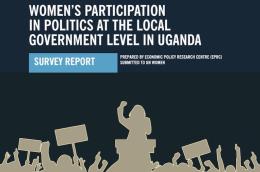
Uganda adopted the Sustainable Development Goals (SDGs) and was one of the first countries to integrate them into its National Development Plan. Under Goal 5, countries commit to promoting and guaranteeing women’s full and effective participation and equal opportunities for leadership at all levels of decision-making. This survey report is a follow-up of the baseline survey of women in local governments that was conducted by the Uganda Bureau of Statistics in 2017 and addresses three specific objectives:
1) To update and track progress towards attainment of gender parity in political representation at LG level;
2) To assess the extent to which women in LGs effectively contribute to local decision-making processes; and
3) To provide a deeper understanding of the factors that hinder elected women in LGs from effectively fulfilling their mandate.
The study was undertaken using Local Government (LG)’s election data from the Electoral Commission and survey data collected through key informant interviews with political leaders at the LG levels and focus group discussions with community people. The survey was conducted in Gulu, Nwoya, and Pader in the North; Napak, and Morotoin Karamoja sub-region; Pallisa and Bugiri in the East; and Kiryandongo in the West. Survey data was analysed using both quantitative (descriptive statistics) and qualitative techniques, which involved qualitative data from focus group discussions and open-ended survey responses from individual respondents was analysed through the following steps: transcribing the qualitative responses; pooling the transcribed responses from the various FGDs according to specific research questions; identifying the main ideas that occur in the answers to each question and creating themes; and writing narratives to describe the themes.
Click here to download the report.
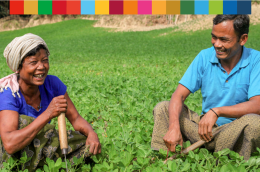
Advancing Gender Equality in National Climate Plans: Progress and Higher Ambitions highlights the latest data on country progress in integrating gender considerations into their national climate plans, or Nationally Determined Contributions (NDCs), under the UNDP Climate Promise initiative. UNDP supports 120 countries through the Climate Promise to reach their climate goals as part of the Paris Agreement. The brief also explores how countries can scale up ambitions on gender integration in the NDC implementation process, as well as the challenges and opportunities that could arise as countries move from pledges to realizing these gender commitments.
Click here to access the report.

This article analyses how women governors, mayors, and local elected officials promoted public health and social protection in countries where men chief executives failed to take steps to contain the virus. We focus on adverse circumstances in six cases: Brazil, the United States, the Philippines, Japan, Mexico, and India. While individual women may not see their leadership in feminist terms, their pandemic response contrasted with men chief executives’ hypermasculine bravado and slapdash decision-making. Women leaders relied on science, co-ordinated community outreach, and attended to the needs of marginalised groups. Their stories reveal women’s resiliency, resourcefulness, and resolve at the local level.
Click here to access the article
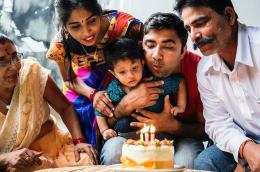
Indians accept women as political leaders, but many favor traditional gender roles in family life.
More than half a century ago, India was one of the first countries in the world to elect a woman as prime minister, and the country currently has several highly influential women politicians, including Sonia Gandhi, the head of one of the major national parties. Today, most Indians say that “women and men make equally good political leaders,” and more than one-in-ten feel that women generally make better political leaders than men, according to a recent Pew Research Center survey of nearly 30,000 adults throughout India. Only a quarter of Indian adults take the position that men make better political leaders than women.
Click here to access the report.
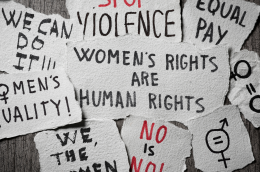
Political gender equality is a central pillar of democracy, as all people, independently of gender, should have an equal say in political representation and decision-making. In practice, democracies are generally better at guaranteeing gender equality than most non-democratic regimes. According to International IDEA’s Global State of Democracy Indices, 41 per cent of democracies have high levels of gender equality, while this is the case in only two of the world’s authoritarian regimes (Belarus and Cuba). The democracies with low levels of gender equality are also exceptional (only four, all weak democracies - Iraq, Lebanon, Solomon Islands and Papua New Guinea). Low levels of gender equality are much more common in non-democracies – more than one third of them fall into this category.
Despite more than half the countries in the world being democracies of some form, levels of political gender equality have not kept pace with democratic progress. In 2022, only 26 per cent of legislators in the world are women, according to the Inter-Parliamentary Union. At the current rate, gender parity will not be achieved until 2062, according to International IDEA’s estimate. The proportion of women heads of state is even lower. In 2022, only 19 countries in the world have women in the highest office of executive power. Of these, all except four are democracies. Moreover, as global democratic progress is threatened by rising authoritarianism and democratic backsliding, fragile levels of gender equality, further weakened by the pandemic, are at risk of more setbacks, as gender is increasingly used as a weapon in such processes.
Click here to read the full article published by International IDEA on 7 March 2022.

The pantheon of autocratic leaders includes a great many sexists, from Napoléon Bonaparte, who decriminalized the murder of unfaithful wives, to Benito Mussolini, who claimed that women “never created anything.” And while the twentieth century saw improvements in women’s equality in most parts of the world, the twenty-first is demonstrating that misogyny and authoritarianism are not just common comorbidities but mutually reinforcing ills. Throughout the last century, women’s movements won the right to vote for women; expanded women’s access to reproductive health care, education, and economic opportunity; and began to enshrine gender equality in domestic and international law—victories that corresponded with unprecedented waves of democratization in the postwar period. Yet in recent years, authoritarian leaders have launched a simultaneous assault on women’s rights and democracy that threatens to roll back decades of progress on both fronts.
Click here to read the full article published by Foreign Affairs.