Women's Leadership
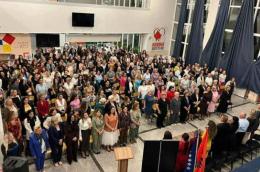
The Women's Forum of the LDK - Branch in Obiliq, held an electoral rally, it is announced through a press release sent to the media. The LDK branch in Obiliq, assesses that "in a magnificent way our daughters, wives, mothers and sisters - the pillar of every home - confirmed their strong support".
This gathering was also attended by the Mayor of Obiliq and candidate for a new mandate, Xhafer Gashi, First Lady Afërdita Gërguri Gashi, the Vice President of LDK Ms. Hykmete Bajrami, also a member of the Assembly of Kosovo, as well as the candidates for the Municipal Assembly from the winning list of LDK in Obiliq.
Mayor Gashi thanked "for the extraordinary presence and continued support, emphasizing the essential role that women have in society and in the development of the municipality."
He outlined the political program, with particular emphasis on areas where women have direct influence.

Deadline: 30-Sep-2025
The Women’s Peace and Humanitarian Fund (WPHF) has launched a new call for proposals to support local women’s and young women’s rights organizations in Mali.
This funding opportunity is focused on empowering grassroots initiatives that promote gender equality and protect the rights of women and girls in conflict and crisis-affected areas.
The primary goal of this initiative is to provide targeted grants to organizations working in the areas of humanitarian and crisis response, as well as the protection and empowerment of women and girls. Projects must align with the overarching mission of the WPHF to foster peaceful, inclusive, and gender-equal societies, in line with the 2030 Agenda for Sustainable Development and the principle of leaving no one behind.
Funding will be allocated to projects operating within specific regions in Mali, including Bandiagara, Bougouni, Dioila, Douentza, Gao, Kidal, Koulikoro, Ménaka, Mopti, San, Ségou, Sikasso, and Timbuktu. Only initiatives based in or directly impacting these areas will be considered, and multi-country or out-of-scope projects will not be eligible.
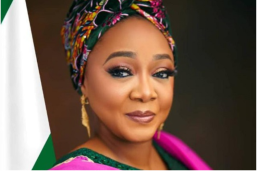
The ninth National Assembly of Nigeria squandered an unparalleled chance to promote equitable political representation and gender empowerment by rejecting landmark gender bills, including the Reserved Seats for Women Bill (HB 1349 & SB 440). As the public hearing for this bill kicks off today, Monday, September 22, 2025, under the chairmanship of Deputy Speaker of the House of Representatives, Benjamin Kalu, the nation stands at a crossroads in its journey toward gender-inclusive democracy. Activists, including renowned human rights advocate, Aisha Yesufu, are calling on the tenth Assembly to right past wrongs and cement their legacy by passing the bill.
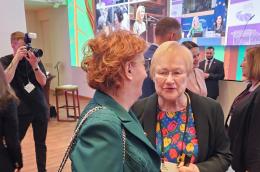
The gathering brought together political leaders from around the world who collectively reflected on a vision of a future in which women not only participate equally in decision-making, but also actively shape global policies in the interests of peace, sustainability and equality.
On the occasion of the 80th Session of the United Nations General Assembly, the Vice President of the Parliament of Montenegro, Zdenka Popović, participated in the event with the theme "Positive Future", organized by the global network WPL (Women Political Leaders) at the invitation of WPL President Silvana Koh Mehrin.
As announced by the Parliament of Montenegro, the gathering brought together political leaders from around the world who jointly reflected on a vision of a future in which women not only participate equally in decision-making, but also actively shape global policies in the interest of peace, sustainability and equality.
"Vice President Popović used this opportunity for a series of important bilateral meetings with prominent international officials and leaders. Among the interlocutors were: Director-General of the World Health Organization Dr. Tedros Adhanom Ghebreyesus, former President of Finland Tarja Halonen, former President of Ethiopia Sahle-Work Zewde, President of WPL Silvana Koh-Mehrin, as well as President and CFO of Salesforce, Robin Washington," it was announced.
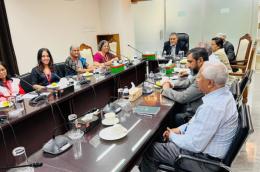
The Women's Political Rights Forum has submitted six-point demands to the Election Commission (EC), calling for electoral reforms ahead of the 13th national elections.
The delegation met Chief Election Commissioner AMM Nasir Uddin at the Election Commission Building in Agargaon this afternoon (23 September).
The forum demanded mandatory nomination of women candidates, leadership roles for women within party structures, allocation of campaign funds equal to the expenditure limit, policies to prevent harassment both online and offline, direct elections to reserved parliamentary seats, and the introduction of 'no' votes in all constituencies. A written proposal outlining these demands was formally submitted to the EC during the meeting.
The meeting was led by Maheen Sultan, member of the Women's Affairs Reform Commission, and attended by Sadaf Saz, executive council member of Naripokkho; Seema Dutta, president of Bangladesh Nari Mukti Kendra; and Shyamoli Shil, president of Nari Samhati. Four election commissioners — Abdur Rahmanel Machud, Tahmida Ahmed, Md Anwarul Islam Sarkar, and Abul Fazal Md Sanaullah — along with EC Secretary Akhtar Ahmed, were also present.
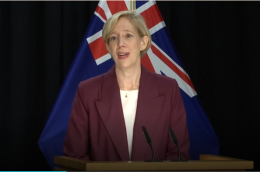
New Zealand has brought in a Swedish economist to run its central bank as it seeks to end a period of turmoil at the top of the institution and steer the country away from the brink of a “double-dip” recession. Anna Breman, who has been first deputy governor of the Sveriges Riksbank in Sweden since 2019, will become the first female governor of the Reserve Bank of New Zealand when she takes up the role in December. Her appointment follows a period of recent upheaval at the central bank, where her predecessor Adrian Orr abruptly stood down this year due to a disagreement with the government over the institution’s budget. Neil Quigley, chair of the central bank, also departed last month. The RBNZ canvassed 300 candidates for the role, according to finance minister Nicola Willis, who in a statement on Wednesday praised Breman’s “impressive blend of technical skills and organisational leadership experience”.

Very little research has considered how media discrimination could impact men and women’s political ambition. Yet, media discrimination could impact both beliefs about gender roles and political competence, and beliefs about voter bias, both of which could decrease women’s political ambition and increase men’s. Alternatively, media discrimination could lead women to react against discrimination and be motivated politically. This study tests how political ambition of men and women is impacted by media discrimination in a campaign and election lab experiment. Media discrimination in this experiment under-reports on women and uses traditional, stereotypical depictions of men and women. The results suggest that in certain conditions, media discrimination in political news may lead to a reactance or positive challenge effect for women, increasing their political ambition. Men, instead, may feel an aversion to entering politics, lowering their political ambition.
Click here to read the full article published by Sage Journals on 22 October 2022.

Although a voluminous literature has studied the substantive representation of women, these studies have largely been confined to advanced democracies. Similarly, studies that focus on the relationship between Islam and women’s rights largely ignored the substantive representation of women in Muslim-majority countries. As one of the first studies of its kind, this article investigates the role of religion in the substantive representation of women by focusing on a Muslim-majority country: Turkey. Using a novel data set of 4,700 content coded private members’ bills (PMBs) drafted in the Turkish parliament between 2002 and 2015, this article synthesizes competing explanations of women’s representation in the Middle East and rigorously tests the implications of religion, ideology, critical mass, and labor force participation accounts. The results have significant implications for the study of gender and politics in Muslim-majority countries.
Click here to download the report.

In times of crisis, people are more likely to appoint women and people of colour to be leaders. But this puts crisis leaders in a very precarious position.
When Carol Bartz was appointed CEO at Yahoo in January 2009, the internet company was struggling. She was hired on a four-year contract and put forward a strategic plan to turn things around. But in September 2011 – in a phone call with Yahoo's chairman of the board – she was fired, just two years and eight months after she'd joined the company.
"They didn't even let [her plan] come to fruition," says Alison Cook, a professor of management at Utah State University in the US.
Bartz is one of countless female leaders given a precarious leadership position and left standing on the edge of a "glass cliff" with no support.
Research shows that women and people from ethnic minorities are more likely to be chosen to lead a company, sports team, or even country when it is in crisis mode. While those glass cliff positions can provide a way for some leaders to prove themselves, they come with significant downsides – including stress, burnout, and derailed careers.
Click here to read the full article published by BBC on 7 February 2022.
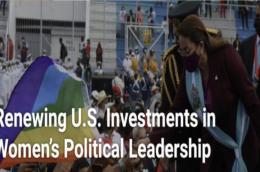
As part of last December’s Summit for Democracy, the Biden administration launched a wide range of commitments aimed at countering the troubling anti-democratic headwinds around the world. One of these pledges is the “Advancing Women’s & Girls’ Civic and Political Leadership Initiative,” a new U.S. government effort to promote women’s democratic inclusion. Implemented by the U.S. State Department and the U.S. Agency for International Development (USAID) with a planned budget of $33.5 million, it seeks to strengthen women-led civil society organizations, tackle entrenched barriers to women’s political and economic participation, and foster a more inclusive environment for women in politics.
Click here to read the full article published by Just Security.
Women remain underrepresented in political leadership in the United States and beyond. While abundant research has studied the possible impact of gender stereotypes on support for women candidates, our research finds that voters also withhold support for women candidates because they perceive practical barriers to women successfully attaining political leadership positions. We find that providing Democratic primary voters with evidence that women earn as much electoral support as men in US general elections increased intentions to vote for women candidates. Our results suggest that women face complex barriers that prevent gender equity in politics, and these barriers can be reduced when voters believe that Americans not only want but also will take action to support women candidates.
Click here to read the full article published by PNAS.

The gender disparity in politics is indicative of the of need to promote education amongst women, thus, enabling greater political participation.
While numerous political advancements have occurred throughout the world in recent decades, the most important influence has to be on women’s involvement and representation in political roles. Women make up about half of our population, but they are underrepresented in our political system in proportion to their numbers. At every level, from the home to the highest levels of government, women are excluded from decision-making. Women’s decision-making engagement in politics may have a substantial impact on women’s empowerment, which is why India is battling with the issue of gender disparity. Despite the Indian Constitution’s provision of equal opportunity, women have a small presence in legislative bodies and political participation at all levels. Accessing the possible reasons, we see that, interestingly, education plays a part in politics; however, only for women because the literacy rate of female politicians is higher than the male politicians, implying that only women need political education.
Click here to read the full article published by Observer Research Foundation.