Women's Leadership
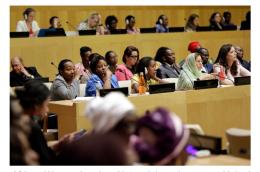
On this International Day of Peace on September 21, the call for unity and reconciliation resonates worldwide but for women in conflict zones, peace is not just a principle to celebrate, it is a daily act of survival and rebuilding. Local community and government leaders, health workers, policymakers, and mothers sustain fragile trust in communities torn apart by violence. They rebuild, they console, they negotiate. Their actions and voices are critical in peace and security efforts, yet their stories seldom receive the recognition they deserve.
The Women, Peace and Security (WPS) agenda acknowledges the meaningful perspectives that women bring to the table, drawing them from the margins to the center. Rooted in UN Security Council Resolution 1325, this framework emphasizes that decisions about peace must meaningfully include women. In alignment with the aims of the WPS agenda, organizations like Our Secure Future are leading initiatives to advance women’s roles in peace and security efforts in order to enable more effective policy-making and lasting peace. Evidence consistently shows that when women fully participate in peace processes, peace agreements tend to endure and carry meaning beyond words.
However, women remain underrepresented in peace processes globally. In 2023, women constituted only 9.6 percent of negotiators, 13.7 percent of mediators, and 26.6 percent of signatories in peace and ceasefire agreements, a notable improvement from earlier figures, yet still far short of parity even as their informal leadership continues to shape trust and dialogue in countless ways.
The harassment of women is nothing alien in Bangladesh, but when it comes to politics, the hostility is sharpened and deliberate. Women candidates, and anyone who dares to support them, are unfairly attacked, judged, and harassed. The recent student council elections in our biggest universities made this painfully clear. The misogyny, the character assassination, the filth in the comment sections of social media platforms, it is all meant to remind women of one thing: Politics is not your field.
I am no fan of BNP politician Rumin Farhana. But it stuck in my head when I scrolled through a news post about her; the comments were filled with bigotry, obscenity, and misogyny. This is the norm, but when the subject is a woman in politics, the ugliness multiplies. She is not attacked for her politics, but for her personal choices, for being unmarried, for simply existing as a woman in public life. The cruelty is staggering.
This cruelty is not just reserved for national figures. At Dhaka University, female candidates contesting the Ducsu elections have faced waves of online abuse. Obscene comments under campaign posts, sexually explicit inbox messages, doctored videos, even rape threats -- this is the reality of student politics for women.
One incident was so severe it reached the High Court: After a left alliance candidate filed a petition, a student posted a call for her “gang rape” on Facebook. The offender was suspended, but almost every woman candidate reported cyberbullying. As one described, social media had become a “weapon to bring down opponents.” Misogyny here is not about ideology. It is about punishing women for daring to get involved in politics at all.
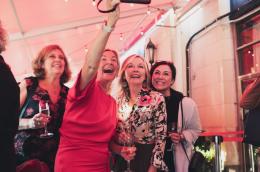
Every fall, as Parliament returns and calendars quickly fill with receptions, meetings, and fundraisers, one gathering on the Hill stands out from the rest. Women on the Hill has become a cherished Ottawa tradition, bringing together women from politics, policy, media, government relations, and diplomacy.
What sets Women on the Hill apart on the Ottawa reception circuit is its purpose of creating a space for women to truly connect. Since the beginning of its origin, the aim has always been to shine a light on the contributions of women who shape the national conversation from House of Commons to press galleries, embassies to boardrooms. It is where senior political leaders and new staffers, veteran journalists and emerging government relations professionals, trade insights and stories over a glass of wine…or two.
The community that the Women on the Hill event has fostered is unique to any other recent throughout the year. It’s a space where a minister may strike up a conversation with a young staffer, where journalists and diplomats share perspectives, and where industry veterans make themselves accessible to the next generation of women on the hill.
Full article here.
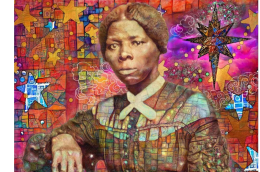
Milestones for notable women this week include birthdays for: Lois Wessel, Amy Poehler, Alexis Bledel, Caroline James, Soledad O’Brien, Nancy Bocskor and Lauren Leader. It’s also the anniversary of the week that Harriet Tubman set herself free in 1849, that Carla Hayden was named the first female librarian of Congress, and Margaret Chase Smith was the first woman elected to the U.S. Senate in her own right.
The 30th anniversary of the Beijing Platform for Action is a moment to reaffirm global commitments to gender equality
2025 is a pivotal year for women and girls. It marks three major milestones: the thirtieth anniversary of the Beijing Declaration and Platform for Action, the twenty-fifth anniversary of United Nations Security Council resolution 1325 on women, peace and security, and the eightieth anniversary of the United Nations. Notable progress on laws, policies and some development outcomes for women and girls has occurred, especially since the adoption of the Sustainable Development Goals (SDGs) in 2015. In the final five-year stretch before the 2030 deadline of the Goals, it is urgent to accelerate action and investment.
The Beijing Declaration and Platform for Action, adopted in 1995 by 189 countries, laid out transformative measures across 12 critical areas of concern, serving as a foundation for progress on gender equality and the SDGs. Drawing on evidence from the thirtieth-anniversary review – including 159 Member State reports and broad consultations – UN Women has developed the Beijing+30 Action Agenda. This bold, forward-looking framework sets out six priority actions to accelerate progress on both the Platform and the SDGs. It positions gender equality at the heart of global development efforts. This section highlights this Agenda noting the investments needed and the benefits not only for women and girls, but at large for societies and economies. The rest of the report assesses gender equality under each of the 17 SDGs, spotlighting actions and investments to accelerate change.
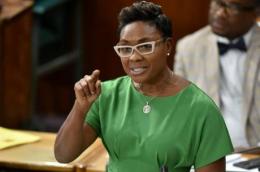
Despite a slight increase in female representation in Parliament, gender advocates warn that Jamaica still falls short in addressing women’s issues at the national level. Judith Wedderburn highlighted ongoing challenges, including securing party backing and meaningful influence in Cabinet-level decisions. Newly re-elected MPs like Juliet Cuthbert-Flynn stressed that women in Parliament must focus on advancing policies affecting women, from domestic violence to support for mothers in difficult circumstances.
Gender advocate spurns tokenism in women’s political participation
Jamaica Gleaner/14 Sep 2025/Karen Madden Sunday/ Gleaner Writer
DESPITE A marginal increase in the number of women that will sit in Lower House when it resumes, at least one gender advocate believes the country is still falling short in its representation of women in the seat of power.
Gender and development practitioner Judith Wedderburn has, however, acknowledged the efforts the leadership of the ruling Jamaica Labour Party (JLP) and the opposition People’s National Party (PNP) have made to bring more women into representational politics.
Of the 189 candidates nominated for the 2025 election, 136 were men and 53 were women. In the new Parliament, 19 women will take their seats – just one more than in 2020 and seven more than in 2016.
Full article here.

By Tapan Kumar Sahu, Kusum Yadav
The paper empirically examined the relationship between education level and political participation of women. The indices of political participation include the following: membership of political party, voting in elections, occupation of political post, means of occupation of political post and level of occupation of political post. The results revealed that women of the South West region of Cameroon are fairly well exposed to formal education as only 4.1% of the sampled population had no formal education. The study revealed that the higher the level of women's formal education, the more their tendency to participate in politics in areas of voting in elections and occupation of political post either through elections or appointments at all levels of government. The study was guided by the following objectives; the first was to assess women’s political participation and decision making. Secondly, what the opportunities of women political participation the third objectives was to determine the level of opportunities women’s political participation and decision making. The researcher recommends that the government, civil society and women activists need to work towards sensitization and awareness creation among the community to realize the need of the Women to participate in politics and governance. The men need to realize the women’s need for political power and change the way they look at the women and the government should embark on activities which support women’s political x Initiatives. The researcher recommends these areas to be further studied including: a study that could analyzes the contribution of civil society organizations in promotion of women political participation and human rights, a study that could assess the policy gaps concerning gender equity in governance and politics for women empowerment and other study could be conducted in the field concerning implication of culture on women’s political participation and decision making.
Click here to read the full article.
By Ellen Johnson Sirleaf
While rebuilding a country previously engulfed in civil war for over 14 years, my administration oversaw, then, one of the deadliest health crises of the 21st century. I, Africa’s first democratically elected woman president and Liberia’s first elected president of the post-conflict period, had to pivot quickly in both attitude and action, as a means of responding to the Ebola outbreak of 2014. The outbreak posed a devastating threat to Liberia’s people and to the gains we had made in recovery and development. Rather than falter, we leaned into the complex challenges the outbreak posed, crafting and embarking upon an approach that embraced the strategies called for by community health workers and ordinary people fighting to save their loved ones. During this period, we lost many lives but averted a national crisis and found an inclusive and sustainable path of hope. In most African countries, strengthening the national health structure requires investing in and prioritizing community health workers and systems. Local community health workers are crucial in times of crisis because of their proximity to those most impacted. Utilizing community leadership ensures communities feel empowered and share in the responsibility, creating genuinely inclusive and responsive approaches. Liberia’s early success in addressing the COVID-19 pandemic relied on the same community health workers and leaders from the Ebola crisis. They were central in the dissemination of reliable information, coordination efforts across the country, building partnerships both internally and internationally, and leading their communities.
Haga clic aquí para leer el artículo completo.
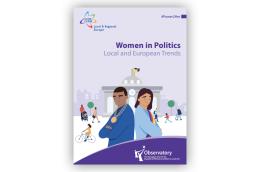
The primary objective of this 2019 CEMR study on women in politics is to evaluate the progression of women’s representation in decision-making over a ten-year period and to present an overview of the current situation. The study aims to mobilise actors and decision- makers at all levels across Europe, in the institutions and organisations included in the study, but also in the associations of local and regional governments, political parties, civil society organisations, as well as anyone interested in just and democratic governance.
Click here to download the report
LGBTQ Victory Institute’s The Decision to Run Report set out to uncover the barriers and motivators for LGBTQ women who want to run for office. The findings — a result of an extensive survey of nearly 290 LGBTQ women as well as four focus groups — show six common barriers and four motivators mentioned by respondents. It is a first glance – not a comprehensive account – of the challenges LGBTQ women encounter. Yet it can be a guide for equality organizations, campaign training organizations and candidate recruitment programs that believe in the importance of representation for LGBTQ women, as well as a starting point for future research.
Click here to download the report.
This policy brief shows that while much remains to be explored, there are clear links between anti-corruption and women's political participation that are important to understand for politicians, anti-corruption advocates, and those working on increasing women’s representation in political office.
Click here to read the full report.
RepresentWomen's Arab State Brief reviews the extent to which women are represented in Arab countries, the history of Arab independence and revolutions - and their impact on women's rights and representation; and country-specific information that covers the history of systems reforms and their impact on women's political rights and representation in the region.
Click here to read the full report.