Women's Leadership
Despite all the progress that has been made toward gender equality globally, many are still tempted to view armed conflict as primarily the domain of men. Women often prove decisive in such settings, including combat, non-combat roles, and leadership positions. Nonetheless, they are routinely sidelined in formal peace processes and post-conflict governance. This pattern reflects a moral and practical failure.
During armed conflicts, women become more vulnerable to genocide, trafficking, slavery, and sexual violence, with all the associated health risks and psychological trauma. This alone earns them the right to participate in peace processes. But women are not only passive victims of conflict, as we have seen in Ukraine. They make profound wartime contributions on the battlefield, as well as in civil society and as advocates for peace.
Full article published by Addis Fortune here.
Image by Addis Fortune
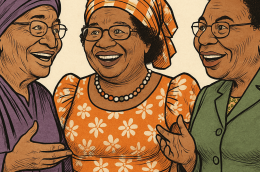
For decades, African politics has been a domain dominated by men, with women often relegated to the sidelines of decision-making. But a growing number of countries how now experienced female leadership, including Liberia, Malawi and most recently Namibia. With President Netumbo Nandi-Ndaitwah becoming the country’s first female head of state and assembling a cabinet where women hold the majority of ministerial positions, Namibia has set a historic precedent. This moment signifies much more than symbolism; it signals a broader and hopeful shift in the continent’s political landscape, one that may pave the way for future gender equality in governance. Could Namibia be a harbinger of a wider trend across Africa? Let’s take a closer look at the evidence.
Namibia is not alone in challenging the traditional power structures that have long kept women out of high political office. In recent years, countries like Tanzania and Ethiopia have also seen women rise to top leadership roles. Tanzania’s President Samia Suluhu Hassan, who took office in 2021 after the death of President John Magufuli, has already made significant strides in reshaping the country’s political and economic trajectory. However, it is important to note that she, like Malawi’s former President Joyce Banda, assumed office not through an electoral mandate but through constitutional succession. This pattern raises important questions about the actual commitment of ruling parties to gender equality when women are not fielded as primary candidates.
Full article by Democracy in Africa.
Image by Democracy in Africa

Ulaanbaatar, May 22, 2025 /MONTSAME/. The “We Women” Forum, jointly organized by the Secretariat of the State Great Khural, the United Nations, and the Korea International Cooperation Agency (KOICA), opened on May 21, 2025, at the State Palace.
Speaker of the State Great Khural of Mongolia Amarbayasgalan Dashzegve delivered opening remarks, stating, “Last year, amendments were made to the Law on Parliamentary Elections, adopting a mixed electoral system and legislating that no less than 30 percent of the candidate list of political parties and 50 percent of candidates in constituencies must be women. As a result, of the 1,341 candidates in the 2024 Parliamentary Election, 38.7 percent, or 520 candidates, were women, a historic high, and 32 women were elected to the State Great Khural, bringing women’s representation in Parliament to 25.4 percent, also a record.”
Full article published by Montsame on 22 May 2025.
Image by Montsame

Women bring different perspectives of cultures and conflict and when those voices are at the negotiating table a lasting peace is more likely, writes Maha Akeel.
It is important to include women at the negotiation table of conflict resolution and peacebuilding early in the process and not be persuaded to delay that for any reason. Ensuring that women’s rights, needs, and expectations are reflected in any texts adopted during the talks lays the groundwork for their political participation and social empowerment later. Third-party mediators can and should play a role in including women in such negotiations whether as negotiation delegates or mediators. A mediator is a neutral third party and a negotiator takes sides or negotiate on behalf of a side.
Including women in peace processes
Research indicates that women’s participation in peace processes, whether at the formal or informal level, leads to a more durable peace. Women not only bring different experiences of war from men but also different perspectives. Most often, through their informal networks and grassroots activism, women can bridge ethnic, cultural, and religious divides, such as in Liberia, Nigeria, and Somalia.
Despite these documented benefits, women face barriers to their effective participation in peace negotiation processes. One of the most persistent and difficult to overcome is the structural problems of patriarchy. Patriarchal structures define the roles women are allowed or assigned to play in peacebuilding and their level of involvement. Even if their numbers are increasing steadily in the political sphere, women remain constrained by patriarchal structures of male leadership.
Mediators play an important role in supporting women’s inclusion in peace processes and in leading by example through having women in mediation. However, from 1990 to 2018, mediation was involved in only 34 per cent of the total 876 conflict-years, and of those mediations only 10 per cent included at least one woman as co-mediator. Despite evidence that women’s full participation makes peacebuilding much more effective, the number of women in decision-making roles is actually falling.
In 2023, women represented only 9.6 per cent of negotiators, 13.7 per cent of mediators and 26.6 per cent of signatories in peace processes. According to a report by the United Nations Secretary General, women were virtually absent from talks on ending the conflicts in Ethiopia, Sudan, Myanmar and Libya. In Muslim societies, culture and tradition are most often used to justify the exclusion of women from peace processes even though the women are active. In fact, women were consulted and included in resolving conflicts and negotiating peace since the time of Prophet Mohamed.
Full article published by the London School of Economics on 23 May 2025.
Image credits: LSE
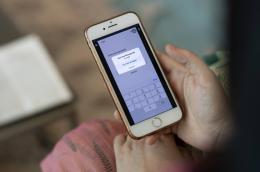
Artificial intelligence (AI) is transforming our world—but when it reflects existing biases, it can reinforce discrimination against women and girls. From hiring decisions to healthcare diagnoses, AI systems can amplify gender inequalities when trained on biased data. So how can we ensure AI is ethical and inclusive? Zinnya del Villar, a leading expert in responsible AI, shares insights on the challenges and solutions in a recent conversation with UN Women.
What is AI gender bias and why does it matter?
“AI systems, learning from data filled with stereotypes, often reflect and reinforce gender biases,” says Zinnya del Villar. “These biases can limit opportunities and diversity, especially in areas like decision-making, hiring, loan approvals, and legal judgments.”
At its core, AI is about data. It is a set of technologies that enable computers to do complex tasks faster than humans. AI systems, such as machine learning models, learn to perform these tasks from the data they are trained on. When these models rely on biased algorithms, they can reinforce existing inequalities and fuel gender discrimination in AI.
Imagine, training a machine to make hiring decisions by showing it examples from the past. If most of those examples carry conscious or unconscious bias – for example, showing men as scientists and women as nurses – the AI may interpret that men and women are better suited for certain roles and make biased decisions when filtering applications.
This is called AI gender bias— when the AI treats people differently on the basis of their gender, because that’s what it learned from the biased data it was trained on.
Full article published by UN Women on 5 February 2025.
What you need to know:
-
The Finnish President, who is on a three-day official visit to Tanzania, made the remarks during a tour of the facility in Ilala District on Friday, 16 May 2025.
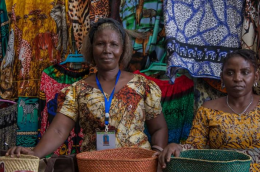
Dar es Salaam. The President of Finland, Mr Alexander Stubb, described the Finnish-supported initiative Machinga Complex in Dar es Salaam as a shining example of multi-stakeholder cooperation to promote gender equality and empower women.
The Finnish President, who is on a three-day official visit to Tanzania, made the remarks during a tour of the facility in Ilala District on Friday, 16 May 2025.
He praised the Women’s Leadership and Economic Rights (WLER) Project as a model of collaboration between the governments of Finland and Tanzania, UN Women, and women in both business and politics.
Full article published by The Citizen on 16 May 2025.
Image by The Citizen
This study applied a conceptual framework that uses a comparative and gendered approach to estimate the cost of politics, using a set of pre-identified variables regularly incurred by both candidates seeking political office and elected representatives while in office. This consideration was in line with the notion that analysis of election delivery and management should not be looked at in the realm of an event but rather as a cycle. The conceptual framework enabled the research team to arrive at both statistical and qualitative evidence regarding the cost of politics in Uganda.
Click here to see the report.
Are elected officials more responsive to men than women inquiring about access to government services? Women face discrimination in many realms of politics, but evidence is limited on whether such discrimination extends to interactions between women and elected officials. In recent years, several field experiments have examined public officials’ responsiveness. The majority focused on racial bias in the USA, while the few experiments outside the USA were usually single-country studies. We explore gender bias with the first large-scale audit experiment in five countries in Europe (France, Germany, Ireland, Italy, and Netherlands) and six in Latin America (Argentina, Brazil, Chile, Colombia, Mexico, and Uruguay). A citizen alias whose gender is randomized contacts members of parliament about unemployment benefits or healthcare services. The results are surprising. Legislators respond significantly more to women (+3% points), especially in Europe (+4.3% points). In Europe, female legislators in particular reply substantially more to women (+8.4% points).
Click here to see the report.

More than 2.5 billion women and girls around the world are affected in multiple ways by discriminatory laws and the lack of legal protections. In response, UN Women, the African Union, the Commonwealth, Inter-Parliamentary Union, Organisation Internationale de la Francophonie, and Secretaría General Ibero-Americana have jointly issued “Equality in law for women and girls by 2030: A multistakeholder strategy for accelerated action” in close collaboration with the Office of the United Nations High Commissioner for Refugees, the United Nations Office on Drugs and Crime, Equality Now, Global Citizen, Global Campaign for Equal Nationality Rights, International Association of Women Judges, International Development Law Organization, Muslims for Progressive Values, and Women’s Learning Partnership to tackle persisting discrimination in law.
Between 2019 and 2023, the strategy seeks to fast track the repeal of discriminatory laws in six thematic areas—comprehensive reforms, women’s economic empowerment, minimum age of marriage provisions, nationality rights, discriminatory rape laws, and family and personal status laws—in 100 countries and is expected to address the legal needs of more than 50 million women and girls.
Click here to see the report.
Our report, with U.S.-based National Democratic Institute (NDI), outlines a new framework for understanding how disinformation is being used online to exclude women from public life, in the first major study into this threat to democracy.
The report has found that online spaces are being systematically weaponised to exclude women leaders and to undermine the role of women in public life. Attacks on women which use hateful language, rumour and gendered stereotypes combine personal attacks with political motivations, making online spaces dangerous places for women to speak out. And left unchecked, this phenomenon of gendered disinformation, spread by state and non-state actors, poses a serious threat to women’s equal political participation.
In this research, we investigated state-aligned gendered disinformation in two countries, Poland and the Philippines, through an analysis of Twitter data. The research found evidence of disinformation campaigns which attacked women and used gendered narratives to undermine women who oppose or criticise the state.
For the first time, researchers identified core themes of gendered disinformation, and common strategies used by those engaged in it, finding that campaigns relied not just on false information, but used highly emotive content to try to undermine their targets politically.
The report found that gendered disinformation is parasitic on news events, existing rumours, and underlying social stereotypes, and can be extremely successful in reaching a broad audience to reshape public discourse in a way that harms women.
Demos is calling for systematic improvements to be made to how platforms operate in facilitating, promoting and moderating online speech. Existing responses to disinformation, such as fact-checking, while important, are ineffective in solving this problem.
Click here to access the report.
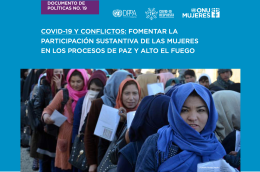
COVID-19 and conflict: Advancing women’s meaningful participation in ceasefires and peace processes
This brief addresses the importance of women’s full, equal, and meaningful participation to an effective pandemic response and to peacemaking efforts, and how the women, peace and security (WPS) agenda can provide a critical framework for inclusive decision-making and sustainable solutions. While efforts to flatten the pandemic’s curve unfold around the globe, violent conflict remains a deadly reality for far too many people.
In March 2020, the UN Secretary-General called for a global ceasefire to allow the world to address COVID-19. Since the outbreak of the pandemic, women have been at the forefront of effective COVID-19 prevention and response efforts—from frontline service delivery to the highest levels of decision-making. With women’s participation central to achieving sustainable solutions, the pandemic has brought into sharp relief how critical the WPS agenda is to inclusive and effective decision-making.
This brief recognizes the vital role of women’s civil society organizations in mobilizing support for an urgent cessation of hostilities, inclusive ceasefire processes, and comprehensive peace talks. It also provides a preliminary analysis of the impact of COVID-19 on women’s participation in ceasefires and peace processes and offers a series of recommendations, including on “building back better”.
Click here to see the report.
On 24–25 October 2019, the International Institute for Democracy and Electoral Assistance (International IDEA)—together with the Edinburgh Centre for Constitutional Law (ECCL) and the Political Settlements Research Programme (PSRP) at the University of Edinburgh—hosted the inaugural event in a series of forums to be known as the Women Constitution-Makers’ Dialogue.
The series is a networking and peer-to-peer dialogue programme wherein women constitution-makers and comparative constitutional experts can share country-specific constitution-building experiences, knowledge resources and tools, and identify opportunities and obstacles to women’s participation and influence from both a country-level and global perspective. The dialogue focuses on women’s representation and participation in national constitution-making processes, examines constitutional outcomes from a gender perspective, and considers commonly contested constitutional design choices more broadly.
Click here to see the report.