Women's Leadership

The Parliamentary Women’s Caucus is positioning itself not simply as a platform for representation, but as a force for influence within Malawi’s legislative process.

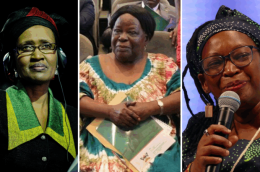
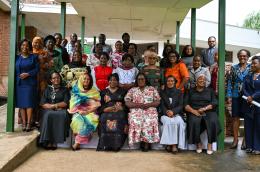
The Parliament of Malawi, in partnership with the United Nations Development Programme (UNDP) and UN Women, convened an Orientation Workshop for the Women’s Caucus to strengthen its strategic role in shaping policy, advancing accountability, and championing gender equality. Opening the workshop, Hon. Mary Maulidi Khembo, MP, Chairperson of the Parliamentary Women’s Caucus, set the tone for the sessions, stating, “The Women’s Caucus is not an accessory to Parliament; it is a strategic engine of influence, advocacy, and accountability.” Her remarks underscored the Caucus's responsibility to build solidarity across party lines and ensure that women’s leadership translates into measurable progress.

Read More here.
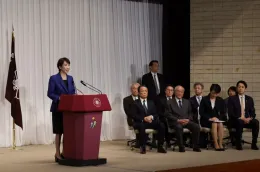
Japan’s Liberal Democratic Party (LDP) won the general election on 8 February 2026 in the biggest win for any Japanese party since the LDP’s formation in 1955. It captured 316 seats in the Diet’s lower house, well above the 233 seats needed for a simple majority. The LDP now also holds majorities in all 17 parliamentary committees, giving it immense power over decision-making.

But the real election winner was Sanae Takaichi, who first became prime minister in October 2025. Pre-election polls, conversations with LDP candidates and YouTube viewing data suggested that her popularity underpinned a significant portion of the LDP’s vote. When Takaichi called the election on 19 January 2026, she wanted a stronger mandate for her leadership. The results show she has it.

Japanese voters have been hungry for something different from the elderly male leaders who have long headed the LDP. Takaichi is certainly different.

She is a woman, the first to lead the LDP and Japan’s first female prime minister. The country was ready for a woman at the helm. She also comes from a non-political, non-wealthy background. For many voters, she has put the ‘representative’ back in representative democracy. Her public speaking and decisive style appealed to voters, and her widely publicised jam with South Korean President Lee Jae-myung also bolstered her image.

The same cannot be said for the confused — and confusing — main opposition party, the Centrist Reform Alliance (CRA), formed only weeks before the election when the left-leaning Constitutional Democratic Party of Japan merged with Komeito — the Buddhist-backed former LDP coalition partner. Both party leaders are over the age of 65 and have struggled to project dynamism. You know you are in trouble when the LDP looks cooler and more diverse than you.

Full article.

In January 2026, Uganda held its general elections, and several women ran as candidates. However, women campaigners have to worry about more than giving speeches and rallying voters — they also have to navigate online violence that manifested as deepfakes, AI-generated images, gendered disinformation, and harmful narratives that were weaponised to target Ugandan women politicians during this year’s election.


Read More here.

Women’s overall influence in American politics is on the rise.

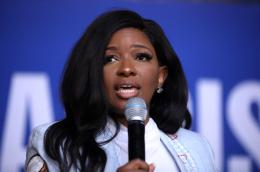
Speaking strictly in numbers, an ever-increasing amount of women are running for office at local, state and federal levels. And more of them are currently holding positions, too. As of this year, women make up 28% of Congress, and just over 30% of state executive and legislative offices, according to the Center for American Women in Politics. Women additionally continue to be the leaders of political movements.

But beyond the wins in representation, it’s worth examining how these women utilize their power. Below, we’ve listed 15 other women – from several gubernatorial hopefuls to a number of opinionated figureheads and already-elected leaders – who are poised to make waves in the U.S. political landscape this year. 

Read More here. 

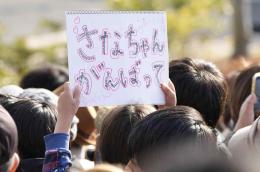
Three months into her tenure as Japan’s first female prime minister, Sanae Takaichi is connecting with younger voters in a way her predecessors failed. She plays "Golden” from the film "K-Pop Demon Hunters" on the drums with South Korea’s president and takes selfies with Italian Prime Minister Giorgia Meloni. In the evenings, she prefers to sharpen her policy knowledge at home rather than wining and dining Japan’s old-guard business elite behind closed doors. From her handbags to her pink pens, orders are surging for items that have unexpectedly captured the zeitgeist.

Read More here. 

"On the first day, I asked 'why are there no more women?'," says Hind Kabawat.

She is Syria's minister for social affairs and labour - the only female minister in the transitional government tasked with navigating the country's jagged road from war to peace.

Sectarian violence, which has killed thousands of people, has marred its first months in power, with many of Syria's minority communities blaming government forces.

Once an opposition leader in exile, Kabawat acknowledges the government has made mistakes since President Ahmed al-Sharaa's rebel forces swept into the capital on 8 December 2024, ending decades of the Assad family's brutal dictatorship.

But she insists "mistakes happen in transition".

Read More here.

The 30th anniversary of the Beijing Platform for Action is a moment to reaffirm global commitments to gender equality

2025 is a pivotal year for women and girls. It marks three major milestones: the thirtieth anniversary of the Beijing Declaration and Platform for Action, the twenty-fifth anniversary of United Nations Security Council resolution 1325 on women, peace and security, and the eightieth anniversary of the United Nations. Notable progress on laws, policies and some development outcomes for women and girls has occurred, especially since the adoption of the Sustainable Development Goals (SDGs) in 2015. In the final five-year stretch before the 2030 deadline of the Goals, it is urgent to accelerate action and investment.  

TheBeijing Declaration and Platform for Action, adopted in 1995 by 189 countries, laid out transformative measures across 12 critical areas of concern, serving as a foundation for progress on gender equality and the SDGs. Drawing on evidence from the thirtieth-anniversary review – including 159 Member State reports and broad consultations – UN Women has developed the Beijing+30 Action Agenda. This bold, forward-looking framework sets out six priority actions to accelerate progress on both the Platform and the SDGs. It positions gender equality at the heart of global development efforts. This section highlights this Agenda noting the investments needed and the benefits not only for women and girls, but at large for societies and economies. The rest of the report assesses gender equality under each of the 17 SDGs, spotlighting actions and investments to accelerate change.

Full article here.


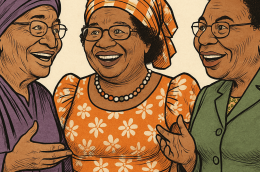
For decades, African politics has been a domain dominated by men, with women often relegated to the sidelines of decision-making. But a growing number of countries how now experienced female leadership, including Liberia, Malawi and most recently Namibia. With President Netumbo Nandi-Ndaitwah becoming the country’s first female head of state and assembling a cabinet where women hold the majority of ministerial positions, Namibia has set a historic precedent. This moment signifies much more than symbolism; it signals a broader and hopeful shift in the continent’s political landscape, one that may pave the way for future gender equality in governance. Could Namibia be a harbinger of a wider trend across Africa? Let’s take a closer look at the evidence.

Namibia is not alone in challenging the traditional power structures that have long kept women out of high political office. In recent years, countries like Tanzania and Ethiopia have also seen women rise to top leadership roles. Tanzania’s President Samia Suluhu Hassan, who took office in 2021 after the death of President John Magufuli, has already made significant strides in reshaping the country’s political and economic trajectory. However, it is important to note that she, like Malawi’s former President Joyce Banda, assumed office not through an electoral mandate but through constitutional succession. This pattern raises important questions about the actual commitment of ruling parties to gender equality when women are not fielded as primary candidates.

Full article by Democracy in Africa.

Image by Democracy in Africa


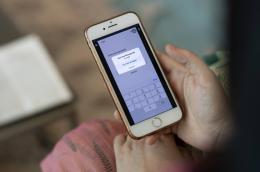
Artificial intelligence (AI) is transforming our world—but when it reflects existing biases, it can reinforce discrimination against women and girls. From hiring decisions to healthcare diagnoses, AI systems can amplify gender inequalities when trained on biased data. So how can we ensure AI is ethical and inclusive? Zinnya del Villar, a leading expert in responsible AI, shares insights on the challenges and solutions in a recent conversation with UN Women.

What is  AI gender bias and why does it matter?

“AI systems, learning from data filled with stereotypes, often reflect and reinforce gender biases,” says Zinnya del Villar. “These biases can limit opportunities and diversity, especially in areas like decision-making, hiring, loan approvals, and legal judgments.”

At its core, AI is about data. It is a set of technologies that enable computers to do complex tasks faster than humans. AI systems, such as machine learning models, learn to perform these tasks from the data they are trained on. When these models rely on biased algorithms, they can reinforce existing inequalities and fuel gender discrimination in AI. 

Imagine, training a machine to make hiring decisions by showing it examples from the past. If most of those examples carry conscious or unconscious bias – for example, showing men as scientists and women as nurses – the AI may interpret that men and women are better suited for certain roles and make biased decisions when filtering applications.

This is called AI gender bias— when the AI treats people differently on the basis of their gender, because that’s what it learned from the biased data it was trained on.

Full article published by UN Women on 5 February 2025.


The Women and Foreign Policy program’s most recent update of the “Women’s Power Index” ranks 193 United Nations (UN) member states on their progress toward gender parity in political participation. It analyzes the proportion of women who serve as heads of state or government, in cabinets, in national legislatures, as candidates for national legislatures, and in local government bodies, and visualizes the gender gap in political representation.  

Over the past year global progress toward gender parity in political representation has remained flat at 29 on the 100-point aggregate scale employed in which a 100-point score represents gender parity. The number of countries that are halfway or more to parity has remained the same. Twenty-eight countries exceeded fifty in their gender parity score, including Canada, Dominica, Moldova, and the United Kingdom in the past year. Mozambique, Peru, Rwanda, and Senegal fell below that halfway to parity mark in the past year. The U.S. gender parity score is slightly above the global average at 35. Iceland has maintained its position in first place, with a score of 86, Mexico and Andorra occupy second and third place, with scores of 75 and 73, respectively. 

Progress in women’s political leadership at the national level has been stalling recently. Since the end of World War II, 82 of the 193 countries have elected a female head of state or government, with the most progress coming in the past two decades. Eleven countries elected their first woman into high office during the 2000s, twenty-five in the 2010s, and seventeen thus far in the 2020s. Most recently, Namibia elected its first woman president, Netumbo Nandi-Ndaitwah, in 2025, and Mexico elected its first woman president, Claudia Sheinbaum, in 2024.

Read here the full article published by the Council on Foreign Relations on 2 April 2025.

Image by the Council on Foreign Relations


Last Saturday, March 8th, marked International Women’s Day, when the international community celebrates the social, economic, cultural, and political accomplishments of women. In post-communist societies, where this day is often a public holiday, there is still a lot left to do to ensure better representation of women in political institutions—but the contribution of women to democracy-building efforts is undeniable.

Meet four exceptional female leaders who are shaping Eastern European politics today and learn more about women of the region fighting against war and autocracy.

Read here the full article published by the Wilson Center on 10 March 2025.

Image by Wilson Center


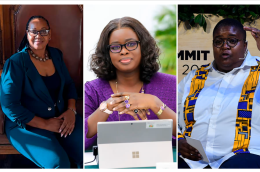
This year, 18 of Africa’s 54 countries went to the polls for presidential or general elections, making 2024 a significant year on the continent. There were high hopes for renewed commitment to fair governance, transparency and equal representation. In particular there were hopes for women’s political participation, for more women to be elected to office to shape policies that address the needs of all citizens.

For more than a decade, we at the human rights organisation Make Every Woman Count (MEWC) have been tracking women’s political participation across Africa. Unfortunately, we did not see the progress we hoped for this year. In 2014, there were three women serving as heads of state across Africa. In 2024, there were two: the president of Tanzania, Samia Suluhu Hassan, and Netumbo Nandi-Ndaitwah, who became Namibia’s first female president-elect on 3 December; the result is being contested in court. Nandi-Ndaitwah was the sole woman among 15 candidates, underscoring the persistent gender disparity in contests for high office.

Ghana also made history by electing Prof Naana Jane Opoku-Agyemang as its first female vice-president.

Read here the full article published by The Guardian on 31 December 2024.

Image by The Guardian