Women's Leadership

As we commemorate World Telecommunications and Information Society Day this year, with its theme of gender equality in digital transformation, we focus on the transformative power of technology in the lives of women across Egypt. Central to this progress in Egypt is the Qodwa-Tech initiative, launched by the Ministry of Communications and Information Technology (MCIT) and supported by the United Nations Development Programme (UNDP).

Since its inception in 2019, Qodwa-Tech has been empowering women across all governorates, training over 32,000 women so far. Its core mission is to bridge the gender digital divide by equipping women with essential digital skills—from social media marketing and e-commerce to advanced areas like artificial intelligence—and fostering leadership capabilities.

Today, we shine a spotlight on inspiring women beneficiaries of the Qodwa-Tech initiative—women whose lives are being transformed by the power of technology. Their stories exemplify resilience, innovation, and leadership—proof that digital inclusion is a vital tool for achieving gender equality and sustainable development.

Full article published by UNDP on 17 May 2025.


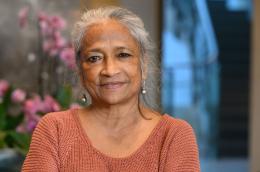
Naila Kabeer is a Professor Emerita in Gender and International Development at the Department of International Development, London School of Economics and Political Science. She is also a Faculty Associate at LSE’s International Inequalities Institute and serves on the governing Naila’s extensive work and research focuses on gender equity, social justice, labour markets, and poverty alleviation. Naila Kabeer joined a two-day Expert Group Meeting organized by UN Women to address one of the most persistent barriers to gender equality in political and public life: discriminatory social norms. The event held on 4-5 February 2025 brought together feminist scholars, policymakers, activists, and practitioners to chart a path forward for transforming social norms and ensuring women’s full and effective political participation. This experts’ meeting was organized under the WYDE | Women’s Leadership, funded by the European Union, which is a collaborative global effort aimed at advancing women’s full and effective political participation and decision-making at all levels, especially those most often left furthest behind.

what advice would you give to young women aspiring to lead in their communities and countries?

Have courage. The world is not always kind to young women who step forward! Find support, build alliances, you don’t have to face the system alone. Be present in every space where decisions are made and make people aware that gender equality matters everywhere. Having allies and a strong constituency behind you will give you the strength to keep going. And finally, never let anyone put you down!

Full interview available here.


Women will for the first time make up a majority of state legislators in Colorado and New Mexico next year, but at least 13 states saw losses in female representation after the November election, according to a count released Thursday by the Rutgers Center for American Women and Politics.

While women will fill a record number of state legislative seats in 2025, the overall uptick will be slight, filling just over third of legislative seats. Races in some states are still being called.

"We certainly would like to see a faster rate of change and more significant increases in each election cycle to get us to a place where parity in state legislatures is less novel and more normal," said Kelly Dittmar, director of research at the CAWP, which is a unit of the Eagleton Institute of Politics at Rutgers University.

As of Wednesday, at least 2,450 women will serve in state legislatures, representing 33.2% of the seats nationwide. The previous record was set in 2024 with 2,431 women, according to the CAWP.

Read here the full article published by SC Now. 

Image credits: SC NOW


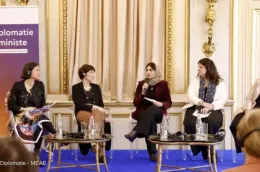
Last month, representatives from UN Women and Zenobia, a civil society organization, spoke at the launch of France’s feminist foreign policy strategy by Minister for Europe and Foreign Affairs Jean-Noël Barrot, highlighting the need for a feminist approach to global peace and technology.

Last month, UN Women and Zenobia — a Syrian civil society organization supported by the Women’s Peace and Humanitarian Fund, or WPHF — were invited to speak at the launch of France’s international strategy for a feminist foreign policy. The event marked a key moment in reaffirming the centrality of gender equality and women’s rights across diplomacy, peace, and technology. It also offered a timely opportunity to reflect on how digital governance and peacebuilding intersect with the ambitions of feminist multilateralism.

Four years ago in Paris, UN Women and the government of France stood alongside global advocates to launch the Generation Equality Forum. This initiative aimed to accelerate global gender equality through collaborative, multistakeholder partnerships that would mobilize concrete commitments and increase investments to advance the Beijing Platform for Action. Our goal was ambitious: to build the world’s first multistakeholder Action Coalition on Gender, Technology and Innovation. We were driven by the conviction that the digital revolution will not advance justice and democracy unless it is feminist.

Read here the full article published by Devex on 21 April 2025.

Image by Devex


Jennifer M. Piscopo is a Professor of Gender and Politics and Director of the Gender Institute at Royal Holloway, University of London. Her research examines gender, elections, and democracy, with a focus on women’s political participation in Latin America and the United States. Jennifer Piscopo joined a two-day Expert Group Meeting (EGM) organized by UN Women to address one of the most persistent barriers to gender equality in political and public life: discriminatory social norms. The event held on 4-5 February 2025 brought together feminist scholars, policymakers, activists, and practitioners to chart a path forward for transforming social norms and ensuring women’s full and effective political participation. This experts’ meeting was organized under the WYDE | Women’s Leadership, funded by the European Union, which is a collaborative global effort aimed at advancing women’s full and effective political participation and decision-making at all levels, especially those most often left furthest behind.

  1. What sparked your passion for studying women's representation and gender in elections?

I'm American, and when I was growing up, there were very few women in U.S. politics. Unfortunately, that’s still the case today—there are very few women in key political leadership roles.

But in some countries, that wasn’t the case. They elected more women to office and even as heads of state and government, which is what led me to comparative political science. I wanted to be able to compare and understand why some countries break barriers to women’s political participation more successfully than others.

  1. What are the key barriers to women’s political participation?

There are many barriers. One common narrative is that women doubt their own abilities and capacities to run for office – which is perhaps true in some cases. So many development programs and organizations have therefore focused on boosting women’s confidence and encouraging them to see themselves as political actors. But actually, self-doubt isn’t the biggest barrier! If this were the case, we wouldn’t see such stark differences across countries in electing women. One of the real, more significant obstacles is political parties. Political parties have historically been male-dominated, which means men control who gets nominated, what resources are provided for campaigns and how elected officials maintain power. Women often find themselves blocked from these institutions that have been historically dominated by men. Even when women meet the required qualifications, the bar shifts. First, they’re told they lack the right education, so they get degrees in law or business. However then, they’re told they lack political experience. So the goalposts keep moving for women, which is the reason we focus so much on the preparing women as political leaders. But this emphasis on preparing women means we actually miss out on policy interventions which should focus on the barriers. We need to target political parties or party leaders to change their attitudes and beliefs, and redefine what qualifications matter. The real issue isn’t women "fixing themselves"—it’s fixing the institutions that gatekeep political opportunities.

  1. How do gender quotas help?

Gender quotas are a great example of policies that cut through or bypass cultural and individual beliefs that society may have about women political leaders. Quotas can challenge both cultural biases and party structures, since they require parties to nominate women, forcing the parties to recruit, train, and position them women candidates for success.

And quotas work. When quotas are enforced, suddenly political parties find, support, and elect women. And not only do women win, but they also prove to be effective leaders and successful at governing.

Quotas can be viewed as a sort of shortcut, to swiftly raise number of women in office, overcoming individual and partisan barriers.

Finally, beyond increasing numbers, quotas transform institutions. They have a knock-on effect. They lead to changes within party cultures, parliamentary codes of conduct and meeting structures, ensuring a more inclusive and professional environment. Quotas, and women entering institutions through quotas, actually have a transformative effect across the board within parties and parliaments in addition to the fact that elected women may hold different policy priorities.

  1. Why is it important to apply a gender lens when analyzing elections?

When I started this work, I worked with political scientists who said, "Elections are about the best candidate winning. This is democracy and this is what we study." But taking a gender lens in this work makes us question that assumption. Because, if men are always winning, despite no inherent difference in abilities or talent, then what does that say about our electoral processes? If democracy means equal opportunity, why don’t we see equal outcomes for men and women in elections? Studying gender in elections reveals whether a democracy is truly substantively meaningful and inclusive. If the same types of candidates always win, are we really getting diverse representation? Are institutions truly accountable to all citizens, or just to those who have historically held power? 

  1. What advice would you then give young women entering politics?

It’s not you, it’s them! Institutions are designed to preserve themselves and it may feel like the bar keeps moving for women when entering these institutions.

At first, you’ll be told you don’t speak up enough. So, you start speaking up. Then, you’ll be told you lack credentials. So, you’ll get them. And still, the bar shifts again.

This isn’t about your shortcomings, it’s about those in power wanting to maintain the status quo. Adjust when necessary, but don’t lose hope, trust yourself, keep pushing. And keep knocking down these barriers, change will happen!

Click here to see the original post published on Capacity4Dev (European Union) on 23 April 2025.


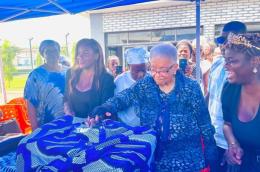
MONROVIA — A prominent fundraising campaign for Edith Gongloe-Weh, the only female candidate in Tuesday’s upcoming senatorial by-election in Nimba County, has drawn widespread support from prominent women, including former President Ellen Johnson Sirleaf. But the noticeable absence of key female legislators has raised questions about solidarity within Liberia’s female political circles.

Since April 15, women have gathered at Invincible Park fish market in Monrovia to raise $10,000 for Gongloe-Weh’s campaign, with funds earmarked for poll watchers to protect votes, similar to efforts that helped Senator Botoe Kanneh secure her seat in 2020.

“Anyone who stops women is stopping progress in the world,” said Sirleaf, 86, who briefly visited the fundraiser to contribute. The former president praised Gongloe-Weh’s past service as Nimba County superintendent, saying, “She shows integrity, commitment, and dedication.”

But conspicuously missing from these events have been Senator Botoe Kanneh and Senator Nyonblee Kargar Lawrence, chair of the Women’s Legislative Caucus — the very organization established to support female political participation.

Read here the full article published by Front Page Africa on 21 April 2025.

Image by Front Page Africa


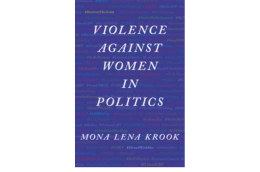
Women have made significant inroads into political life in recent years, but in many parts of the world, their increased engagement has spurred attacks, intimidation, and harassment. This book provides the first comprehensive account of this phenomenon, exploring how women came to give these experiences a name: violence against women in politics. 

Tracing its global emergence as a concept, Mona Lena Krook draws on insights from multiple disciplines--political science, sociology, history, gender studies, economics, linguistics, psychology, and forensic science--to develop a more robust version of this concept to support ongoing activism and inform future scholarly work.

Click here to see the book.

UN Women organized an Expert Group Meeting (EGM) on “Data and violence against women in politics” (VAWP) on 4–5 December 2019, in New York, as a part of its ongoing efforts to tackle this issue. More than 40 experts attended the meeting, including academics, gender equality advocates, Members of Parliament, representatives of electoral management bodies, civil society organizations, and international organizations, as well as UN agencies.

Being recognized as one of the key deterrents to women’s political participation, VAWP has captured global attention, but comparative data remains unavailable. Internationally agreed indicators and data collection methods to measure incidence or prevalence do not yet exist. The EGM helped map existing knowledge tools, databases, and surveys as sources of data on VAWP, and facilitated the exchange of lessons learned, experiences, and good practices in data collection.

This follow-up EGM on data was a recommendation of the Violence against Women in Politics Expert Group Meeting in March 2018.

Click here to see the report.

This report aggregates over five hundred pieces of academic and institutional research on the ways in which women’s political careers differ from their male counterparts, what stands in their way, and what impact their political presence has on democracy and policy. Parity of political presence between women and men is fundamental for a representative, legitimate and accountable democratic system, and this report points to the diverse and important ways that women’s political representation improves and contributes to democratic institutions and processes. It also highlights methods and approaches which address their underrepresentation. Bringing this research together in this way gives us a holistic understanding of the political recruitment and impact of women politicians that will provide a platform for future research and action. 

Click here to see the report.

RepresentWomen tracks women's representation and leadership in the United States and around the world to identify the "best practices" for creating a more representative government. Our research indicates that even as more women run, electoral rules and systems play a major role in determining electoral outcomes. As seen in both our 2016 and 2020 reports, we find that electoral outcomes for women and people of color are overall better in jurisdictions that have implemented ranked choice voting (RCV)

The 2020 ranked choice voting report, "In Ranked Choice Elections, Women WIN" provides a thorough review of ranked choice voting in the United States and how it is impacting women's representation in the cities that have implemented it. Over the last decade, 19 cities and counties have used ranked choice voting to elect sitting city officials, including 13 mayors and the city councilmembers in 14 jurisdictions. Over the last decade (2010-2019), women have won 45% of all municipal ranked choice elections. As of April 2020, nearly half of all mayors (46%) and 49% of all city council seats decided by RCV are held by women.

Click here to see the report.

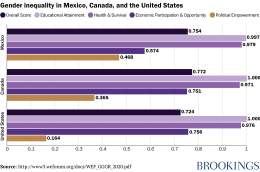
A century on from women winning the right to vote in the U.S., our nation has made huge progress on many fronts. But plenty more is needed—and above all in the political sphere. The U.S. compares badly to most other countries in the world in terms of gender equality in politics—including to our nearest neighbors, Canada and Mexico.

Measuring gender equality

The 2020 Global Gender Gap Report from the World Economic Forum ranks progress toward equality in 153 countries around the world. The U.S. is in a disappointing 53rd place, compared to 25th place for Mexico and 19th place for Canada. WEF calculates gender equality in each country based on four equally weighted domains: educational attainment, health and survival, economic participation and opportunity, and political empowerment. WEF calculates the degree of gender equality in each domain, drawing on a range on indicators for each, where each indicator ranges from 0 to 1, with 1 indicating parity.

Click here to see the academic article.

  • Since 1995, the world has made important strides in advancing gender equality. The increase in female representation in parliaments across the globe has been driving these advances, although there has been some progress on other indicators used to measure Gender Equality in the Global State of Democracy (GSoD) Indices.
  • Democracies provide better guarantees for gender equality. Out of 29 countries that scored highly in the GSoD Indices on Gender Equality in 2018, 28 of them are democracies.
  • There are wide regional variations in Gender Equality, with North America and Europe seeing the highest scores, and the Middle East the lowest. However, the greatest progress over the 25-year period has been achieved in Africa, and Latin America and the Caribbean.
  • The representation of women in parliament is considerably better today than 25 years ago. The world average has increased from 10 per cent in 1995 to 23 per cent in 2018 (and 24 per cent in 2019). The percentage of women legislators is highest in Latin America and the Caribbean (28 per cent), and lowest in the Middle East (11 per cent).
  • Despite progress made to date, at the current rate it will take another 46 years to reach gender parity in all parliaments.
  • Civic space is shrinking across all regions of the world and across all levels of democratic performance. The shrinking of civic space has had severe effects on women’s participation in civil society, as women’s organizations tend to be the most vulnerable, the least well-resourced and the least networked.
  • Over the 25-year period since 1995, the global average of women’s participation in civil society organizations has seen very slow improvement. While the Middle East is the lowest performer, North America and Europe have the highest scores, although Europe has witnessed some declines in the last five years.

Click here to see the academic article.