Women's Leadership

Worsening levels of abuse are deterring future politicians from careers in parliament, a group of MPs have warned.
Bradford West MP Naz Shah, Rother Valley MP Jake Richards and ex-Dewsbury MP Mark Eastwood said women received more threats and abuse than male colleagues - and it was discouraging their staff from careers in politics.
The politicians made the claims after Spen Valley MP Kim Leadbeater told Radio 4 earlier this week that the level of abuse had increased since her sister Jo Cox was murdered by a far right terrorist in 2016.
Leadbeater said the level of "abuse and nastiness in politics" then was "nowhere near what it is like now".
Richards, who worked on the prosecution of Cox's killer as a junior lawyer, said the abuse had caused members of his parliamentary staff to reconsider careers in politics, which was "pretty shocking".
He said: "We need people from all backgrounds and perspectives to get into public life and to represent us or we'll go wrong politically.
"It's not just about looking after MPs and not hurting feelings, it's about how we make our politics work better."
Read the full article here.

1. Defends Mexico’s Sovereignty
Claudia Sheinbaum, the newly elected president of Mexico, has reiterated the need to “keep calm” in the face of several executive orders and threats issued by President Donald Trump regarding trade, migration, and other issues that impact U.S.-Mexican relations.
2. International Criminal Court Prosecutor Requests Arrest Warrants for Taliban Leaders
This week, a prosecutor from the International Criminal Court (ICC) officially requested arrest warrants for two Taliban leaders in Afghanistan under charges of gender-based persecution. The warrants, which cite article 7(1)(h) of the Rome Statute, target supreme spiritual leader Hibatullah Akhundzada and Abdul Hakim Haqqani, who has been the chief justice of Afghanistan since 2021.
3. Iraqi Parliament Passes Law to Permit Marriage of Girls as Young as Nine
The Iraqi parliament has enacted legislation allowing the marriage of girls as young as nine. The law revokes a ban enacted in 1959 that made the statutory minimum age for marriage eighteen, with some allowance for individuals as young as fifteen to marry with legal approval.
Read here the full article published by the Council on Foreign Relations on 24 January 2025 .
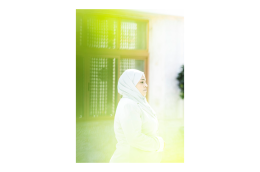
Ten years of war have severely weakened political life, undermining its role as a peaceful foundation for society in Yemen. CMI is supporting the country’s political parties in restoring their standing, with a strong emphasis on empowering women as a crucial step toward lasting peace. During a workshop held in Amman, Jordan, in November 2024, politicians shared their perspectives on how to strengthen women’s role in politics.
“The first obstacle to women’s participation in politics in Yemen is that their roles are restricted to traditional expectations. We rarely see women involved in critical and sensitive departments within political parties. For instance, women hardly ever work in political or economic departments, and they rarely participate in military or diplomatic matters. This means women are often unaware of or uneducated about these issues.”
Read here the full article published by CMI – Martti Ahtisaari Peace Foundation on 16 January 2025.
Image by CMI – Martti Ahtisaari Peace Foundation
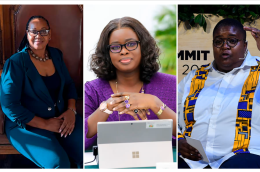
This year, 18 of Africa’s 54 countries went to the polls for presidential or general elections, making 2024 a significant year on the continent. There were high hopes for renewed commitment to fair governance, transparency and equal representation. In particular there were hopes for women’s political participation, for more women to be elected to office to shape policies that address the needs of all citizens.
For more than a decade, we at the human rights organisation Make Every Woman Count (MEWC) have been tracking women’s political participation across Africa. Unfortunately, we did not see the progress we hoped for this year. In 2014, there were three women serving as heads of state across Africa. In 2024, there were two: the president of Tanzania, Samia Suluhu Hassan, and Netumbo Nandi-Ndaitwah, who became Namibia’s first female president-elect on 3 December; the result is being contested in court. Nandi-Ndaitwah was the sole woman among 15 candidates, underscoring the persistent gender disparity in contests for high office.
Ghana also made history by electing Prof Naana Jane Opoku-Agyemang as its first female vice-president.
Read here the full article published by The Guardian on 31 December 2024.
Image by The Guardian
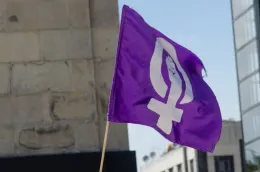
Claudia Sheinbaum’s election as Mexico’s president has captured global attention for several reasons. Mexico is the world’s 12th largest economy. Sheinbaum secured a decisive victory, garnering nearly 60% of the vote; she is the first woman to assume the presidency in over 200 years of Mexican independence—all within the context of a deep national crisis of gender-based violence.
In recent decades, the world has seen a rise of women to power, with gender quota laws in Latin America and 13 of the world’s 20 largest economies having witnessed female leaders. Although Sheinbaum was not Mexico’s first female presidential candidate, her presidency has sparked diverse reactions in Mexico, ranging from unfortunate instances of sexism to critical feminist perspectives, as well as the enthusiastic support of younger generations and women’s organizations who see Sheinbaum´s rise to power as a moment of direct representation in government.
Although the presence of a woman in leadership does not automatically ensure positive change, empirical evidence underscores the broader impact of having more women in public decision-making roles. This shift is associated with higher economic growth, improved gender equality, and greater social investment in education, healthcare, and environmental protection.
Read here the full article publsihed by the Wilson Center on 13 December 2024.
Image by Wilson Center
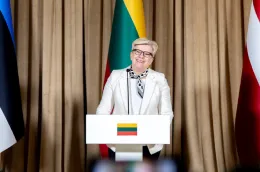
Significant and, arguably, profound changes took place in Baltic high politics over the past four years. The peak pandemic years — 2020 and 2021 — proved quite pivotal for both Lithuania and Estonia, as both saw the emergence of the first most gender-balanced cabinets in the history of these countries, with Latvia following in 2022. The Estonian parliament elected the first woman prime minister, Kaja Kallas, whose cabinet had the largest number of women ministers. For almost a year, Estonia’s top political positions — the presidency and prime ministership — were held by two women, making Estonia the only parliamentary democracy ruled by elected women. Meanwhile, the Lithuanian prime minister, Ingrida Šimonytė, was the second woman to hold this position. Unlike her predecessor, Danutė Prunskienė, who served as the first woman prime minister of Lithuania more than 30 years ago (1990-1991) and was the only woman in her all-male cabinet, Šimonytė’s cabinet was the most gender-balanced in the modern history of the country. With the election of Evika Siliņa in September 2023 as Latvia’s prime minister, all three Baltic prime ministerships were held by women for about ten months — a historical first in the Baltic states’ politics.
Read here the full article published by the Foreign Policy Research Institute on 19 December 2024.
Image by Foreign Policy Research Institute

This map is a unique visual tool that captures women’s participation in executive government and in parliament on a given date—1st January 2020. The map of Women in Politics not only provides a country ranking for both ministerial and parliamentary representation, but also statistics on women in political leadership positions—Heads of State or government, women Speakers of Parliament, as well as ministerial portfolios held by women throughout the world. Borders are depicted and used on the map in order to present data. They are not the expression of any opinion concerning the legal status of any country, territory, city or area, or concerning the delimitation of frontiers or boundaries.
Click here to download the map in English.
Political campaigns online have demonstrated that they can help candidates win elections, include more citizens’ concerns in political debates or allow upcoming parties to gain political exposure.
However, social media can also have a negative effect on political and electoral integrity by attacking an essential principle of democracy: the fundamental right of citizens to access trustable, reliable information to form their political opinions and, ultimately, decide their votes.
In this context of potential manipulation of public opinion through digital information operations, electoral management bodies, monitoring authorities, legislators and political parties face increasing difficulty in protecting the integrity of the political process.
Based on International IDEA’s work in Tunisia, Panama and Bolivia, this Fact sheet seeks to identify some overarching recommendations and a way forward based on how these types of activities may have potentially influenced their recent elections.
Click here to see the fact sheet.
Women made great strides in political representation in 2018. There has been significant media attention devoted to the historic gains women made in Congress, but the shift in political representation the states was equally significant. Women’s representation in state legislatures increased by more than three points in 2018 (from 25.4 percent to 28.9 percent of all state legislative seats). Nevada became the first majority women legislature and Colorado approached gender parity, with a legislature that is 47 percent women.
Although often presented as a non-partisan phenomenon, the gains in women’s representation across the board were due to Democratic women candidates’ victories. Democratic women gained about 300 state legislative seats in 2018, while the number of Republican women state legislators declined by just over 40.3.
More than a year out from the “year of the woman,” the National Women’s Law Center (NWLC) and Quorum examined the impact of this changing representation in the states. In this fact sheet, we present new data on women’s state legislative achievements, including that women state legislators introduced and enacted more legislation than men over the past two legislative sessions.
Click here to see the factsheet.
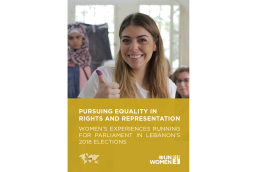
In late 2018 and early 2019 UN Women interviewed 87 per cent of the women who ran for Parliamentary election (75 of the 86 women; of the 113 women who registered to run, 86 made it on to candidate lists). This report summarizes their stories and experiences as candidates and looks at issues of: violence against women in politics, financial constraints and campaign management, media and image portrayal, violence harassment and discrimination.
Click here to see the report.
While still far from parity, female representation in politics has continuously increased over the last two decades worldwide. In light of this development, we analyze whether higher female representation has substantive effects on policy choices using the example of child care – a public good arguably valued by women. We hand-collect micro-data for 224,448 candidates running in the local council elections of 2002, 2008 and 2014 across 1,632 municipalities in the German state of Bavaria. Exploiting an open-list electoral system, we run RDD regressions centered around mixed-gender races for the last council seat that accrues to a party. We find that a female victory in a mixed-gender race accelerates the expansion of public child care provision by 40%. Our main strategy to explore mechanisms uses information from hand-collected minutes of 7,721 monthly council meetings. We show that an additional woman changes "the conversation": female councilors speak up more often and child care is discussed more frequently in the council.
Click here to see the report.
Women Human Rights Defenders (WHRDs) have long played a central role in the advancement of human rights. In the fight against impunity and repression, WHRDs have been among one of the most vocal in calling for human rights to be protected and upheld. In recent years, WHRD-led movements have particularly gained traction. Their relentless work calling for justice has, however, exposed them to serious risks and threats.
In this context, the new working paper series of the FORUM-ASIA aims to put WHRD’s perspective at the centre, exploring personal reflections and case studies on how they are experiencing and promoting human rights in an increasingly challenging context.
Ongoing struggles of WHRDs in Kyrgyzstan, Nepal, as well as the coordinated actions of women garment workers advocating for their rights in Cambodia and the testimonies collected by the University of York, showcase the need for stronger support and protection mechanisms, taking into account psychosocial wellbeing. At the same time, reflections on progress made 25 years after the adoption of the Beijing Platform for Action, and the advances and developments within the United Nations system indicate that a vibrant civil society is vital for WHRDs’ protection.
Click here to see the report.