Women's Leadership

In elections across the globe, the spotlight has been trained on the question of women’s representation, and rightly so. How vibrant can a democracy be if half of its population does not find adequate representation in politics or in the corridors of power? Which is why, when Kamala Harris became the Democratic nominee for the US presidential election, it was welcomed by those who thought it was high time that a woman — especially a woman of colour — held its highest office. Her campaign and the possibility of her victory was seen as symbolising the maturity of American democracy and an acknowledgment of its diversity.

As it turned out, a large number of African Americans, especially young men, and White women voted en-masse for Donald Trump. There are many reasons for this, but one is that mere symbolic gestures are not enough to win voters’ support. India has seen this happen in recent elections in Madhya Pradesh, Karnataka, Telangana and Haryana. We are seeing the end of vote-bank politics and the emergence of value-based voting. In India, women across the political spectrum have marched beyond mere symbolism and metaphors. Women have become game changers, shaping electoral politics and defining electoral gains. They have transitioned from descriptive political representation to substantive political presence, and with women-centric policies, like Sukanya Samriddhi Yojana, Beti Bachao Beti Padhao and Jan Dhan Yojana, we have seen women becoming changemakers in policy formulation. The outcome of such politics promises a brighter tomorrow by making women more skilled, employable and empowered.

Read here the full article published by the Indian Express on 12 November 2024.

Image by Indian Express


Gender quotas have become an important mechanism for promoting gender equality in political representation. This blog post explores their impact on women’s political empowerment, particularly in Malta, by discussing the historical context, current situation, and future prospects for gender equality in Maltese politics.

Understanding Gender Quotas

Gender quotas are affirmative measures designed to increase women’s participation in politics by reserving a certain proportion of seats for them. According to the European Institute for Gender Equality (EIGE), the goal is to provide a clearer pathway for women to enter political leadership, as they have historically been underrepresented. This is particularly relevant in Malta, where, despite advancements in other areas of gender equality, political representation remains unequal.

A Historical Overview of Women’s Political Participation in Malta

Women’s political participation in Malta has a long history, tied to the broader socio-political developments of the nation. Women were first granted the right to vote and run for office in 1947, preceding Maltese men who received this right three years later. However, significant measures aimed at improving female political representation only came in the 21st century. The Gender Corrective Mechanism, introduced in 2021, was a landmark policy. It mandates an increase in parliamentary seats if female representation falls below 40%, ensuring that women have a stronger foothold in Maltese politics.

Read here the full article published by Gender On The Ballot on 11 November 2024.

Image by Gender On The Ballot


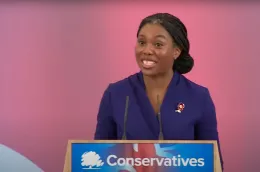
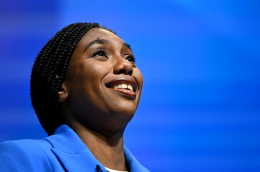
Kemi Badenoch has become the new leader of the UK Conservatives and the first black woman to lead a major political party in the UK.

Badenoch, 44, replaces Rishi Sunak as leader and has promised to lead the party through a period of renewal following its election loss to the Labour Party in July.

Badenoch won 53,806 votes from party members to win the leadership over former immigration minister Robert Jenrick, who won 41,388 votes. 

Badenoch’s leadership will mark a shift to the right for the Conservatives. She has told supporters it’s time to “get down to business”.

“The task that stands before us is tough, but simple, our first responsibility as his majesty’s loyal opposition is to hold this Labour government to account,” she told party members after winning the vote.

“Our second is no less important, it is to prepare over the course of the next few years for government.”

Badenoch is the sixth Tory leader in less than 9 years. She has a professional background in banking and IT and became an MP in 2017.

She has talked about returning the party to “first principles”, and has been described as having a no-nonsense style of communication and holding “anti-woke” values.

During the campaign for the Conservatives leadership, Badenoch sparked debate on maternity pay, when she said it was “excessive” . She spoke about how she believes in personal responsibility and “the answer cannot be let the government help people to have babies”. She later clarified that she believes in maternity pay.

Read here the full article published by the Women's Agenda on 4 November 2024.

Image by Women's Agenda


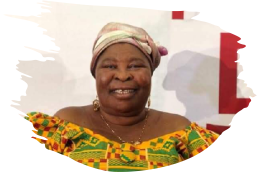
Some female politicians in Sunyani have described the late Akua Donkor, the leader and Election 2024 Flagbearer of the Great Freedom Party (GFP), as an inspiring and courageous role model for women in politics, irrespective of their party inclinations.

Madam Akua Donkor passed away at the Greater Accra Reginal Hospital, Ridge, on Monday, October 28, 2024, at the age of 72 years.

Reacting to her sudden death in an interview with the Ghana News Agency (GNA) in Sunyani, the women also described her death as a “big blow” to womanhood, especially in a period where civil society organisations and actors are pushing for more women representation in active politics.

“Some of us admired her from afar. She was indeed an icon in our multi-party democracy and her death is very sad,” Ms Leticia Gyan, a staunch member of the New Patriotic Party stated.

Read here the full article published by Ghana Web on 31 October 2024.

Image by Ghana Web


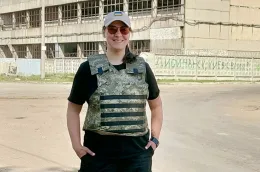
Women have been on the front lines of Russia’s war on Ukraine. Their suffering has been disproportionate and relentless, with women and children making up almost 90 per cent of people fleeing the war. But that is not the whole picture. Women are also humanitarian actors, community leaders, and providers for their families. One in every two businesses in Ukraine is founded by a woman. Ukrainian women are also taking on more roles in traditionally male-dominated professions, such as the security sector, transit, and demining.

Since Russia’s large-scale invasion of Ukraine in 2022, women’s rights organizations and women leaders have been providing humanitarian assistance, advocating for women’s rights, taking on leadership roles in business and in politics, and many have joined the armed forces.

Read the stories of Ukrainian women on the front lines of the war and recovery efforts.

Read here the full article published by UN Women 21 October 2024.


The report on “The Empowerment of Women in Politics and the 6 th Legislature National Assembly Elections 2018” is an analysis of the data and views of Cambodian women’s participation in politics, especially the process of the 6th Legislature National Assembly (NA) Elections 2018.

This report looks in particular at the women’s political empowerment and elections; number of women candidates, measures for how to select women candidats, policies of political parties for promoting women’s political participation, political party platforms on women’s and children’s issues, challenges facing women both as voters and candidates including violence against women in politics. Also, it shows about women’s opinions on electoral progress, and activities related to promoting women’s participation in politics as well as the outcome of elected women representative from the single party CPP which dominated the election and the outcome. It also provides an overview of a rapid survey on “The reason of women voters who voted or have indelible ink on their finger and women voters who did not go to vote or have no indelible ink on their finger” conducted by Women Volunteer Citizens throughout the four provincial target area of COMFREL a day after the election and two case studies. The report closes with a set of recommendations to improve gender equality and women’s political empowerment in Cambodia.

Click here to see the report.

There are currently 22 gender-balanced cabinets, of which 14 have at least 50% of women ministers. 

Women continue to be under-represented globally in political leadership positions. Data from UN Women and the Inter-parliamentary Union’s 2019 Women in Politics map shows that women made up 24.3% of all parliamentarians and 20.7% of government ministers, in January 2019. Although far from parity and gender-balance, this represents an all-time high for women in politics. 

According to the same data, only nine countries had 50% or more of women in ministerial positions on 1 January 2019.* These were Spain (64.7%), Nicaragua (55.6%), Sweden (54.4%), Albania (53.3%), Colombia (52.9%), Costa Rica (51.9%), Rwanda (51.9%), Canada (50%) and France (50%).

Below is an update on parity and gender-balanced cabinets (see our previous list here). As of 1 September 2019, there are 14 government cabinets made up of at least 50% of women ministers: 

1. Spain

Caretaker Prime Minister Pedro Sánchez’s acting cabinet includes six men and ten women, making Spain the country with the highest proportion of women ministers at 62.5%. Click here to learn more. 

2. Finland

Prime Minister Antti Rinne’s government is composed of seven men and 11 women ministers. The proportion of women ministers is 61.1%. Click here to learn more.  

3. Nicaragua

President Daniel Ortega Saavedra’s current cabinet includes seven men and ten women. The share of women ministers is 58.8%. Click here to learn more.

4. Sweden

Sweden has the world’s first self-proclaimed feminist government. Prime Minister Stefan Löfven’s cabinet is composed of ten men and 12 women ministers. The proportion of women ministers is 54.5%. Click here to learn more. 

5. Albania

Albanian Prime Minister and Minister of Foreign Affairs Edi Rama reshuffled his cabinet at the end of 2018. The government is composed of eight women ministers out of a total of 15, bringing the proportion of women ministers to 53.3%. Click here to learn more. 

6. Rwanda

Prime Minister Édouard Ngirente’s government includes 25 ministers, among which 13 are women (52%). Rwanda has the highest proportion of women MPs in its Chamber of Deputies at 61.3%. Click here to learn more.

7. Canada

Upon assuming office in November 2015, Prime Minister Justin Trudeau appointed a parity cabinet. Following the most recent reshuffle in March 2019, gender parity remained with a total of 17 men and 17 women ministers. Click here to learn more. 

8. Colombia

President Iván Duque announced Colombia’s first parity cabinet in August 2018. The current government team is composed of eight men and eight women ministers. Click here to learn more.

9. Costa Rica

President Carlos Alvarado’s current 24-member cabinet includes as many men as women ministers. Click here to learn more.

10. El Salvador

On 1 June 2019, President Nayib Bukele announced upon his inauguration a parity government with eight men and eight women ministers. Click here to learn more. 

11. Guinea-Bissau

In July 2019, a presidential decree announced a new government under the leadership of Prime Minister Aristides Gomes with eight men and eight women ministers. Click here to learn more.  

12. Haiti

The new Prime Minister Fritz-William Michel announced a parity cabinet in July 2019. Despite a government reshuffle a month later, parity was kept with nine men and nine women ministers. Click here to learn more. 

13. Moldova

In June 2019, Ms. Maia Sandu was elected Prime Minister of Moldova by Members of Parliament. Her new government is formed of five men and five women ministers. Click here to learn more. 

14. South Africa

In May 2019, President Cyril Ramaphosa’s second cabinet was inaugurated. In includes 14 men and 14 women ministers. Click here to learn more.  

Close to parity but not quite, there are currently eight gender-balanced cabinets where women occupy at least 40% of ministerial positions. These are France (48.6%), Ethiopia (47.6), Peru (47.4), Norway (42.8%), Switzerland (42.8%), Seychelles (41.6%), Germany (40%), and Iceland (40%).

Did we miss anything? Please let us know at connect@iknowpolitics.org.

* All calculations do not include Prime Ministers/Heads of Government, unless they hold ministerial portfolios. Vice-presidents and heads of governmental or public agencies are not included.
This policy paper aims to reconsider the concept of parity democracy in the current context of the EU and focusing on the elections to the EP in May 2019. As developed in the Athens Declaration, adopted at the European Summit of Women in Power in 1992, parity democracy stands on 5 basic arguments (equality, democracy, good use of human resources, needs and interests of women and quality of policy-making) which are recalled and updated with a view to provide stakeholders, including democrats standing for gender equality and feminist movements, with useful ammunitions to inform and convince EU citizens (women and men) to vote and to vote for women defending equality. This policy paper is, therefore, part of broader Gender Five Plus’ efforts to inform EU citizens and influence stakeholders for greater gender balance in the EU. The analysis in this policy paper is based on desk research, literature review and includes diverse forms of experience in EU policy-making. It is divided into four different parts and a list of recommendations. Part I tries to answer the question of why parity democracy is important to the EU; Part II focuses on why the EU and parity democracy are important to women; Part III analyses gender balance in the EU decision-making (focusing in the EP); Part IV examines the possible challenges and opportunities for fostering parity democracy in the current EU context and the conclusion provides space for a reflection on the EU that we want and need to build. Finally, derived from the analysis of the whole policy paper, a noncomprehensive list of recommendations is provided.

Click here to see the report.

Raising women’s political participation leads to faster maternal mortality decline. We estimate that the introduction of quotas for women in parliament results in a 9–12 per cent decline in maternal mortality. In terms of mechanisms, it also leads to an 8–11 per cent increase in skilled birth attendance and a 6–11 per cent increase in prenatal care utilization. We find reinforcing evidence from the period in which the United States experienced rapid declines in maternal mortality. The historical decline made feasible by the introduction of antibiotics was significantly greater in states that had longer exposure to women’s suffrage.

Click here to see the academic article.

By Elizabeth Renzetti,

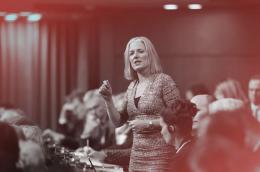
Imagine, for a second, that you’re walking down the street with your kids or your dog and someone who doesn’t like the way you do your job decides to hurl abuse at you. This probably seems inconceivable, if you’re a teacher or a lawyer or a baker or a construction worker.

However, if you are a politician – a female politician, specifically – it could be part of your life. This week we learned that Catherine McKenna, the Liberal Environment Minister, is sometimes accompanied by security, after the constant abuse she suffers online spilled over into real life (while she was with her kids going to see a movie in Ottawa, a man hurled an expletive at her and called her “Climate Barbie.”) The incident made international headlines – not the kind we usually associate with our friendly country. It was, perhaps, the wake-up call people needed to understand the situation that many women in politics face.

I’m Elizabeth Renzetti, a columnist and feature writer with The Globe and Mail, and I’ve long been interested in the ways that women are discouraged from seeking a life in politics. Over the years I’ve interviewed politicians and aspiring politicians and academics who study politics, and one thing is clear – the abuse that women take, online and increasingly offline, is getting worse.

It’s not an issue that follows partisan lines, either: the abuse cuts across party politics. The former interim Conservative leader Rona Ambrose wrote that she had been “mocked, dismissed, insulted, threatened (including with sexual violence), underestimated, cyber-bullied, sexually harassed, disrespected and ignored” because of her gender. Women in politics tend to have hides thicker than suitcase leather, but we cannot and should not become inured to threats that require them to have security guards by their sides, which happened with both Alberta MLA Sandra Jansen and former Alberta premier Rachel Notley.

Click here to read the full article published by The Globe and Mail on 13 September 2019.

Gender equality is fundamentally related to sustainable development, and globally accepted as a necessity for the promotion of human rights. Gender empowerment is determined by active participation of women and men in social, economic, and political spaces and activities taken in decision-making. In the context of local government, gender equality is critical as women and men face different challenges in full participation, representation and decent work opportunities. Though the constitution provides women the right to be elected in political and public representative institutions, such as parliament and local government bodies, gender inequality, as a collection of interlinked problems existed in the political arena too. Today the representation of women in politics has been increased considerably but due to their low participation, their issues and problems are generally unseen and unnoticed. Participation of women in the decision-making levels not only enhances their social, political and economic status, but also strengthens democratic institutions and even perhaps change the nature of the democratic process. Thus, the present study analyzed the gender challenges, gender influence in leadership styles, gender role and responsibilities of the elected panchayat leaders in Sivagangai district. The sample size of the study is 50 and the Harvard Analytical Framework has been used as a tool for data collection. Findings of the study assisted in the framing of strategies for the effective role performance of women in rural local governance and for the promotion of Gender Responsive Governance.

Click here to see the academic article.